2 Month Old Baby Development: Sleep, Feeding, and Milestones

This article is approved by Çiğdem İrem İleri
Published: 09 March, 2026
Updated: 05 August, 2026

At a Glance
Total daily sleep for two-month-old babies usually ranges from 14 to 17 hours.
The ideal wake window between sleeps averages 60 to 90 minutes.
The feeding schedule is often every 2 to 3 hours for both breastfed and formula-fed babies.
During awake times, 3 to 5 minutes of supervised tummy time a few times a day supports muscle development.
This month, your baby's interest in the outside world increases, and their first conscious social smiles may appear.
During 2 month old baby development, parents often try to cope with fatigue while finding ways to adapt to their baby's gradually changing feeding routines and wake windows. The second month is a very special transition period where your baby begins to react more to the outside world, "cooing" sounds are heard, and a tiny smile offers comfort during sleepless nights. In this guide prepared for new parents, you will find essential information to make your daily life easier—from height and weight tracking to breastfeeding routines, dream feeds, and wake windows.


2 Month Old Baby Height, Weight, and Physical Growth Chart
In their second month, babies grow an average of 2.5 to 4 cm (1 to 1.5 in) in length, and their weight increases by an average of 150 to 200 g (5.3 to 7.1 oz) per week. Of course, since every baby's genetics and birth weight are different, their growth rate is also unique. During this period, your baby's legs and arms will start to fill out a bit more. According to World Health Organization (WHO) growth standards, this rapid development in the first months is a sign of a healthy metabolism. At routine pediatrician check-ups, your baby's individual growth curve will be evaluated.
Percentile Values and Growth Rate
Percentile values and growth rates are standard measurement systems that help parents understand their two-month-old's height, weight, and head circumference ratios as percentages compared to their peers. Whether you are looking at a baby weight chart by month or head measurements, this chart is not meant for comparing your baby with others, but rather for tracking your baby's consistent growth. For example, a baby in the 50th percentile is exactly in the middle of their peers. You can use the Yuppo percentile calculator to see your baby's measurements on a regular graph and record changes. What matters most is not that your baby always stays in the same percentage, but that they do not experience sudden, sharp drops on their own curve.
The Importance of Tracking Head Circumference
In two-month-old babies, tracking head circumference is one of the key physical indicators showing that brain development is progressing healthily and skull bones are growing at the expected rate. Babies have soft spots called fontanelles on their skulls, which allow space for the rapidly growing brain. Regular measurement of the head circumference provides pediatricians with important clues about a baby's cognitive and neurological development.

2 Month Old Feeding Schedule: How Much Should They Eat?
Two-month-old babies generally consume 120 to 150 ml (4 to 5 fl oz) of formula per feeding, or if breastfed, they typically need to eat every 2 to 3 hours. Although a baby's stomach capacity has expanded slightly in the second month compared to the newborn period, they still get hungry frequently. During these weeks, when growth spurts can occur, it is perfectly normal for your baby to want to nurse or drink formula more often than usual.
Breastfeeding Frequency and Amount
A two-month-old baby's breastfeeding frequency usually occurs every two to three hours during the day, while each nursing session can last between 15 and 30 minutes, depending on the baby's sucking strength. The American Academy of Pediatrics (AAP) recommends feeding on demand without keeping a strict schedule whenever young babies show hunger cues (such as bringing hands to their mouth or rooting). You can tell your baby is getting enough to eat if they have 5 to 6 heavy wet diapers a day and generally settle down after feeding.
Formula Preparation and Storage Conditions
Prepared formula can safely sit at room temperature for up to two hours if it hasn't been offered to the baby yet. However, once the baby begins drinking from the bottle, the formula must be discarded within one hour due to the risk of bacteria multiplying from saliva. When preparing formula, it is crucial to strictly follow the water-to-powder ratios on the container. Using too much water can prevent the baby from getting adequate nutrients, while too little water can strain their kidneys. Unused formula that you prepare and place in the refrigerator (which the baby has not touched) can generally be stored for 24 hours; however, heated formula should never be put back in the fridge.
2 Month Old Wake Windows and Sleep Schedule
When wondering how much should a 2 month old sleep, their total daily sleep needs typically range from 14 to 17 hours over a 24-hour period. The ideal wake windows between sleeps are usually 60 to 90 minutes. These wake windows include feeding, diaper changes, and a short playtime. Keeping a baby awake for more than 90 minutes can lead to extreme fatigue, making it very difficult for them to fall asleep. For more detailed information, you can review average month-by-month baby sleep schedules.
Development Area | Daily Averages for 2 Month Old Babies |
|---|---|
Total Sleep Need | 14 - 17 Hours |
Ideal Wake Window | 60 - 90 Minutes |
Daytime Naps | 3 - 5 Times |
Feeding Interval | 2 - 3 Hours (Varies on demand) |
This table provides average durations to give parents an idea; your baby's needs may show slight variations from day to day.
Daytime Naps and Nighttime Sleep Transition
Daytime sleep for babies at this stage occurs as three to five short naps, while nighttime sleep blocks can start stretching to three or four hours uninterrupted between feeds. Because the biological clock, known as the circadian rhythm, is not yet fully established, the process of distinguishing day from night continues. Keeping the house bright during the day and maintaining a dim, quiet environment at night will gradually make it easier for your baby to transition to nighttime sleep.
Dream Feed Practices and Swaddling
A dream feed is typically offered right before parents go to sleep, usually around 10:00 PM to 11:00 PM. You gently nurse or bottle-feed the baby without fully waking them, aiming to help them sleep for a longer uninterrupted stretch at night. This gives parents a chance to catch a few more hours of solid sleep as well. The partial swaddle method, often used to aid sleep, prevents the baby from waking up by softening the Moro (startle) reflex. However, the AAP states that swaddling must be discontinued for safe sleep as soon as a baby shows signs of rolling over.

2 Month Old Activities: Tummy Time and Social Skills
During your baby's wake windows, 3 to 5 minutes of supervised tummy time a few times a day helps strengthen their neck, shoulder, and back muscles. Initially, many babies dislike this position and may become fussy. If this happens, keep the sessions short and try doing it on your chest or in front of a mirror.
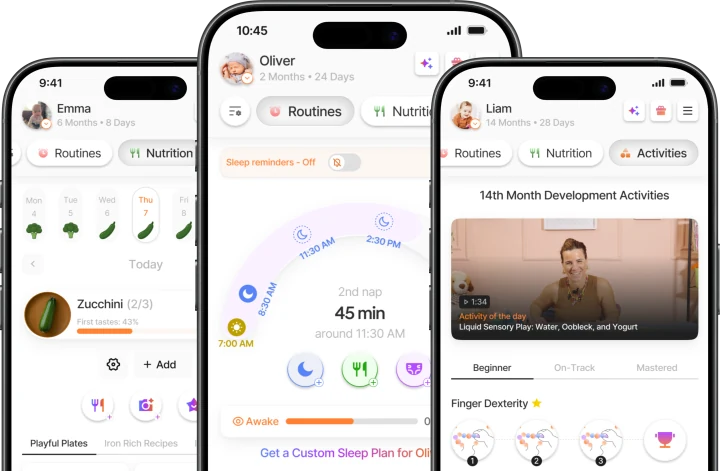
The most exciting development this month is your baby consciously beginning to smile while looking at your face. This social smile is the first step in their effort to communicate. If you want to add suitable activities to your daily routine and track developmental milestones more easily, you can use the milestone tracker and interactive content in the Yuppo app. If you are experiencing unexplained, prolonged crying spells, especially in the evenings, you can discuss signs of colic in babies with your doctor and try soothing techniques.
Summary and Next Steps
Sleep tracking: Pay attention so your baby's wake window does not exceed 90 minutes; start the sleep routine at the first sign of yawning or eye rubbing.
Feeding frequency: Continue feeding every 2-3 hours during the day; consult your pediatrician about whether you should wake a sleeping baby to feed.
Tummy time practice: Incorporate 3 to 5 minutes of short tummy time exercises into your routine every day after diaper changes by turning it into a game.
Parental rest: Try the dream feed method to see if you can align your baby's solid sleep block with your own bedtime.
When to Call the Doctor
Although babies' growth rates and behaviors vary, certain physiological signs should be evaluated by your pediatrician. While 2 to 3-hour crying spells are generally considered normal as the onset of colic, the following situations require contacting a doctor without delay:
A rectal temperature of 38°C (100.4°F) or higher in babies under 3 months.
The baby producing fewer than 5 wet diapers in 24 hours, or having very dark-colored urine.
Completely refusing to feed, or eating less than half of their normal amount for several consecutive meals.
Showing no response (like startling or jumping) to loud noises such as a door slamming or loud talking.
Not tracking moving objects or your face with their eyes, even briefly.
Noticeable yellowing of the skin or the whites of the eyes (signs of jaundice).
This content is for informational purposes only; always consult your pediatrician for diagnosis and treatment.
Coping with feelings of sleep deprivation and uncertainty during your baby's miraculous first months can be exhausting. Remembering that every baby's growth pace is unique and managing this process with compassion will make your parenting journey easier. On the Yuppo app, you can track your baby's developmental milestones weekly and receive age-appropriate activity and content suggestions. To feel like you have a guide by your side as you build your daily routines, you can try the Yuppo world for free. You can also gain detailed information about the next steps of this process by checking out our 3-month-old baby development article.
Frequently Asked Questions
What are 2 month old wake windows?
The ideal wake window between naps for a two-month-old baby is generally between 60 and 90 minutes. Exceeding this timeframe makes the baby overtired and makes falling asleep more difficult. A wake window includes feeding, burping, and a brief period of play.
How do you dream feed a 2 month old?
A dream feed involves gently picking up your baby around 10:00 PM to 11:00 PM and nursing or bottle-feeding them without fully waking them from deep sleep. This method extends the time before their next feed, providing parents with an uninterrupted sleep block.
How often should a 2 month old eat?
During the day, two-month-old babies typically need to eat every 2 to 3 hours, whether they are receiving breast milk or formula. At night, unless your doctor advises otherwise, this stretch can extend up to three or four hours.
How long is formula good for at room temperature?
Prepared formula can safely sit at room temperature for up to two hours if the baby has not yet touched the bottle. However, once the baby begins drinking from it, the remaining formula must be consumed within one hour to prevent bacteria from saliva from multiplying.
Why is my 2 month old crying so much? (Is it colic?)
In the second month, it is common for babies' crying times to increase to two or three hours a day. These crying spells, which often intensify in the evening, may be due to colic. If crying persists even when the baby's needs (hunger, clean diaper, sleep) are met, consult your pediatrician.
Do babies start social smiling at 2 months?
Yes, two-month-old babies generally begin to show their first conscious social smiles during this period, responding to the sounds and faces around them. This smile, done to communicate with you rather than as a reflex, is a major milestone in your baby's emotional and social development.
References
UNICEF. Your baby's developmental milestones at 2 months. https://www.unicef.org/parenting/child-development/your-babys-developmental-milestones-2-months
Mayo Clinic. (2025). Infant development: Birth to 3 months. https://www.mayoclinic.org/healthy-lifestyle/infant-and-toddler-health/in-depth/infant-development/art-20048012

Dr. Çiğdem İrem İleri
Developmental Psychologist
After graduating from Koç University in 2019 with a double major in Psychology and Media and Visual Arts, alongside track programs in Design, Gender Studies, and Media and Management, Çiğdem İrem İleri began her integrated doctoral studies in Developmental Psychology at the same institution that same year.