10-Month-Old Baby Development - Walking Steps and Language Development

This article is approved by Çiğdem İrem İleri
Published: 13 March, 2026
Updated: 30 July, 2026
At a Glance
10-month-old milestones usually involve preparing for first steps and combining syllables into first words.
Most babies start walking independently between 9 and 15 months, and each baby has a unique developmental pace.
During this period, a baby's daily sleep needs typically range between 12 and 14 hours.
Cognitive steps like separation anxiety and object permanence deeply affect how 10-month-olds communicate.
10-month-old development is an exciting period where your baby's mobility increases, communication with their surroundings strengthens, and they gain brand-new skills. This month, your baby will likely start cruising along furniture and chatting with you by combining syllables. For parents of children aged 0-6 who are constantly on the move, this period can be both fascinating and slightly challenging when it comes to things like a 10 month old sleep schedule. In this guide, you will learn how to confidently manage the signs of walking, milestones in baby language development 10 months, and sleep patterns.


What are the 10 month old milestones?
10 month old milestones usually include pulling up to stand by holding onto furniture, grasping small objects with the thumb and index finger, and understanding simple commands. During this period, babies experience a major physical and cognitive leap. They can get into a sitting position on their own and take a more active role in exploring their environment. Every baby's developmental path is unique; some may focus on motor skills and choose to be constantly in motion, while others might concentrate on communicating with their surroundings. These differences become increasingly evident starting from the 9-month-old milestones.
Motor skills: Standing and pulling up
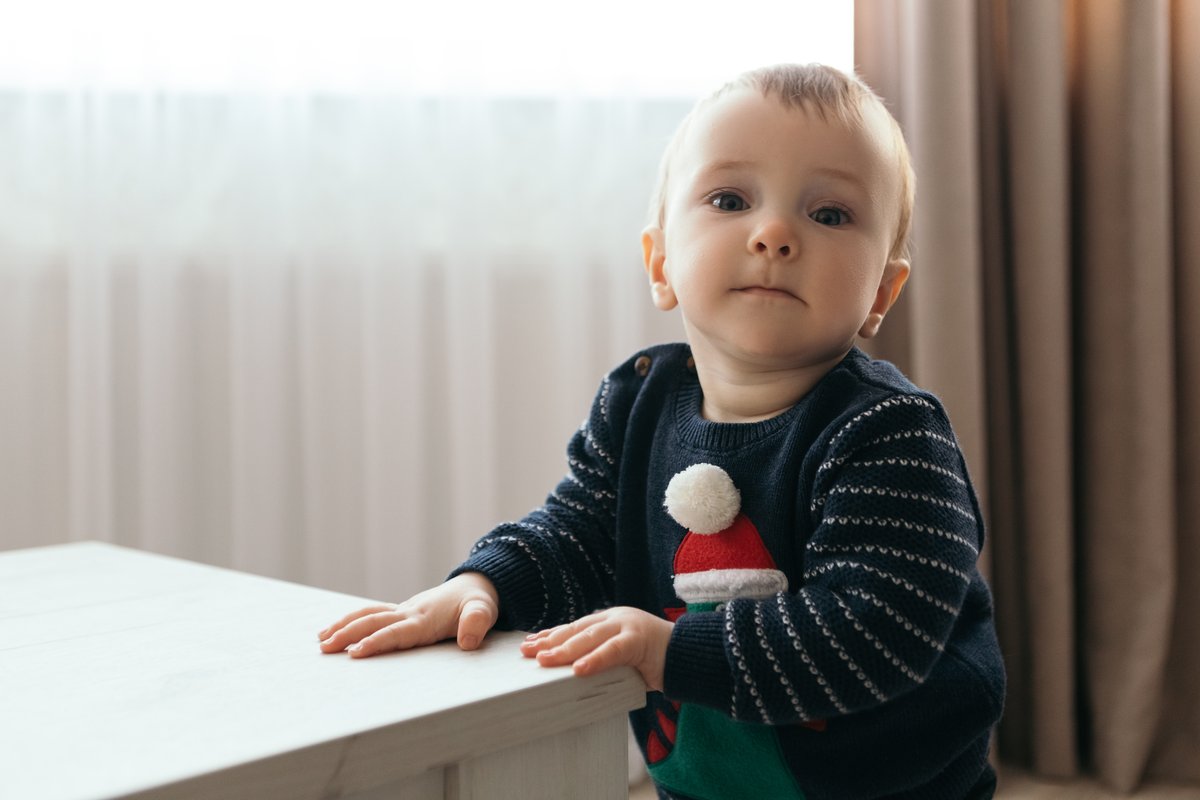
Motor skills in 10-month-olds manifest as pulling up to stand on furniture, cruising, and grasping small objects with a pincer grasp. As their gross motor skills develop, your baby's leg and core muscles strengthen to maintain balance. Standing with support is one of the most important preparatory stages for independent walking. Fine motor skills become apparent with the ability to skillfully hold tiny objects between the thumb and index finger. Thanks to this new skill, they can bring pieces of food to their mouths on their own and begin to gain autonomy.
Social and cognitive development
The social and cognitive development of 10-month-old babies is shaped by their grasp of object permanence and experiencing separation anxiety when away from their caregivers. Object permanence means knowing that a toy or parent out of sight still exists and hasn't disappeared. According to the American Academy of Pediatrics (AAP), this cognitive leap typically becomes prominent between 8 and 12 months, allowing babies to enjoy activities like hide-and-seek or peek-a-boo. At the same time, separation anxiety, which shows up as crying when you leave the room, is a completely expected and healthy sign of attachment during these months.
When do babies start walking and how can you support the process?
Babies typically begin to walk independently between 9 and 15 months, and this process is supported by providing them with plenty of floor time. Although most parents expect the first steps to happen exactly at 12 months, this timeline spans a wide range, and each baby waits for the moment they are ready. According to the World Health Organization (WHO) motor development standards, starting to walk without support by 18 months is considered a healthy range. What matters is that your baby has safe opportunities to strengthen their muscles at their own pace.
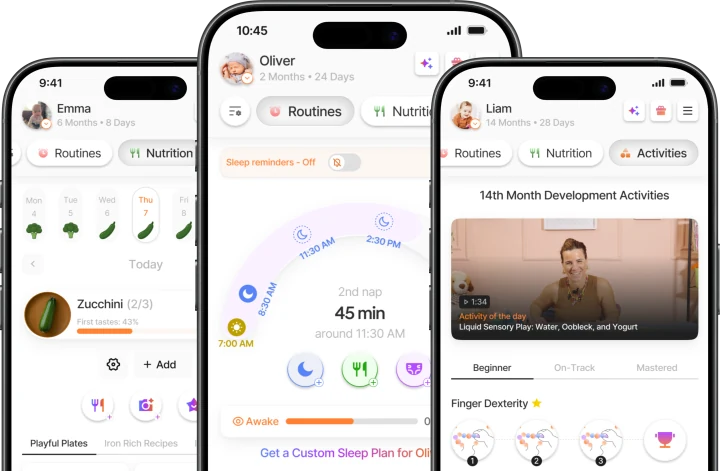
Tracking your baby's development/milestones on this exciting growth journey is easy with Yuppo, allowing you to see when they will be ready for the next motor skill phase.
Signs of readiness before walking
Signs of readiness before walking include the baby pulling up to stand using furniture, taking side steps with support, and standing unsupported for brief periods. Signs of walking in babies emerge slowly and through trial and error. Rising on their knees or trying to move forward by pushing heavy boxes during the crawling phase shows that they are beginning to establish their balance. These signs are physical proof that your baby is getting ready to carry their own weight on two feet.
Safe games on how to help baby walk
Safe games on how to help baby walk include placing desirable toys on the couch to encourage cruising and using push toys to help them balance. To encourage your baby to walk, creating a wide and safe play area on the floor is much more beneficial than using a baby walker. Experts state that walkers pose safety risks and can disrupt the natural walking process. You can playfully support their gross motor skills by adding back-and-forth ball-rolling games on the floor to your 10-month-old baby activities.
10 month old sleep schedule and dealing with sleep regression
A 10 month old sleep schedule can be affected by a temporary 10 month sleep regression, where night wakings increase due to the motor and cognitive leaps experienced in the 10th month. Your baby's brain is highly active throughout the night as they learn new skills, making it hard to settle down. A baby discovering how to stand or say new words might want to practice these skills even in their sleep. While this is exhausting, maintaining a consistent sleep routine helps your baby feel secure again and settle down comfortably.
Ideal daily sleep schedule
An ideal daily sleep schedule for 10-month-olds includes a total of 12-14 hours of rest, consisting of 10-12 hours at night and two short daytime naps. Around this age, babies usually need two daytime naps a day, one in the morning and one in the afternoon. Every baby's wake window (the time they can stay awake) averages between 3 to 4 hours. You can review the average month-by-month sleep needs for a 10-month-old baby in the table below:
Sleep Type | Average Duration | Daily Frequency |
|---|---|---|
Night Sleep | 10 - 12 hours | 1 continuous block (usually) |
Daytime Sleep | 2 - 3 hours (total) | 2 times a day |
Total Sleep Need | 12 - 14 hours | - |
The times in the table reflect average values; these durations can be flexible based on your baby's activity level during the day, fatigue, or processes like teething.
Baby language development 10 months: When do the first words come?
Baby language development 10 months is characterized by the baby babbling, combining meaningless syllables, and starting to direct sounds like "ba-ba" and "ma-ma" toward specific people or situations. Your baby's receptive language (capacity to understand what is said) develops much faster than their expressive language (speaking ability). For instance, they can grasp the meaning of the word "No" or look at the relevant object when you ask, "Where is your car?". The first meaningful words usually appear around 10 to 14 months.
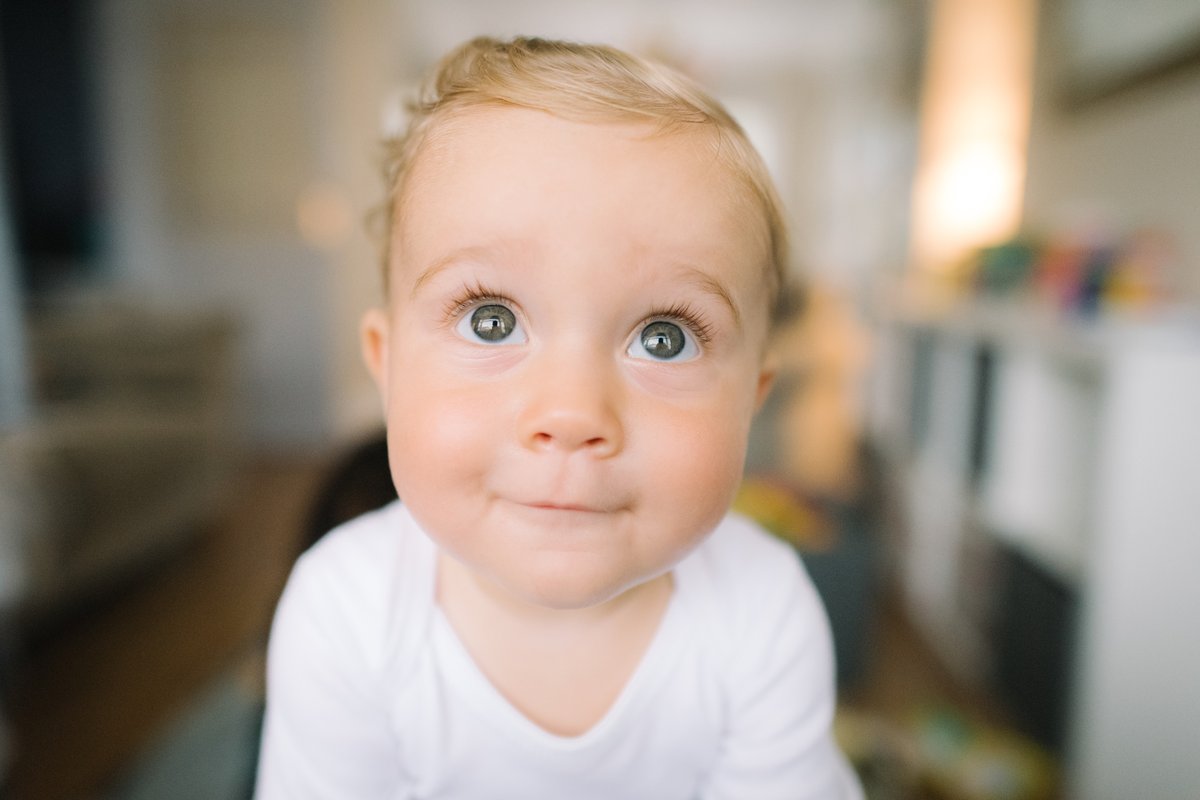
To naturally support your baby's language development, you can joyfully incorporate age-appropriate interactive stories, sounds, and musical content from the Yuppo app into your daily communication routine.
Summary and Next Steps
Support Motor Skills: Create a safe exploration area for your baby by padding sharp corners in the house so they can safely pull up and cruise.
Stick to the Sleep Routine: To cope with the 10 month sleep regression, persistently continue applying calming steps like a warm bath and reading a book before bed this week.
Strengthen Communication: Have plenty of conversations in your daily routine by imitating the sounds your baby makes and making frequent eye contact.
Show Understanding for Separation Anxiety: Instead of quietly disappearing when leaving the room, make them feel secure by saying you will be back shortly.
When to Call a Doctor?
While every baby has a unique pace of development, certain signs might warrant a consultation with a pediatrician. If you notice any of the following thresholds in your baby's development, it is a good step to consult your doctor:
If your baby is 10 months old and still cannot sit unsupported (most babies sit between 6-8 months; inability to sit after 9-10 months should be evaluated).
If they show no effort to move around in any way (crawling, bottom shuffling, or rolling).
If they do not respond to sounds or produce any syllables (like ba, ma, da).
If they do not use both hands equally and constantly prefer one side (only right or only left hand).
If they consistently avoid making eye contact and do not show a social smile.
This content is for informational purposes only; always consult your pediatrician for diagnosis and treatment.
Closely tracking critical milestones like your baby's first steps, sleep, and language development starts with accurately understanding their needs during this process. On the Yuppo app, you can monitor your baby's developmental steps weekly, use the percentile calculator, and easily access expert-approved activity recommendations tailored to their age.
Try Yuppo for free to feel more equipped as a parent on this developmental journey and safely support your baby's potential. You can also gain detailed information about the following of your baby’s development by checking out our 11-month old baby development article.
Frequently Asked Questions
How many words should a 10 month old say?
A 10-month-old usually doesn't form clear words yet, but starts consciously using 1 to 3-syllable sounds like "ba-ba" and "ma-ma". Every baby's language development is different; while some may say their first word around this time, others might prefer to communicate solely by babbling until 14 months.
Should I worry if my 10-month-old isn't crawling yet?
Instead of worrying if your 10-month-old isn't crawling yet, you should observe if your baby uses other methods to move. Some babies prefer bottom shuffling or directly pulling up to stand rather than classic crawling. The important thing is that they are moving around to explore their surroundings.
When do most babies walk independently?
Most babies walk independently within a broad timeframe between 9 and 15 months. Taking the first steps varies depending on the baby's muscle strength, genetics, and temperament. Beginning to walk unsupported by 18 months is generally considered a healthy part of the normal developmental process.
How many hours should a 10 month old sleep schedule include?
A 10 month old sleep schedule should include an average of 12 to 14 hours of sleep per day. This usually consists of 10 to 12 hours of uninterrupted nighttime sleep, while the remaining 2 to 3 hours are divided into two separate short naps during the day.
How long does the 10 month sleep regression last?
The 10 month sleep regression usually lasts between 2 and 4 weeks, depending on the acquisition of new motor and cognitive skills. Frequent night wakings and refusing daytime naps are common during this period. When a consistent routine is maintained, babies return to their natural patterns shortly.
Do baby walkers help babies walk faster?
Using baby walkers does not speed up walking; on the contrary, experts say it can delay the walking process by making it harder to establish independent balance. Because it encourages toe-walking, it can negatively impact muscle development, and since it poses serious safety risks, its use is generally not recommended by experts.
References
World Health Organization. (2006). Windows of achievement for six gross motor development milestones. https://www.who.int/tools/child-growth-standards/standards/motor-development-milestones

Dr. Çiğdem İrem İleri
Developmental Psychologist
After graduating from Koç University in 2019 with a double major in Psychology and Media and Visual Arts, alongside track programs in Design, Gender Studies, and Media and Management, Çiğdem İrem İleri began her integrated doctoral studies in Developmental Psychology at the same institution that same year.