8-Month-Old Baby Development - Crawling, Activities, and Sleep

This article is approved by Çiğdem İrem İleri
Published: 12 March, 2026
Updated: 30 July, 2026
At a Glance
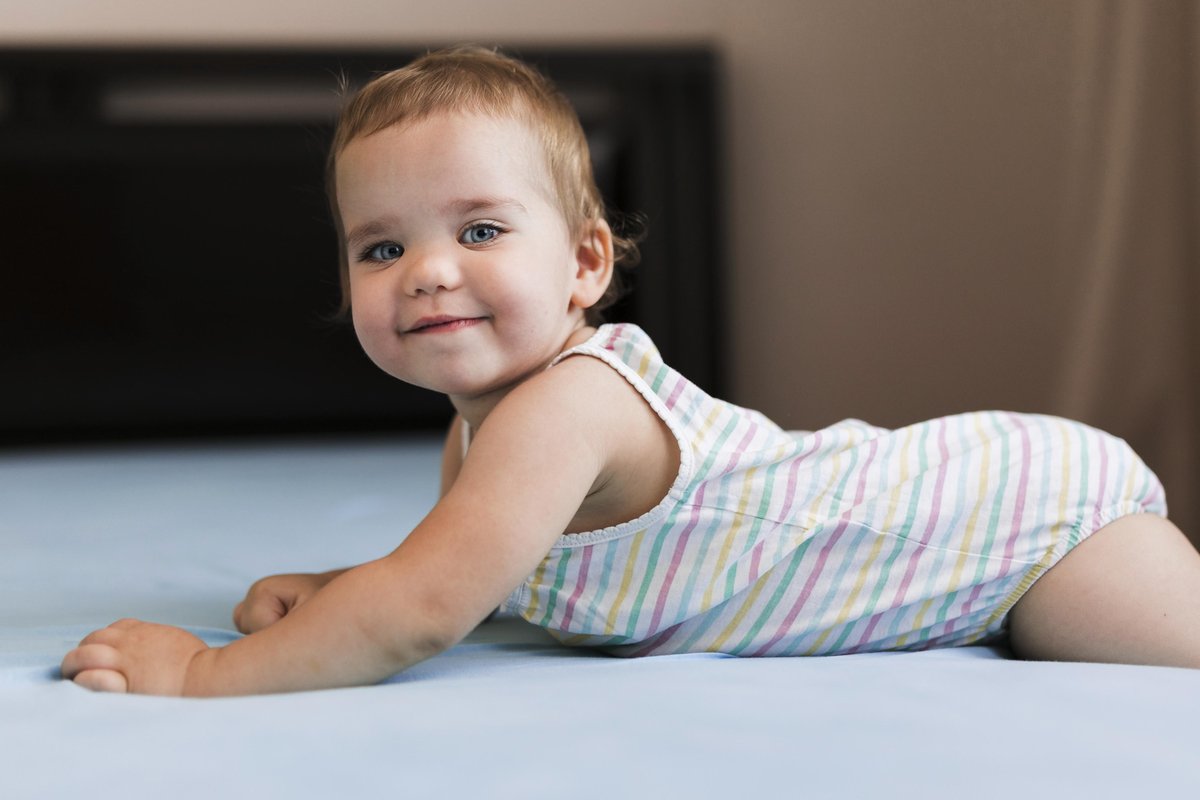
Most 8-month-olds can sit unsupported and usually start showing signs of crawling at their own pace between 7 and 10 months.
During this period, a baby's total daily sleep requirement is typically between 12 and 14 hours.
Separation anxiety, a part of cognitive development, becomes more noticeable around 8 months; your baby crying when you leave the room is a healthy sign of development.
As wake windows lengthen, activities that support object permanence, like peek-a-boo, accelerate mental development.
8-month-old baby milestones mark a dynamic period where your baby becomes more mobile, increases communication with their surroundings, and gradually begins to explore their independence. This is a time when your 8-month-old perceives the world from an entirely new angle. For parents excitedly watching their child become more active by the day but also feeling tired due to changing sleep patterns, this guide covers everything you need to know—from the crawling journey and sleep schedules to separation anxiety and activities that support development.


What Does an 8-Month-Old Do? Physical and Social Milestones
8-month-olds can generally sit unsupported, pass objects from one hand to the other, and recognize familiar faces by establishing more conscious social interactions with their environment. The time it takes to reach these 8 month milestones varies for every baby. Some babies choose to be constantly in motion during this period, while others prefer to carefully observe their surroundings and process information cognitively. What matters most is that your baby progresses on their own natural developmental curve.
Changes in fine and gross motor skills
Motor skill changes this month include your baby pivoting around, trying to grasp small objects with their thumb and index finger (pincer grasp), and attempting to pull to a stand using furniture. Gross motor development accelerates as the large muscle groups in the arms and legs strengthen. Fine motor skills mostly involve movements requiring hand-eye coordination, like banging two toys together or visually tracking a dropped object. The fact that your baby tries a new movement every day is proof that their nervous system is developing at a wonderful pace.
Separation anxiety and social interaction
Separation anxiety and social interaction emerge as the baby begins to understand the concept of "object permanence," reacting with worry when a parent leaves their line of sight. According to the American Academy of Pediatrics (AAP), the onset of separation anxiety between 8 and 12 months is a completely healthy sign of cognitive development. Your baby now knows that you don't disappear entirely when you leave the room, but since their perception of time isn't fully developed, they can't grasp when you will return. Calling out to them during these moments can reinforce the bond of trust between you.
When Do Babies Crawl and How to Support the Process?
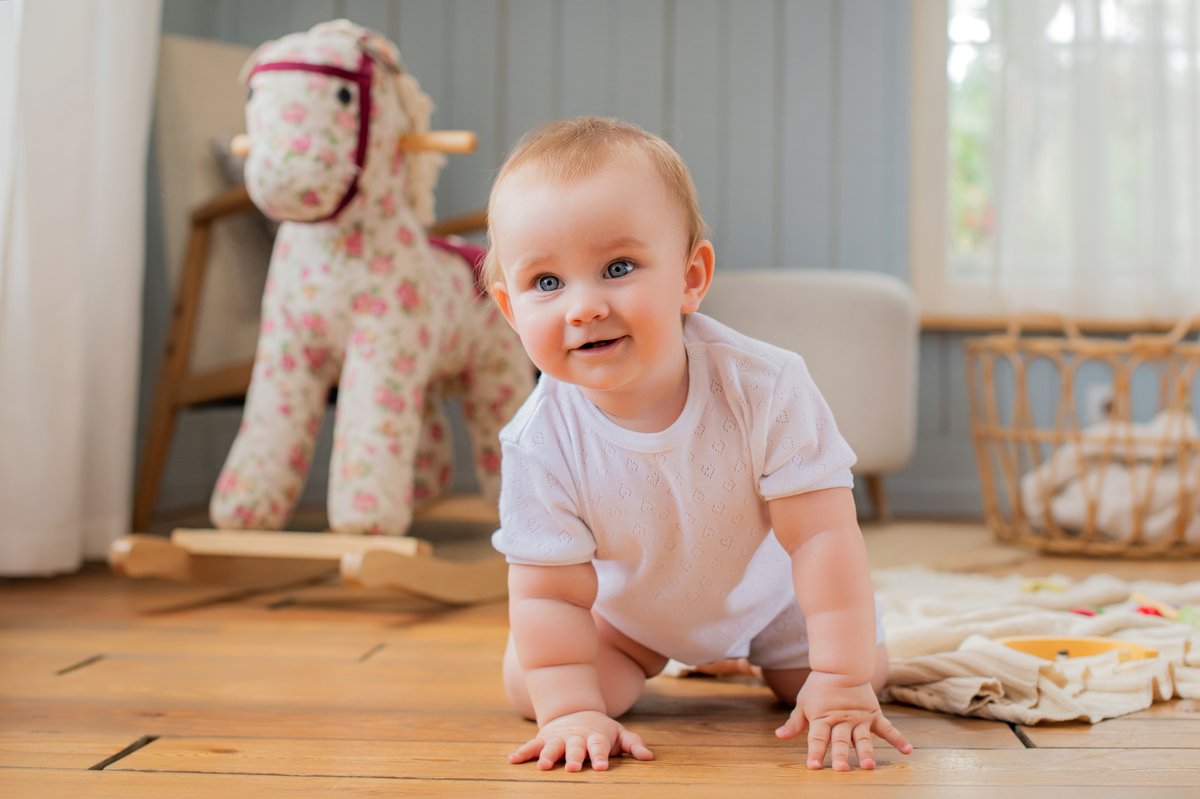
The majority of babies start crawling between 7 and 10 months using a method they determine themselves, and parents can encourage this process by placing safe toys on the floor. "When do babies start crawling" is one of the most common questions parents research; however, crawling is not strictly tied to a specific month. Some babies attempt to stand up right away, while others may choose to roll around on the floor for months. You can learn more about the nature of this process in our crawling guide.
Different crawling styles
Different crawling styles seen among babies include commando crawling, moving backward, classic hands-and-knees crawling, or scooting on their bottoms. If your baby doesn't use the classic method, it doesn't mean there is a problem. They discover how to balance their body weight on their own. Often, babies may start crawling backward at first because their arms are stronger than their legs.
The importance of tummy time
Tummy time is critical for physical development as it strengthens the baby's neck, shoulder, and back muscles, laying the foundation for gross motor movements like crawling and sitting. Having your baby spend short periods on their tummy a few times a day when they are awake and happy prepares them physically for independence. Placing a favorite toy just out of reach while they are on their tummy is the most natural way to encourage them to move.
8-Month-Old Sleep Schedule and 8-Month Sleep Regression
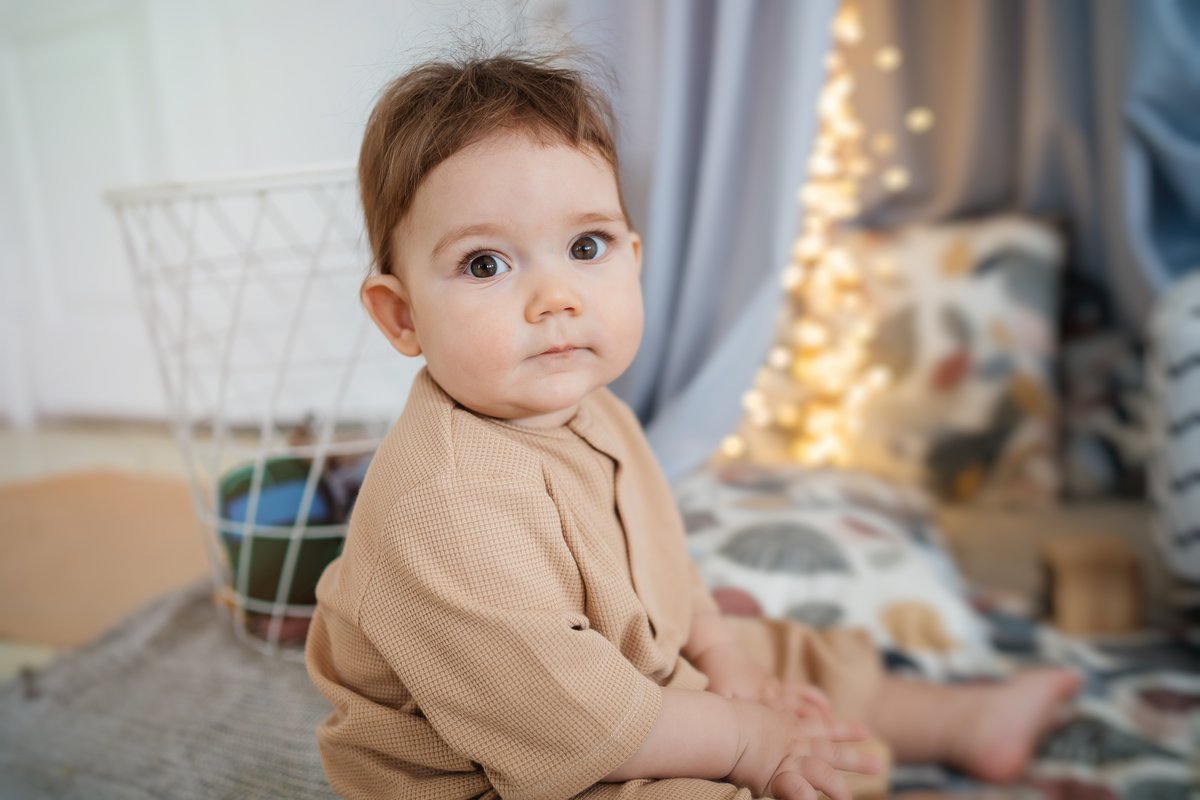
The sleep schedule for 8-month-olds typically consists of a 12 to 14-hour cycle, with 10-12 hours at night and two or three daytime naps. This month is a period where sleep can be frequently disrupted because your baby wants to practice the new motor skills they acquired during the day in their crib at night. While these fluctuations in sleep cycles may tire you, they are a sign that your baby's brain is actively processing new information.
Ways to cope with the 8-month sleep regression
The most effective ways to cope with the 8-month sleep regression include maintaining a consistent sleep routine, putting the baby to bed before they are overtired, and avoiding overstimulation during night wakings. Sudden leaps in motor skills and separation anxiety are the primary causes of this regression. This is a temporary phase and, while it varies from baby to baby, it lasts an average of 2 to 6 weeks. Calming your baby with a soft tone of voice without taking them out of their crib during night wakings makes the process easier.
Daytime nap schedule and night routine
The baby's daytime naps are generally divided into total blocks of 2-3 hours in the morning and afternoon, while the night routine should include calming steps like a bath, massage, and reading a book. This 8 month old sleep schedule takes its ideal form when wake windows are kept between an average of 2.5 and 3.5 hours. If you are wondering how to plan sleep times according to your baby's cues, you can check our baby sleep schedule guide.
8-Month Activities to Support Development
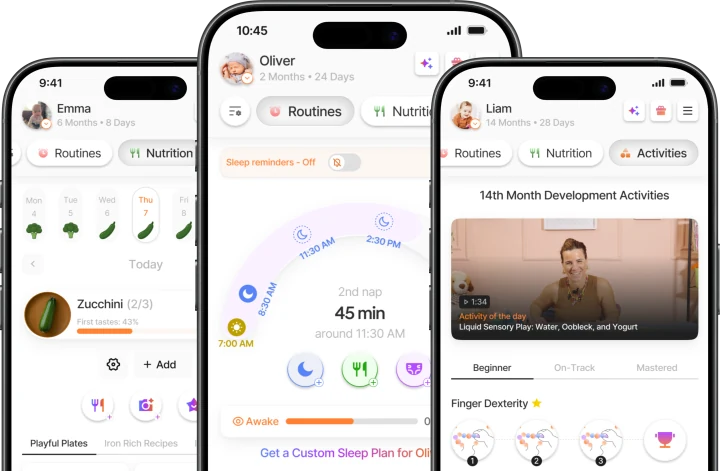
Development-supporting activities specific to this month include activities that combine motor and cognitive skills, such as hide-and-seek, peek-a-boo, exploring objects with different textures, and rolling a ball back and forth. Play is the most important tool through which babies learn about the world, cause-and-effect relationships, and communication. The World Health Organization (WHO) recommends that babies spend active, screen-free, and interactive time with their parents while awake. If you are wondering which activities to play to support your baby's age-specific cognitive abilities, you can track your baby's development on Yuppo and access over 10,000 mini-games and daily interactive story recommendations tailored to their pace.
When to Seek Professional Advice During Development?
If your baby is approaching 9 months and cannot sit unsupported, does not respond to sounds, or is reluctant to reach for toys, you should seek professional advice from a pediatrician. Every baby's pace of reaching milestones is unique; therefore, differences of a few weeks are generally considered normal. However, if your baby stops communicating with their surroundings or loses a previously acquired skill, trusting your instincts and consulting a specialist is the healthiest step.
Summary and Next Steps
Sleep schedule: Stick to your current sleep routines during the 8-month sleep regression, and respond to your baby's night wakings in a calm, dimly lit environment.
Physical development: To support the crawling process, ensure your baby gets tummy time in a safe area while awake and place their favorite toys around them.
Social and emotional bond: Instead of sneaking out of the room when they experience separation anxiety, establish a short and consistent goodbye routine by talking to them.
Playtime: Support cognitive development by playing peek-a-boo in short intervals every day to help them grasp object permanence.
When to See a Doctor?
If you observe any of the following symptoms, it is recommended to consult your pediatrician without delay:
High fever: Body temperature exceeding 38.5°C (101.3°F) in babies older than 3 months and not decreasing within 24 hours despite the appropriate use of fever-reducing medication.
Refusal to feed: Significant fluid refusal lasting longer than 24 hours and dry diapers (suspected dehydration).
Breathing and sleep: Pauses in breathing during night sleep, chest retractions, or abnormal wheezing.
Physical signs: Constant stiffness in muscles, not using a single limb at all, or the body being completely floppy (hypotonia).
This content is for informational purposes only; always consult your pediatrician for diagnosis and treatment.
Parenting during the developmental journey can sometimes seem complex and exhausting, but when you have the right information, the process becomes much safer and more enjoyable. To closely track your baby's physical, mental, and sleep changes at 8 months, you can use a digital assistant.
With the Yuppo app, you can track your baby's developmental milestones weekly, monitor their growth curve with the percentile calculator, and get age-appropriate activity recommendations; plus, you can try it for free. You can also gain detailed information about the next steps of your baby’s development by checking out our 9-month-old baby development article.
Frequently Asked Questions
Why won't my 8-month-old sleep?
8-month-olds often struggle to sleep due to the excitement of new motor skills, leaps in brain development, teething pain, or the 8-month sleep regression brought on by separation anxiety. During this temporary phase, your baby may wake up frequently at night or resist daytime naps.
At what age do babies usually start crawling?
Most babies begin crawling in their own style between 7 and 10 months on average, once their muscle development reaches a sufficient level. Some babies may prefer scooting over classic crawling, or skip the crawling phase entirely and attempt to pull to a stand.
How much should an 8-month-old weigh?
The weight of an 8-month-old girl typically ranges from an average of 7 to 9.5 kg (15.4 to 20.9 lb), while boys average between 7.5 and 10 kg (16.5 to 22 lb). Since every baby's birth weight and genetics are different, the percentile curve tracked by your doctor is the most accurate indicator.
How long does the 8-month sleep regression last?
The 8-month sleep regression generally lasts between 2 and 6 weeks, depending on the baby's developmental pace and sleep habits. Maintaining consistent sleep routines and balancing the baby's daytime wake windows helps get through this process faster.
Can my baby walk without crawling?
Yes, some babies skip the crawling phase entirely and transition directly from a sitting position to pulling up to stand and walking. Not crawling does not indicate a developmental issue; what truly matters is that the baby is in motion to explore the world around them in some way.
What games does an 8-month-old play?
8-month-olds play interactive games like peek-a-boo where they grasp cause and effect, passing objects back and forth, banging noisy toys together, and water play. Allowing them to touch different textures during this period supports their sensory development.
References
American Academy of Pediatrics. (2024). Movement: 8 to 12 Months. HealthyChildren.org. https://www.healthychildren.org/English/ages-stages/baby/Pages/Movement-8-to-12-Months.aspx
American Academy of Pediatrics. (2022). Crawling Styles. HealthyChildren.org. https://www.healthychildren.org/English/ages-stages/baby/Pages/Crawling-Styles.aspx
World Health Organization. (2019). Guidelines on physical activity, sedentary behaviour and sleep for children under 5 years of age. WHO. https://www.who.int/publications/i/item/9789241550536

Dr. Çiğdem İrem İleri
Developmental Psychologist
After graduating from Koç University in 2019 with a double major in Psychology and Media and Visual Arts, alongside track programs in Design, Gender Studies, and Media and Management, Çiğdem İrem İleri began her integrated doctoral studies in Developmental Psychology at the same institution that same year.