4-Month-Old Baby Development - Senses, Movement, and Sleep

This article is approved by Çiğdem İrem İleri
Published: 11 March, 2026
Updated: 30 July, 2026
At a Glance
4-month-old baby development is a significant transition period where sleep stages change and physical mobility increases.
Most babies begin to show their first signs of rolling over between 4 and 6 months of age.
For safety reasons, swaddling should be stopped when the baby shows signs of rolling over, or by the fourth month at the latest.
The 4 month sleep regression typically lasts 2 to 6 weeks and is a natural result of your baby transitioning to adult-like sleep cycles.
As your baby enters their fourth month, the calm newborn days of the first few weeks give way to a much more engaged and active phase. For many tired parents, 4-month-old baby development brings new questions as sleep patterns suddenly change and physical activity increases. In this guide, we will explore the dynamics of this special month with scientific foundations, from understanding your baby's changing sleep cycles to their feeding needs, rolling attempts, and the swaddle transition process.


4-Month-Old Baby Development Milestones: When Do Babies Start Rolling Over?
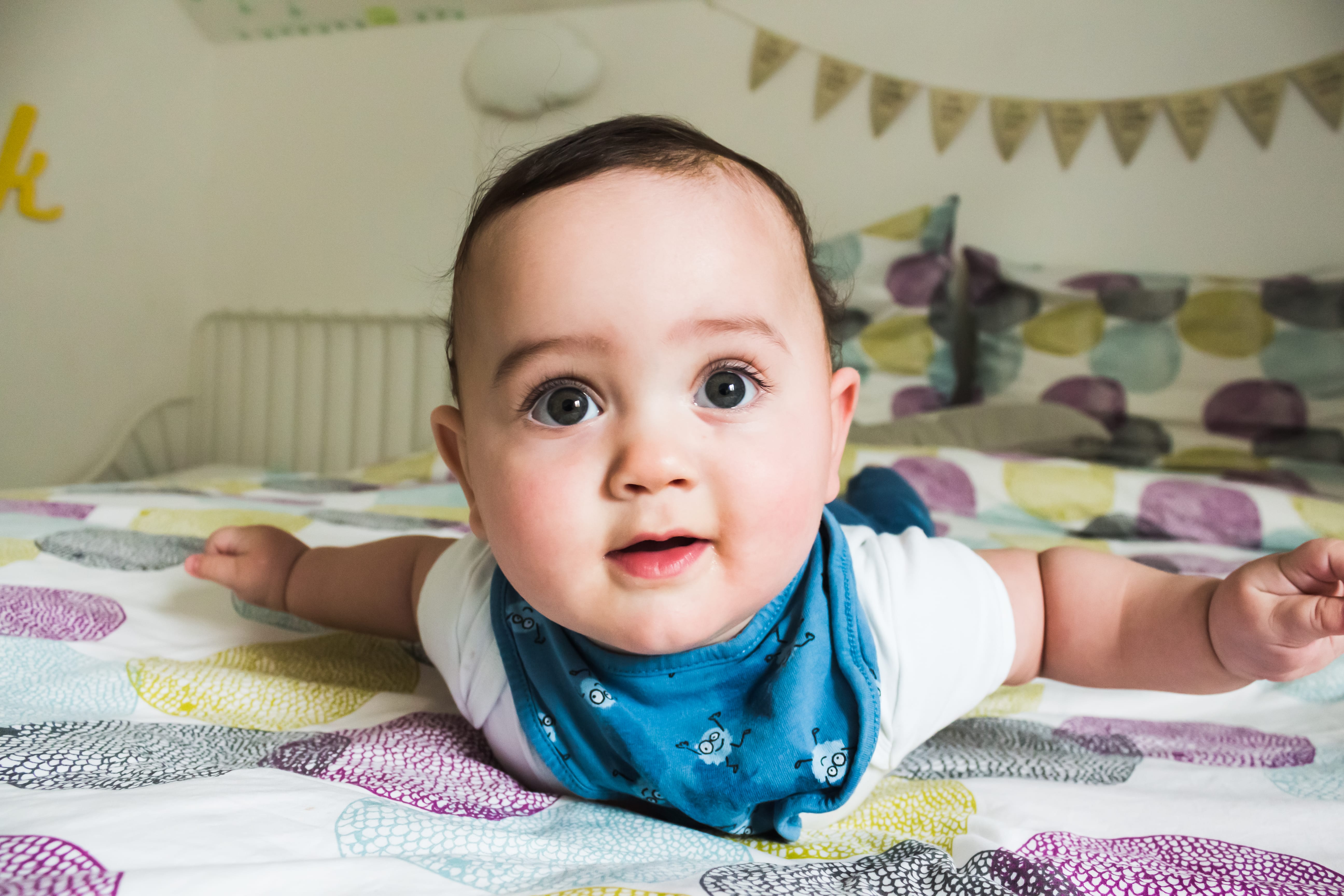
Babies typically start rolling from their stomach to their back or vice versa between the fourth and sixth months, as their neck and shoulder muscles become sufficiently strong. This process does not happen exactly the same way for every baby; some may only attempt to tip over to the side during these weeks, while others might discover the rolling movement a bit later. During these months, your baby's desire to examine the world around them increases, and they gradually begin to take control of their own body.
The Importance of Tummy Time
Tummy time practices, when done for a few minutes several times a day on average, support the rolling milestone by strengthening the baby's neck, shoulder, and back muscles. The American Academy of Pediatrics (AAP) recommends daily tummy time activities when babies are fully awake and under parental supervision. If your baby does not enjoy this position at first, you can make the practice fun by keeping the duration short, placing them on your chest, or using a mirror to capture their attention.

Gross Motor Skills: Rolling and Supported Sitting
Gross motor skills during this period include the baby's attempts to roll over and short sessions of sitting practice, usually with supportive pillows. Around the fourth month, your baby can lift their chest off the floor by supporting themselves with their arms and make pushing movements with their legs. Expecting them to sit up unassisted is still early for this month; the answer to the question of when babies sit up generally becomes clearer around the sixth month. The important thing is to create safe spaces on a play mat where your baby can move around.
The 4 Month Sleep Regression and What the New Sleep Schedule Should Look Like
The 4 month sleep regression occurs because the baby's brain is transitioning into adult-like sleep stages (light and deep sleep), and this process usually lasts between two and six weeks. While babies go straight into deep sleep during the newborn period, their sleep cycles change starting this month. This situation can cause hourly night wakings or shorter daytime naps. Although this seems like a regression, it is actually an important indicator that your baby's brain is developing healthily.
Sleep Cycle Changes and Night Wakings
The change in sleep cycles means it becomes harder to transition into deep sleep and the time spent in light sleep increases; this leads to frequent night wakings in a 4-month-old's sleep schedule. The hormone melatonin, which increases in production at night, begins to shape the baby's sleep rhythm. However, at the end of each cycle—which lasts about 40-45 minutes—the baby enters light sleep and may look for the conditions under which they initially fell asleep (such as being held or nursing). While getting through this 4 month sleep regression period, establishing a calming bedtime routine helps smooth the process.
Sleep Type | Average Duration Needed (4th Month) | Tips for Parents |
|---|---|---|
Total Daily Sleep | 14 - 15 hours | Try to catch the baby's tiredness signs before they start yawning. |
Nighttime Sleep | 10 - 12 hours (May be broken) | Support the transition back to sleep during night wakings by keeping the room dim and quiet. |
Daytime Sleep (Naps) | 3 - 4 hours (Usually 3-4 separate naps) | Have daytime naps in a calm room that is not overly bright. |
*The sleep hours stated in the table are average values; every baby's sleep needs can show minor individual differences.

Is It the Right Time for Sleep Training and the Ferber Method?
For approaches like sleep training and the Ferber method, which aims for the baby to fall asleep on their own by crying it out, most pediatricians generally find it more appropriate to wait until the sixth month. The fourth month is a sensitive period where the baby is trying to adapt to their new sleep architecture. At this stage, instead of strict sleep training, trying gentler soothing techniques—like putting the baby to bed before they are overtired and patting them with a "shh" sound—can make the transition to sleep easier.
Swaddle Transition Guide: How to Move to Free Arms?
When babies show their first signs of rolling over, or when they reach the fourth month, it is necessary to stop full swaddling for safety and transition to sleep sacks where the arms are free. If a swaddled baby rolls onto their stomach, they will not be able to use their arms to lift their head, which can lead to blocked airways. To reduce the risk of Sudden Infant Death Syndrome (SIDS), babies with the potential to roll must have their hands and arms free in bed.
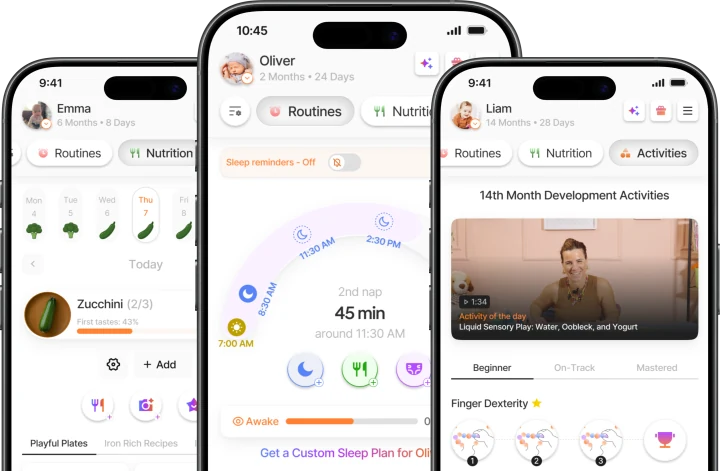
Making this transition suddenly can affect the baby's sleep quality, so you can follow a gradual approach by first leaving one arm out of the swaddle. After a few days, you can take the other arm out and switch to fully free sleep sacks. You can record and track your baby's developmental milestones, such as the rolling milestone, via the Yuppo app, gaining insight into which habits you should change and when.
4-Month-Old Baby Feeding Chart: Breastmilk and Formula Amounts
In a 24-hour period, 4-month-old babies generally need to be fed five to six times in total, with an average of 120 to 180 ml (4 to 6 fl oz) per feeding. The World Health Organization (WHO) recommends that for healthy development, babies be fed exclusively breastmilk—or formula if medically necessary—for the first six months. At this stage, the baby's digestive system is not yet mature enough to start solids.
Feeding Type | Feeding Frequency (Average) | Amount (Per Feeding) |
|---|---|---|
Breastmilk | Every 3 - 4 hours | On demand (Avg. equivalent to 120 - 180 ml / 4 - 6 fl oz) |
Formula | Every 3 - 4 hours | Usually 120 - 180 ml (4 - 6 fl oz) |
*These values provide a general framework; your baby's growth curve and your doctor's recommendations are always the priority.
Feeding intervals occur on average every three hours during the day, while this period can be longer at night for some babies. Noticing your baby's hunger cues (bringing their hands to their mouth, rooting) and feeding them before they start crying helps reduce gas pains and fussiness.

When to Consult a Specialist During the Developmental Process?
Situations such as your baby not responding to loud noises, not being able to hold their head steady while lying on their stomach, or not tracking moving objects with their eyes in the fourth month are developmental signs that warrant a consultation with a pediatrician. Although every baby's developmental timeline is different, certain basic motor and sensory skills are expected to be observed within specific ranges. It is best to seek a medical evaluation if your baby lacks a social smile in your daily routines or if you notice constant stiffness in their arms or legs.
Summary and Next Steps
Preparation for the sleep regression: Accept that frequent night wakings are temporary and start establishing a calming bedtime routine (warm bath, massage) this week.
Tummy time practices: Organize short tummy time play sessions during your baby's awake times, totaling up to 15-20 minutes a day.
Swaddle transition: If your baby is showing signs of rolling over, start the swaddle weaning process tonight by leaving one arm out.
Feeding tracking: The baby should continue to be exclusively fed with breastmilk or formula; discuss the six-month plan with your doctor before offering water or solids.
When to Contact a Doctor?
Contact your pediatrician without delay if you observe any of the following:
An armpit temperature of 38°C (100.4°F) or higher in babies aged 3 to 6 months.
The baby has not wet a diaper in more than 6-8 hours (a sign of dehydration).
Eyes crossing, staring at a fixed point for a long time, or lacking a startle response to environmental sounds.
A tendency to use hands or arms on only one side, or not moving one side of their body.
Continuous, inconsolable high-pitched crying spells.
This content is for informational purposes only; always consult your pediatrician for diagnosis and treatment.
As your baby reaches their fourth month, their growth journey takes on a much more interactive dimension. Approaching the 5-month-old baby development stages, regularly tracking your baby's height, weight percentiles, and motor skill progress reduces parenting anxieties.
Thanks to the percentile calculator and development tracking features in the Yuppo app, you can observe your baby's age-specific milestones weekly and easily access play and activity suggestions suited to their temperament. You can also gain detailed information about the next steps of your baby’s development checking out our 5-month-old baby development article.
Frequently Asked Questions
Why does a 4-month-old suddenly wake up frequently at night?
The sudden night wakings at four months happen because the baby's sleep cycles are dividing into light and deep sleep stages, similar to adults. During this transition, a baby who wakes up between sleep cycles struggles to fall back asleep on their own and needs parental support.
Is swaddling dangerous when babies start rolling over?
When babies begin to develop the rolling milestone, full swaddling is dangerous because the arms are restricted in the face-down position, carrying a risk of blocking the airways. Most experts strongly recommend freeing the arms when signs of rolling begin.
How many hours should a 4-month-old baby sleep?
A 4-month-old baby generally needs around 14 to 15 hours of total sleep in a 24-hour period. An average of 10-12 hours of this time is allocated to nighttime sleep, while the remaining portion is distributed across three or four separate daytime naps.
Is the Ferber method safe for 4-month-olds?
Sleep training methods that involve crying, such as the Ferber method, are generally not recommended by pediatricians before the sixth month, considering the developmental characteristics and changing sleep cycles of 4-month-olds. Supportive soothing techniques should be preferred during this period.
Should a 4-month-old start solids?
Since a 4-month-old baby's digestive system is not yet sufficiently developed to process solid food, starting solids (complementary feeding) is generally not recommended unless there is a medical necessity. The primary nutrition for the first six months should solely be breastmilk or formula.
References
HealthyChildren.org. (2023). Back to Sleep, Tummy to Play. American Academy of Pediatrics. https://www.healthychildren.org/English/ages-stages/baby/sleep/Pages/Back-to-Sleep-Tummy-to-Play.aspx
Moon, R. Y., Carlin, R. F., & Hand, I. (2022). Sleep-Related Infant Deaths: Updated 2022 Recommendations for Reducing Infant Deaths in the Sleep Environment. Pediatrics, 150(1), e2022057990. https://publications.aap.org/pediatrics/article/150/1/e2022057990/188304/Sleep-Related-Infant-Deaths-Updated-2022

Dr. Çiğdem İrem İleri
Developmental Psychologist
After graduating from Koç University in 2019 with a double major in Psychology and Media and Visual Arts, alongside track programs in Design, Gender Studies, and Media and Management, Çiğdem İrem İleri began her integrated doctoral studies in Developmental Psychology at the same institution that same year.