6 Month Old Developmental Red Flags: What Parents Should Know

This article is approved by Çiğdem İrem İleri
Published: 30 July, 2026
Updated: 30 July, 2026

At a Glance
Babies gradually master skills between 4 and 7 months, including sitting with support, reaching for objects, and responding to familiar sounds.
Developmental red flags are neurological and motor signs indicating a baby may struggle to meet age-appropriate milestones.
If a 6-month-old cannot hold their head steady or fails to respond to sounds or eye contact, consulting a pediatrician is recommended.
Early milestone tracking helps recognize potential support needs in a timely manner.
Understanding 6 month old developmental red flags across motor, sensory, and social domains helps parents observe their baby's growth with confidence. Development is not a linear path; every child grows at their own unique pace. This guide is designed to help you understand key 6-month milestones and potential warning signs without anxiety. You can also explore general 6-month baby development for context on expected skills.


What Are the 6-Month Baby Milestones?
Milestones at 6 months reflect a baby's growing ability to adapt to their environment, spanning motor skills to social interaction. At this stage, babies begin exploring the world more actively.
As highlighted by the American Academy of Pediatrics (AAP), 6-month developmental milestones mark a turning point where physical strength meets mental awareness. The exact timing for displaying these skills varies between 4 and 7 months for each baby.
Motor and Physical Skills
Motor skills for 6-month-olds include maintaining full head control, pushing up on arms during tummy time, and reaching for items. Gross motor skills progress rapidly during this period.
According to the World Health Organization (WHO), most babies begin developing sitting balance, with or without support, between 5 and 8 months. Tummy time exercises strengthen back and neck muscles to support this transition. To learn more about sitting milestones, you can review when babies start sitting. For fine motor skills, babies may attempt transferring objects from one hand to the other.

Social and Emotional Responses
Social development in a 6-month-old manifests as smiling at familiar faces, chuckling, and interacting back and forth with caregivers. Babies at this age discover their voice and begin making babbling sounds.
Social interaction is one of the clearest indicators of neurological progress. A baby may smile at their reflection in a mirror, turn their head when their name is called, or respond actively to visual stimuli.
What Are Considered Red Flags in a 6-Month-Old?
The concept of 6 month old developmental red flags refers to potential warning signs in muscle tone, eye contact, and responses to environmental cues. These signs do not constitute a definitive diagnosis; rather, they suggest that a specialist evaluation is warranted.
When noticing signs of developmental delay in 6 months, staying calm and seeking expert advice is the best approach. Often, simple physical therapy guidance or minor home adjustments can accelerate progress.
Delays in Physical Movement
Neurological signs and gross motor delays in a 6-month-old may present as difficulty holding the head upright, or body muscle tone that feels excessively stiff or floppy.
A head that flops backward when lifted is a notable 6 month baby milestone concern regarding head control. Additionally, observe whether the baby struggles to move arms and legs freely while lying on their back, or shows a marked preference for using only one side of the body.
Communication and Sensory Warning Signs
A 6 month old not making eye contact or failing to turn toward sounds represents an important warning sign in sensory and social tracking.
If a baby at 6 months struggles to look at a caregiver's face, does not respond to smiles, or fails to startle or turn toward loud noises, a hearing and social development evaluation is recommended. To learn more about social interaction limitations, you can review early signs of autism.

The table below summarizes typical developmental milestones between 5 and 7 months alongside signs that may warrant professional evaluation:
Developmental Area | Typical Milestones (5–7 Months) | Signs Warranting Professional Evaluation |
|---|---|---|
Gross Motor | Holds head steady, sits with support | Struggles with head control, body appears floppy |
Fine Motor | Reaches for objects with both hands, brings items to mouth | Does not reach for objects, keeps hands tightly fisted |
Social / Sensory | Makes eye contact, turns to familiar voices | Avoids eye contact, does not respond to sounds |
Language / Communication | Makes vowel sounds, babbles | Makes no vocal sounds, remains unusually quiet |
These indicators serve as general reference points; each baby's muscle development and temperament mature at a unique pace.
Why Is Early Intervention Essential?
Early intervention during infancy helps minimize the impact of potential developmental delays, leveraging the brain's high level of neuroplasticity.
According to the World Health Organization (WHO), support provided during the first years of life when developmental differences are identified positively impacts long-term motor and cognitive skills. Minor hiccups in neurological steps can often be effectively addressed with appropriate exercises and guidance.
How Can You Support a 6-Month-Old's Development?
To foster development in a 6-month-old baby, regular tummy time, conversational interaction, and sensory play are recommended. One-on-one interaction builds your baby's sense of security and desire to learn.

Simple and effective home strategies include:
Daily Tummy Time: Practice short tummy time sessions several times a day while your baby is awake and supervised.
Interactive Babbling: Respond when your baby makes sounds, maintaining eye contact and singing songs.
Object Tracking: Move colorful, safe toys slowly side to side to encourage visual and head tracking.
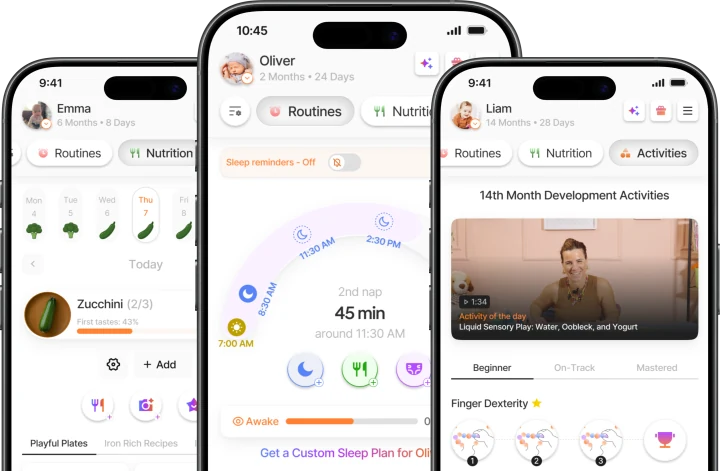
If you would like to explore activity ideas tailored to your baby's temperament and systematically log milestones, you can use the milestone tracking features in the Yuppo app.
When Should You Consult a Professional?
If you notice extreme muscle stiffness, persistent eye crossing, or a lack of response to sounds, consult your pediatrician promptly.
Parental instinct is valuable throughout developmental tracking. If you sense a difference in your baby's movements or responses to surroundings, bringing it up during routine wellness visits is the healthiest approach.
Summary and Next Steps
Motor Tracking: Support head control and trunk stability through daily tummy time exercises.
Social Communication: Maintain frequent eye contact and respond to your baby's vocalizations throughout the day.
Warning Signs: Keep note of observations such as not turning to sounds, avoiding eye contact, or marked muscle floppiness.
Pediatric Guidance: Stay in communication with your pediatrician regarding any developmental milestone concerns.
When to Call the Doctor?
Consult your pediatrician if your baby is older than 6 months and demonstrates any of the following:
Significant difficulty keeping the head upright, or the head falling back completely when picked up
Muscle tone that is persistently stiff or noticeably floppy
Not turning the head toward sound sources or failing to startle at loud noises
Avoiding eye contact with caregivers or showing little interest in human faces
Showing no effort to reach for objects, or keeping hands constantly in tight fists
A noticeable, persistent crossing of the eyes (strabismus)
This content is for informational purposes only; always consult your pediatrician for diagnosis and medical guidance.
Tracking your baby's motor and social milestones at their own pace brings peace of mind to your parenting journey. To monitor growth steps and discover age-appropriate activities, check out the Yuppo app to document your baby's journey with confidence.
Frequently Asked Questions
When do babies start sitting without support?
Most babies develop the ability to sit independently between 5 and 8 months. Not sitting at 6 months red flag concerns are usually unfounded if sitting upright with support is progressing well, but consult your pediatrician if trunk control is absent even with support.
My 6-month-old is not making eye contact, is this a problem?
A 6 month old not making eye contact or avoiding brief visual connection with caregivers warrants attention. If your baby consistently avoids eye contact or ignores faces, contact your pediatrician for a social and sensory evaluation.
Is it normal for a 6-month-old to struggle with head control?
By 6 months, babies are expected to have stable head control. Difficulty holding the head steady or having the head flop backward when lifted requires evaluation by a pediatrician to check motor and neurological progress.
What are signs of developmental delay in 6 months?
Signs of developmental delay 6 months into infancy include persistent muscle stiffness or weakness, lack of response to sounds, absence of eye contact, and lack of effort to reach for objects. These indicate a need for professional guidance.
What should I do if my 6-month-old does not respond to sound?
A 6-month-old should turn toward familiar voices or startle at sudden noises. If your baby shows no response to auditory stimuli, inform your pediatrician promptly so a formal hearing evaluation can be conducted.
References
Centers for Disease Control and Prevention. (2026). Milestones by 6 months. U.S. Department of Health & Human Services. https://www.cdc.gov/act-early/milestones/6-months.html

Dr. Çiğdem İrem İleri
Developmental Psychologist
After graduating from Koç University in 2019 with a double major in Psychology and Media and Visual Arts, alongside track programs in Design, Gender Studies, and Media and Management, Çiğdem İrem İleri began her integrated doctoral studies in Developmental Psychology at the same institution that same year.