Picky Eating: Helping Your Child Try New Foods

This article is approved by Yuppo Lab Pediatric Dietitian
Published: 25 August, 2026
Updated: 15 September, 2026

From Outcome-Driven Mealtimes to Process-Oriented Discoveries: Understanding Picky Eating in Children
Some feeding challenges in parenting don’t begin all at once. They gradually and quietly become the center of daily life. First, you say, “They didn’t want to eat this today.” Then the number of foods they refuse grows. Before long, meals revolve around the same few foods, negotiations begin before sitting down at the table, “Just take one more bite” becomes part of the routine, and constant worry about whether your child is eating enough becomes a natural part of mealtimes.


Picky eating is often about more than simply “not liking vegetables” or “being difficult.” Greater sensitivity to certain tastes, smells, textures, or appearances; avoiding new foods; and having trouble moving beyond familiar, trusted foods can all contribute. For parents, the hardest part is often that every meal becomes a test of both their child’s nutrition and their own sense of competence as a parent.
Let’s hear in her own words what a Yuppo mom who had been dealing with picky eating for a long time experienced:
“For us, food was never just about food. When my son was about 2 years old, I realized that some of the problems at the table had become habits. At first, I thought, ‘He’s a child. If he doesn’t want it today, he’ll eat it tomorrow.’ But over time, the list of foods he ate kept getting shorter. Pasta, bananas, a few kinds of crackers, sometimes meatballs… He had a few favorite foods, and moving beyond them seemed almost impossible.
When he saw vegetables, he would wrinkle his nose and push his plate away. If different ingredients were mixed into a dish, he would say, ‘No,’ before even tasting it. If the soup was a little lumpier one day, he would push it away with his tongue. At breakfast, seeing eggs or cheese made him want to run out of the kitchen. When I offered something new, he didn’t just refuse it. Sometimes he didn’t even want to come near the plate.
What tired me most was this: No matter how hard I tried, at the end of the day he had still eaten the same things. I kept thinking, ‘How will this child grow? Is he getting enough protein? Could he become iron deficient? Is he filling up only on carbohydrates?’ I didn’t want to pressure him, but I also couldn’t stand by and do nothing.”
Picky eating often begins between ages 1 and 2 and may continue until ages 5 or 6, or sometimes longer. During this period, many families fall into a similar cycle. As a child refuses certain foods, a parent’s worry grows. As the parent becomes more anxious, offers, pressure, and negotiations at the table increase. When the child feels this pressure, they may become even more resistant to unfamiliar foods. The table can then stop being a place where a child builds a safe relationship with food and become a place where everyone feels tense and caught in a struggle.
Interpreting a child’s behavior simply as “being defiant” or “spoiled” is often an inaccurate way to look at picky eating. Some children are more cautious about new tastes. Some may be bothered by mixed dishes, strong smells, lumpy textures, or foods touching one another. Others may have trouble approaching a food again after a negative experience. Understanding picky eating means looking not only at what a child eats, but also at what they resist, how they resist it, and why.

The Yuppo mom describes this difficult situation:
“For a while, I started feeling tense even before mealtime. As soon as I walked into the kitchen, I would think, ‘What will he eat today?’ I knew he wouldn’t eat if I prepared something different. But if I served the same foods again, I felt guilty that he wasn’t getting enough nutrition. When we sat at the table, he would glance at his plate, but if he saw something he didn’t want, he would immediately pull away.
Sometimes I tried hiding other foods inside the ones he liked just to get him to eat. I grated cheese into meatballs, added vegetables to pancakes, and changed the texture of soup. But most of the time, he noticed. Once he did, he started refusing not only that meal but also foods he had previously enjoyed. That scared me even more. I wondered, ‘Am I breaking his trust?’
Comments from other people also wore me down emotionally. Someone said, ‘He’s so skinny. Maybe he doesn’t like your cooking?’ Someone else said, ‘You focus on him too much. You’re spoiling him, so that’s why he acts this way.’ Hearing, ‘Our child eats everything,’ especially hurt. I felt as though the whole situation was my fault. But all I wanted was for my child to eat healthfully.”
When a child is a picky eater, the parent’s intention is usually easy to understand: They want their child to grow, become stronger, and benefit from a range of foods. But some well-intentioned strategies—such as forcing, tricking, hiding foods, using rewards to get a child to eat, or insisting that they finish their plate—may get a few extra bites in the short term while making the child’s relationship with food more stressful over time.
What helps at this point is not trying to turn a child into someone who suddenly “eats everything.” It is helping them take small, sustainable, pressure-free steps that gradually expand their comfort zone. Rather than dismissing the foods a child accepts, build from them and introduce new tastes, smells, and textures gradually.
That was exactly when Yuppo entered this mother’s life:
“I discovered Yuppo at the exact moment I thought this problem would never be solved and that my son would always be an extremely picky eater. Through the app’s nutrition module and expert content, I understood that his reactions, which had been going on for months, were picky eating related to visual, tactile, smell, and taste sensitivities. He wasn’t being difficult. Those textures and smells were simply too much for his sensitive nervous system.
That was what relieved me most when I found Yuppo: understanding that my son’s behavior wasn’t just ‘defiance.’ The app’s expert content helped me see that picky eating can often be related to sensory sensitivities and sometimes to a need for control.
Until then, I had focused only on the outcome: Did he eat or not? How many bites did he take? Did he finish his plate? Yuppo taught me to look at the process. Looking at a food, touching it, smelling it, allowing it to stay on his plate, touching a small piece to his tongue… I realized that all of these were steps.
We started by reducing pressure at the table. I tried not to say, ‘Just one more bite.’ I put a small amount of a new food next to something he liked, but I didn’t insist that he eat it. For example, I placed a small piece of cooked carrot next to his pasta. At first, he only looked at it. Then he picked it up. Later, he smelled it. In the past, I would have said, ‘Come on, eat it already.’ This time, I remembered Yuppo’s suggestions and simply let him touch and smell it.”

Progress with picky eating is rarely linear. A child may touch a food today and refuse it again tomorrow. They may accept a food one week and not want it another day. These ups and downs do not mean the process has failed. What matters is continuing to offer safe, repeated, pressure-free contact with food.
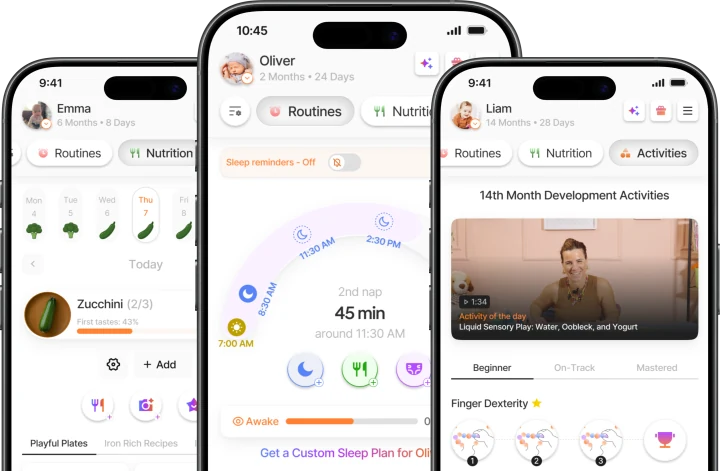
Yuppo’s nutrition module helps parents follow this process more intentionally. Seeing which foods are easier to accept, which textures are challenging, and which meals your child is more open to can help parents move beyond the feeling that “They eat nothing” and look at a more concrete picture. Yuppo’s extensive recipe library also keeps parents from feeling trapped every day by the question, “What am I going to cook today?”
The Yuppo mom describes the change:
“After a while, we began using the play-based methods recommended by Yuppo’s experts. We made funny faces on the plate, using grapes for eyes and apples for smiles. While making the faces, he touched the foods himself and had his first fearless contact with them. For smells he had been avoiding for months, we played ‘Smell Detective.’ He explored the smells with his eyes closed and gradually became used to their intensity. To work through his oral sensitivity, we used the ‘Crunch Detective’ and ‘Food Traffic Light’ games. By using the methods recommended by Yuppo’s experts, I respected my son’s boundaries and gave him choices. Being involved in preparing food satisfied his need for control while also sparking interest and curiosity about food. I also used Yuppo’s AI assistant, Po, to create recipes from ingredients my child could easily eat. I analyzed the nutritional content and visited Yuppo’s recipe library for balanced, iron- and protein-rich alternatives. My worry about whether he was eating enough finally eased.
The arguing and stress that had lasted for months gave way to a curious process of discovery. My child now sits at the table not with fear but with joy. He touches the foods on his plate and tastes them by choice. My own worries gradually faded because I had found a way to meet my child’s needs and felt more confident that he was getting enough nutrition. Yuppo became our greatest guide through a process we had struggled to move through for months, offering a scientific and compassionate path.
And I think the biggest change happened in me. I no longer start every meal feeling as though I’m about to experience another defeat. I learned that I could support his nutrition without pressuring him. I learned to talk less and observe more at the table. I began to understand better what my son was ready for and what was too much for him. That brought relief to both of us.”
For families dealing with picky eating, the goal is not for a child to suddenly enjoy every food. A realistic goal is for the child to develop a safer relationship with food, gradually build tolerance for new tastes, and for the parent to manage the process with information rather than anxiety. The table is not only a place to satisfy hunger. It is also where children learn to listen to their bodies, experience different sensations, and be together with their family.
With science-based nutrition content tailored to ages and developmental stages, expert videos, and its AI-powered parent assistant Po, Yuppo helps families manage this process more calmly, intentionally, and sustainably. Yuppo is here to help you approach your child’s picky eating with scientific, compassionate, play-based steps—not pressure, bargaining, and anxiety.
Download Yuppo to turn mealtime struggles into a safer, more enjoyable discovery process that better meets your child’s needs.

Yuppo Lab
Pediatric Dietitian