8 Month Sleep Regression: Why It Happens and How to Help Your Baby Sleep Again

This article is approved by Yuppo Lab Sleep Expert
Published: 12 October, 2026
Updated: 13 October, 2026

At a Glance
- The 8 month sleep regression is a temporary phase, typically lasting 2 to 6 weeks, driven by rapid cognitive and motor development rather than a medical problem.
- Most babies going through this phase, generally between 7 and 9 months, experience more frequent night wakings, shorter naps, or both as their brains process new skills.
- Placing your baby in the crib drowsy but not fully asleep is one of the most effective ways to build self-settling skills during this period.
- Teething and the regression often overlap around 8 months, but swollen gums and extra drooling point toward teething while clinginess and motor practice in the crib suggest a developmental shift.
- This phase passes on its own; a consistent bedtime routine and patient responses are your strongest tools.
Your baby was sleeping in longer stretches, and now the nights feel unpredictable again. If your 8-month-old has started waking more often, fighting naps, or crying the moment you leave the room, you are most likely in the middle of the 8 month sleep regression, a temporary phase fueled by rapid developmental changes. In this article you will learn why the disruption happens, how to tell it apart from teething, and which gentle strategies can help everyone in the household sleep a little more.


What is the 8 month sleep regression?
The 8 month sleep regression is a widely used parenting term for the temporary sleep disruption many babies go through between roughly 7 and 9 months. It is not a formal medical diagnosis but a well-recognized pattern: a baby who was sleeping in reasonable stretches suddenly wakes more at night and resists naps.
A few characteristics help distinguish a regression from a random rough week:
- The change appears suddenly in a baby who was sleeping relatively well before
- It lasts a defined period, usually 2 to 6 weeks
- It coincides with visible developmental progress such as crawling or pulling to stand
How infant sleep cycles change around 8 months
Your baby's sleep architecture is maturing around 8 months, with lighter sleep stages becoming more distinct and easier to wake from. The American Academy of Pediatrics (AAP) explains that a "good sleeper" at this age is actually a baby who wakes frequently but can fall back asleep independently. Frequent waking is developmentally appropriate and even serves a protective role, helping your baby rouse if breathing conditions are not ideal.
Why it is called a regression when it signals progress
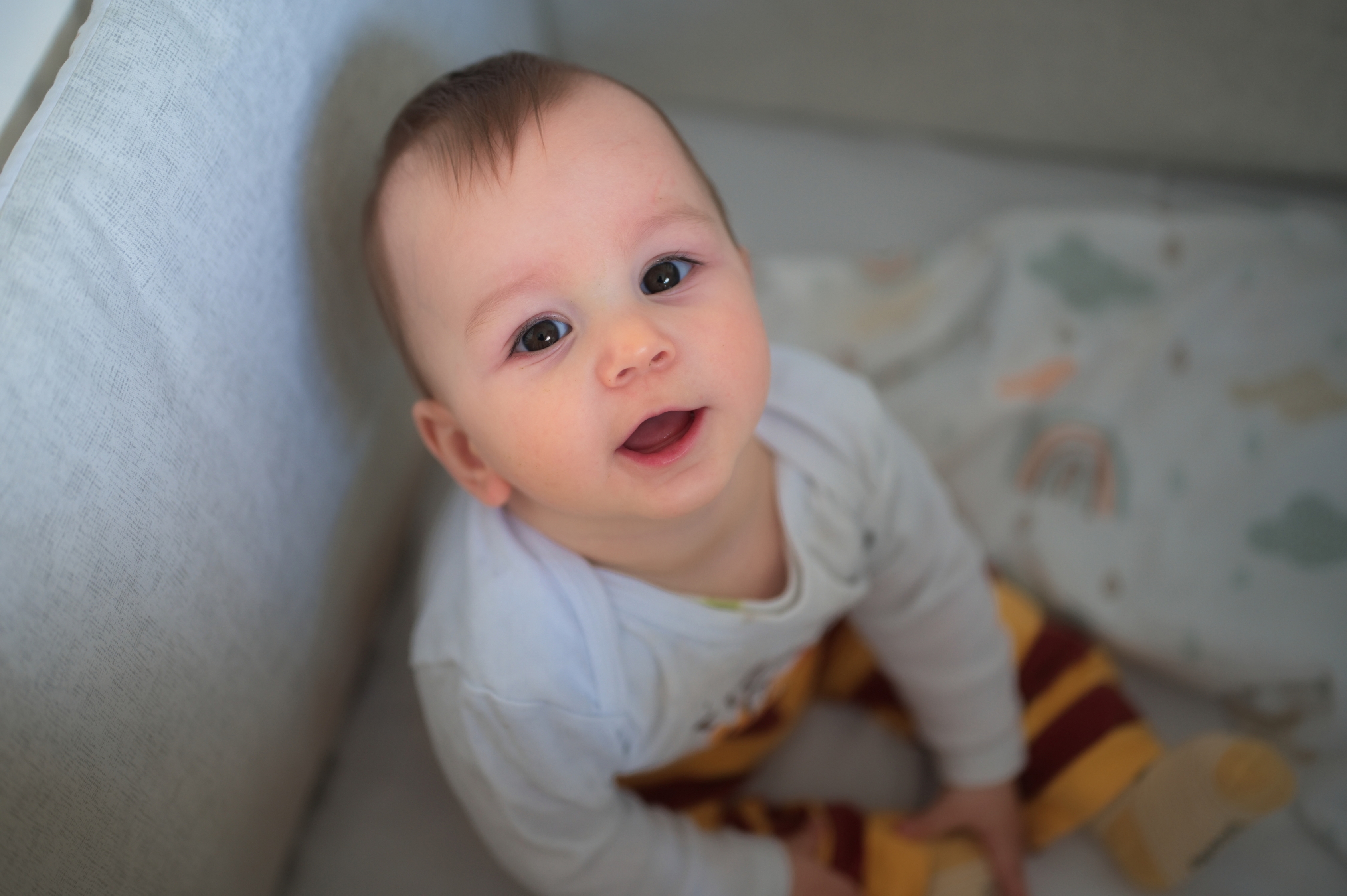
The word "regression" can feel misleading because the disruption reflects new abilities emerging at full speed. Your baby's brain is processing skills like crawling, standing, and understanding that you still exist when you leave the room. As you follow your baby's month-by-month developmental changes, you will often notice that big skill gains and choppy sleep arrive together.
Why does the 8 month sleep regression happen?
Several developmental changes converge around 8 months to disrupt your baby's sleep, which is why this regression can feel especially intense. The three main drivers are:
- Cognitive leaps including object permanence and the onset of separation anxiety
- Motor milestones such as crawling, pulling to stand, and cruising
- Nap transition from three daily naps to two
Cognitive leaps: object permanence and separation anxiety
Around 8 months your baby begins to grasp object permanence, the understanding that people and things continue to exist even when out of sight. This realization often sparks separation anxiety: your baby may cry the instant you step toward the door because they now know you are somewhere else. A classic scenario is a baby who used to settle calmly at bedtime but now protests the moment a caregiver tries to leave the room.
Motor milestones: crawling, pulling up, and cruising
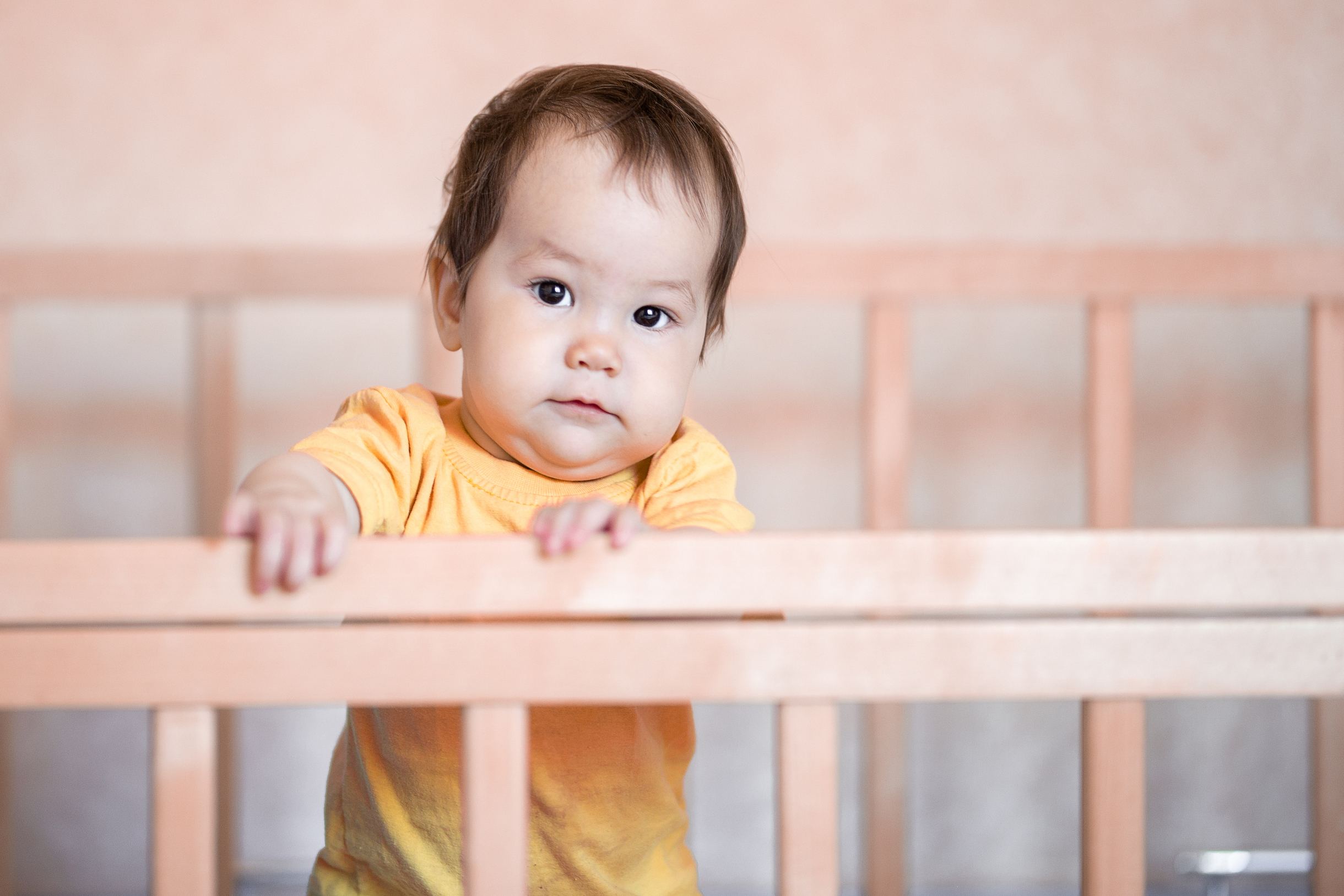
The AAP notes that babies become significantly more mobile around 8 months, and crawling is usually mastered between 7 and 10 months. Your baby may rehearse these exciting skills at 2 a.m., pulling to stand in the crib and then crying because they have not figured out how to sit back down. Physically showing your baby how to bend their knees during daytime practice can reduce those nighttime rescue calls.
Nap transition from three naps to two
Many babies start dropping the third nap somewhere between 7 and 9 months. This shift stretches wake windows and can leave your baby overtired by evening, leading to more fragmented night sleep. The adjustment is temporary. Like other baby growth spurts, this nap transition is a sign your baby's stamina and circadian rhythm are maturing, and nighttime stretches usually lengthen once the two-nap schedule takes hold.
Signs your 8-month-old is in a sleep regression
The clearest sign of the 8 month sleep regression is a sudden change in your baby's sleep pattern after a period of more settled nights. Common signs include:
- Waking every one to two hours, sometimes with loud crying or screaming
- Naps shrinking to around 30 minutes or less, with the third nap fading
- Protest crying when placed in the crib or when you leave the room
Frequent night waking and screaming
Your baby may go from occasional brief wake-ups to waking repeatedly each night. The AAP notes that it is normal for babies around this age to wake during the night and go back to sleep within a few minutes. During a regression those wake-ups may take longer to resolve as your baby processes new skills or feels the pull of separation anxiety.
Shorter naps or nap refusal
Where your baby once napped for 60 to 90 minutes, they may now wake after half an hour and resist resettling. This is especially common once the third nap starts to fade, and it can take a few weeks for the two-nap rhythm to stabilize.
Increased clinginess at bedtime
Reaching for you, bedtime tears, and protests the moment you set your baby down all reflect a growing awareness that you can walk away. This clinginess usually peaks and then eases over a few weeks as your baby gains confidence that you always come back.

8 month sleep regression or teething: how to tell the difference
Teething disruption and the 8 month sleep regression often arrive in the same window, which makes separating them tricky.
Overlapping symptoms and key distinguishing clues
Swollen, tender gums and noticeably increased drooling are the clearest physical markers of teething, according to the AAP. The National Health Service (NHS) notes that lateral incisors typically appear around 8 months, placing teething right inside the regression zone. The table below highlights the main differences.
Feature | Sleep Regression | Teething |
|---|---|---|
Onset timing | Usually 7 to 9 months | Varies; lateral incisors often around 8 months |
Typical duration | 2 to 6 weeks | A few days per tooth |
Daytime behavior | Clinginess, motor practice | Fussiness, chewing on objects |
Drooling and gum signs | Not typically present | Swollen gums, extra drooling |
Night-waking pattern | Multiple wakings, may practice standing | Wakings often linked to gum discomfort |
Response to comfort | Settles with reassurance or self-settling | May need gentle gum relief |
Both issues can overlap, so check for gum changes alongside the behavioral cues listed above.
When both happen at the same time
If your baby has swollen gums and is also pulling to stand in the crib at night, you are likely managing both at once. Address each separately: offer comfort for sore gums during the day and keep the bedtime routine consistent so your baby can still practice self-settling at night.
How long does the 8 month sleep regression last?
The 8 month sleep regression generally lasts between 2 and 6 weeks, though every baby moves through it at their own pace.
Typical timeline: 2 to 6 weeks
Most families notice sleep improving once the driving milestone, whether crawling, pulling to stand, or the nap transition, is firmly established. Sleep usually does not snap back in a single night; a gradual return to longer stretches is more realistic.
Factors that can shorten or extend the phase
A few things influence how quickly this period passes:
- Consistent bedtime routines help your baby anticipate sleep and reduce protest
- Adequate daytime activity supports longer nighttime stretches
- Avoiding new sleep associations prevents backsliding; if a family adds an extra nighttime bottle for what they believe is hunger, they may inadvertently reinforce the waking pattern and stretch the disruption beyond the typical window
Gentle strategies to help your baby through the regression
Gentle, consistent responses during the 8 month sleep regression support your baby's developing self-settling skills without adding new stress to an already demanding phase.
Adjust wake windows and the daily schedule
Stretching your baby's awake periods gradually as the third nap drops can prevent the overtiredness that fuels extra night wakings. The AAP recommends keeping daytime active with talking, reading, and play to help babies sleep longer at night. Noticing early sleepy cues, as the AAP also suggests, helps you catch the right window before overtiredness takes over.
Reinforce a calming bedtime routine
A predictable sequence of bath, feeding, a short book, and a quiet song tells your baby that sleep is near. The AAP recommends turning off all screens at least 60 minutes before bedtime and dimming lights to cue the body's natural wind-down.

Respond consistently without creating new sleep associations
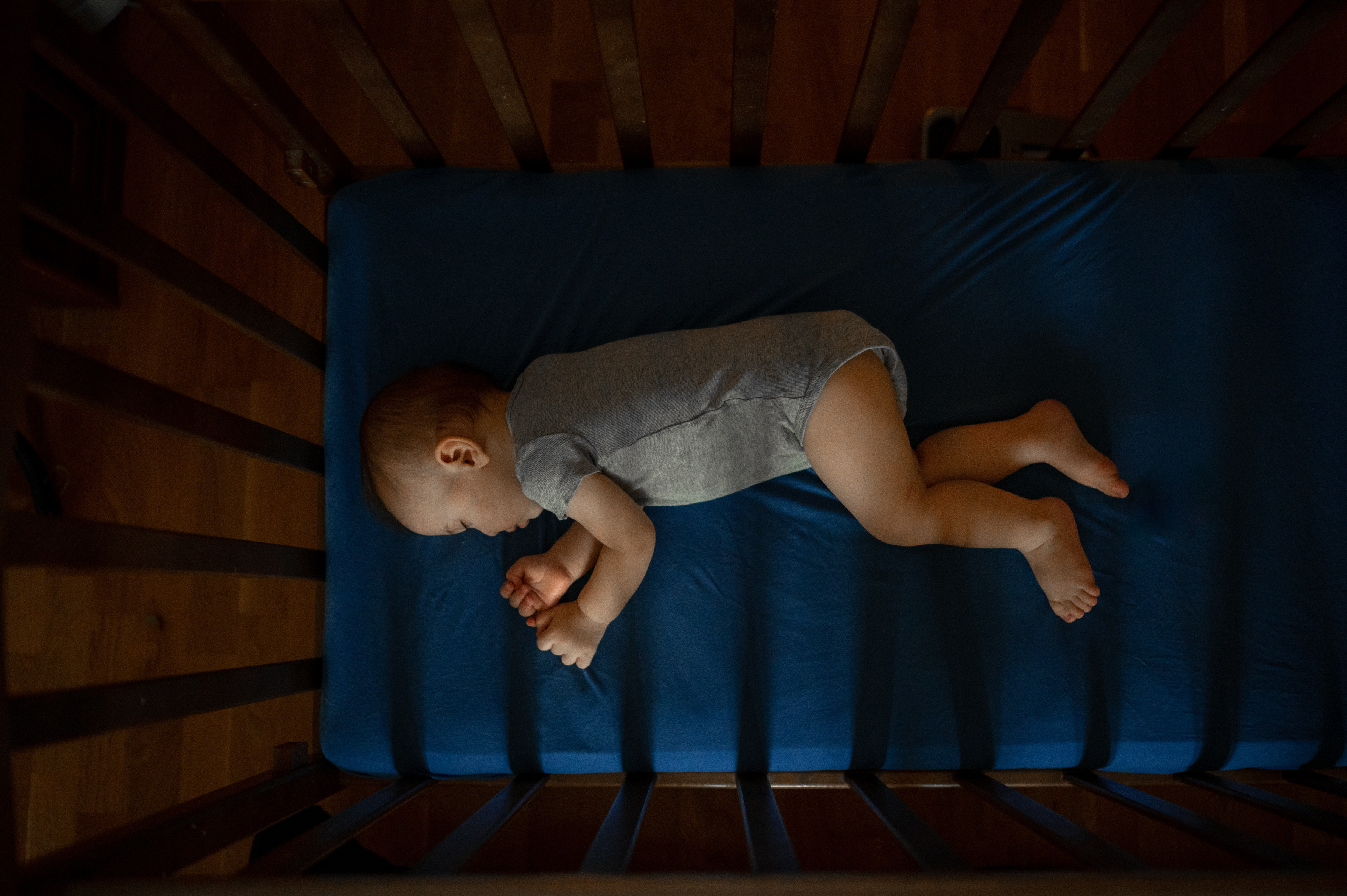
Your baby benefits from a brief pause before you intervene when they wake at night. The AAP advises not rushing in immediately so your baby gets a chance to fall back asleep independently. Placing your baby in the crib drowsy but not fully asleep builds that same skill at the start of the night. If you log naps, bedtimes, and night wakings in Yuppo, you can review the recorded pattern over several days and see which schedule tweaks are actually making a difference.
Create a safe, distraction-free sleep environment
Keeping the sleep space consistent and calm makes it easier for your baby to wind down. The AAP recommends:
- Room temperature between 20 and 22 °C (68 and 72 °F)
- Lights dimmed at least 60 minutes before bedtime
- No toys in the crib
If your baby has a persistent fever, refuses feeds for more than a day, or seems unusually lethargic beyond normal tiredness, contact your pediatrician to rule out illness.
Summary and Next Steps
- Night wakings during this phase signal progress, not a problem. Your baby's brain is processing major cognitive and motor leaps, and the disruption typically resolves within 2 to 6 weeks.
- Check for swollen gums and extra drooling to separate teething from a developmental regression and address each issue on its own terms.
- Stick to a predictable bedtime sequence even when nights feel chaotic; consistency now builds habits that carry your baby through future sleep transitions.
- Set the room to 20 to 22 °C (68 to 72 °F) and go screen-free for at least an hour before bed. Small environment changes can meaningfully reduce unnecessary wake-ups.
- This week, try extending one wake window by about 15 minutes and track the result over three to four nights to see if the adjustment helps.
> This content is for information only; always consult your pediatrician for diagnosis and treatment.
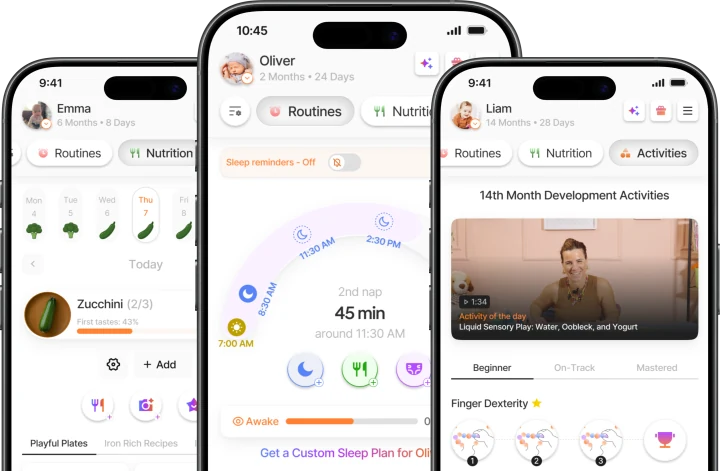
Figuring out whether last night's disruption was the regression, a tooth, or just a rough night is hard to parse when you are running on broken sleep. In Yuppo, you can enter your baby's date of birth and follow the week-by-week developmental steps mapped by experts for this age, giving you context for the sleep changes you are seeing right now.
Frequently Asked Questions
Can the 8 month sleep regression start at 7 or 9 months?
The regression window typically spans 7 to 9 months because developmental milestones do not follow a strict calendar. If your baby reaches crawling or separation anxiety a bit earlier or later, sleep disruption may shift accordingly.
Should I start sleep training during the 8 month regression?
Most pediatric sleep professionals suggest waiting until the acute phase passes, usually 2 to 3 weeks, before introducing or resuming a formal approach. During the regression, consistent routines and gentle reassurance are your best focus.
Does the 8 month sleep regression affect naps too?
Naps are frequently affected during this phase. Many babies shorten their daytime sleep or drop the third nap entirely as they transition to a two-nap schedule, and the adjustment usually stabilizes within a few weeks.
Will feeding my baby more during the day prevent night wakings?
Ensuring your baby gets enough daytime calories can reduce hunger-driven wakings, but developmental wakings driven by the regression will still occur. Avoid adding a new nighttime feed that was not part of the earlier routine.
Is it normal for my 8-month-old to wake up screaming?
Sudden, loud night wakings are common during this phase because separation anxiety and new motor skills can jolt your baby out of lighter sleep stages. A brief, calm check-in is usually more helpful than picking your baby up right away.
References
1. American Academy of Pediatrics. (2024). Getting Your Baby to Sleep. HealthyChildren.org.
2. American Academy of Pediatrics. (2013). Sleeping Through the Night. HealthyChildren.org.

Yuppo Lab
Sleep Expert

News
Learn how parallel play supports toddlers and find simple developmental activities for toddlers at home. Follow your child’s progress with Yuppo.

Sleep
Learn how the 4 month sleep regression affects nights and naps, how long it may last, and what you can do. Follow your baby's sleep changes with Yuppo.
News
Learn why a child growth chart is more useful over time than one weight check—and how Yuppo helps you follow your child's growth. Track growth with Yuppo.