Baby Refusing to Breastfeed? Causes and Gentle Solutions

This article is approved by Çiğdem İrem İleri
Published: 13 April, 2026
Updated: 18 August, 2026

At a Glance
Breast refusal is when a baby who previously breastfed without difficulty suddenly pushes away from the breast for a physical or emotional reason, usually between 3 and 8 months.
Also known as a nursing strike, it usually lasts 2 to 5 days and can often be resolved with patient, pressure-free support.
Skin-to-skin contact, offering the breast when your baby is sleepy, and trying different breastfeeding positions can support your baby in returning to the breast.
When your baby is refusing to breastfeed, it usually means they have suddenly stopped nursing because of physical discomfort, a growth spurt, or a change in their surroundings. Although these temporary pauses are quite natural during breastfeeding, they can feel exhausting and worrying for parents. We prepared this article for parents whose baby's feeding pattern has suddenly changed and who are concerned about whether their baby is getting enough to eat. You'll learn about possible reasons for breast refusal and practical, compassionate ways to help your baby return to the breast.


Why Is Your Baby Refusing to Breastfeed?
Breast refusal is when babies do not want to nurse for an average of 2 to 5 days in response to a physical or emotional change. It is often an outward sign of a new development your baby is trying to manage. A baby who usually breastfeeds pulling away does not mean your milk supply is too low or that your baby is rejecting you. According to the World Health Organization (WHO), nursing strikes are usually temporary and do not mean your baby is ready to wean completely.
They are less common in the early months and may happen more often as babies become increasingly interested in the world around them. Every baby develops at their own pace, but a caring approach can usually help you get through this period. Sometimes it lasts only a day, and sometimes several days; during this time, babies may need the comfort of their parents' arms more than usual.

Why Does Baby Refuse the Breast? Common Reasons
Babies may refuse the breast because of physical discomfort, such as ear pain or a stuffy nose, or because of sudden changes around them. Finding the cause is the first step toward a solution. A minor stuffy nose can make nursing physically difficult, while general stress at home can also cause a baby to pull away from the breast.
Physical Discomfort and Growth Spurts
Teething, reflux, thrush, or a growth spurt can make babies feel pain or discomfort while nursing. Teething often begins between 4 and 7 months, and tender gums can make latching uncomfortable. The American Academy of Pediatrics (AAP) notes that ear infections or nasal congestion can create pressure during swallowing and make breastfeeding more difficult.
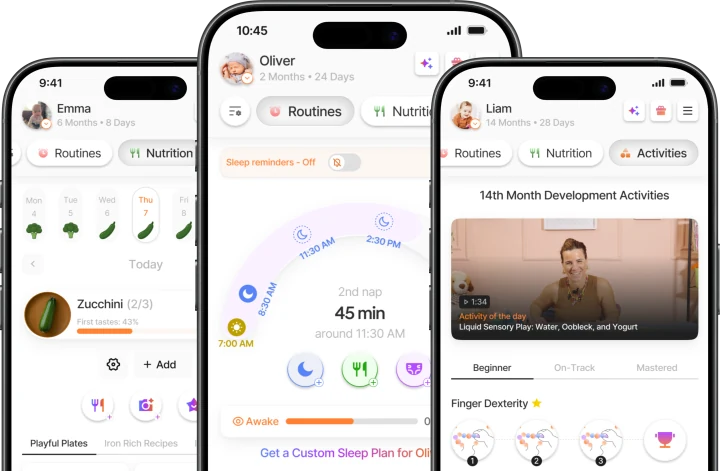
Hormonal changes that alter the taste of your milk, or an oral infection such as thrush, can also temporarily reduce your baby's desire to nurse. By recording your baby's feeding intervals in Yuppo's feeding-tracking module, you can see when your baby refuses to nurse and how long they stayed on each breast, then look for patterns over time.
Changes in the Environment and Emotional Factors
Moving, a parent returning to work, or a sudden fright during breastfeeding can trigger a nursing strike. Babies are highly sensitive to changes around them. A loud noise, a different perfume, or an unusually crowded home can affect their sense of safety.
Sometimes a parent's stress while nursing can slow milk flow, leaving the baby frustrated and more likely to push away from the breast. Staying calm and creating a dim, quiet environment can help your baby feel safe again.

How to Get Baby Breastfeeding Again: Practical Strategies
To resolve breast refusal, try skin-to-skin contact without pressure, changing breastfeeding positions, and offering the breast when your baby is sleepy. Forcing your baby to nurse can increase resistance. Instead, focus on making breastfeeding feel comfortable and stress-free again.
Skin-to-Skin Contact and Calming Techniques
Holding your baby skin to skin with both of your upper bodies bare can reawaken their natural instinct to nurse. Skin-to-skin contact lets your baby hear your heartbeat and feel safe. Lying down after a warm bath with your baby on your chest can increase oxytocin, helping you relax and supporting milk flow.
Babies often resist less when they are sleepy, such as while falling asleep or waking up. Offering the breast during these drowsy moments is a gentle way to move past a conscious refusal. Monthly baby sleep schedules can help you recognize your baby's transitions into sleep.
Trying Different Breastfeeding Positions
Changing your baby's usual position or nursing while moving can break the routine they are resisting and help them relax. If your baby pushes away while sitting in your arms, try breastfeeding while lying down.
Nursing in a dim room, while gently swaying, or while lightly bouncing on a Pilates ball can sometimes distract your baby enough to help them latch. If milk flow is very slow, try a warm compress on your breast before nursing to stimulate the ducts. If flow is very fast, express a little milk first to reduce the force of the flow.
How Long Does Breast Refusal Last, and How Can You Manage It?
Breast refusal usually lasts 2 to 5 days, although it can sometimes continue for several weeks. During this time, express milk around your baby's usual feeding times to help maintain your milk supply. You can give the expressed milk with a spoon, cup, or syringe so your baby continues to receive nourishment.
Use of a bottle should be considered carefully during this sensitive period because your baby may become accustomed to the bottle's flow and move farther from the breast. Lactation consultants emphasize that releasing guilt and focusing on relaxation can help the process move forward. Record the amounts and times you express milk in Yuppo's feeding module to track your supply and manage your current pumping routine.

When Should You See a Lactation Professional?
If breast refusal lasts longer than 4 to 5 days and you think your baby is not getting enough nourishment, support from a lactation consultant can help. Most nursing strikes resolve with compassionate strategies at home. Sometimes, though, a professional can identify the cause much faster.
A lactation specialist can assess physical barriers such as a hidden plugged duct or tongue-tie. They can also observe your breastfeeding position and offer personalized strategies to help you and your baby get back in sync.
Summary and Next Steps
Stay calm: Babies sense your stress. This week, try taking a few deep breaths to relax before breastfeeding.
Use sleepy moments: Over the next few days, offer the breast before your baby is fully awake or while they are falling asleep to ease conscious resistance.
Increase skin-to-skin time: Spend time skin to skin with your baby at least once a day this week to encourage their natural instincts.
Protect your milk supply: Continue expressing milk regularly during feeds your baby misses to help prevent a drop in supply.
Try different positions: If sitting is difficult, practice nursing while lying down or gently swaying in a dark, quiet room.
When to Call a Doctor
Although nursing strikes are usually temporary, you should contact your pediatrician if you notice any of these specific signs:
Your baby has fewer than 4 wet diapers in 24 hours,
Your baby is younger than 3 months and has a rectal temperature of 38°C (100.4°F) or higher, or is 3 months or older with a fever of 39°C (102.2°F) or higher,
Their urine becomes dark yellow, orange, or brick-colored,
They do not shed tears when crying and their fontanelle (the soft spot on their head) appears sunken,
They cry with a high-pitched scream as if in pain whenever they refuse the breast and pull at their ear.
Although acetaminophen or ibuprofen may generally be used to reduce fever, ibuprofen should not be given to babies younger than 6 months, and no medication should be given to babies younger than 3 months without a doctor's approval.
This content is for informational purposes only. Always consult your pediatrician for diagnosis and treatment.
During challenging periods such as breast refusal, closely tracking changes in your baby's feeding routine can ease the parenting load. Yuppo lets you record how much your baby feeds at each session day by day through its feeding-tracking feature, while also tracking expressed milk amounts to help you establish a routine.
You can also follow your baby's developmental steps each week and try free, expert-approved activity and content recommendations suited to your baby's age and needs.
Frequently Asked Questions
Why is my baby refusing to breastfeed?
Breast refusal is more common between 3 and 8 months, when babies become increasingly interested in their surroundings. They may become more sensitive to distractions. However, it can happen at any age because of teething, illness, or a growth spurt.
How long does a nursing strike usually last?
A nursing strike usually lasts about 2 to 5 days. A caring, non-pressuring approach and methods such as skin-to-skin contact may shorten it. In rare cases, it can last a week, but staying calm and continuing to offer support is important.
How should I feed a baby who won't latch?
To feed a baby who won't latch, express breast milk and offer it with a spoon, syringe, or cup. Bottles are often avoided during this sensitive period because they may lead your baby farther from the breast. Expressing regularly is also critical for protecting your milk supply.
Can nursing while my baby is asleep help?
Yes. Offering the breast while your baby is asleep or falling asleep can help overcome breast refusal. When babies are drowsy, conscious resistance is often weaker and their natural sucking reflexes can take over. This may make it easier for your baby to accept the breast again.
Is breast refusal just a temporary phase?
Yes. Breast refusal is usually a temporary response to discomfort or change. It rarely means a baby is ready to wean completely. With the right support, plenty of skin-to-skin contact, and a low-pressure approach, most babies return to breastfeeding at their own pace.
References

Dr. Çiğdem İrem İleri
Developmental Psychologist
After graduating from Koç University in 2019 with a double major in Psychology and Media and Visual Arts, alongside track programs in Design, Gender Studies, and Media and Management, Çiğdem İrem İleri began her integrated doctoral studies in Developmental Psychology at the same institution that same year.

Sleep
Learn 6 month sleep regression signs, likely duration, and practical ways to respond. Navigate your baby's changing sleep with Yuppo.

Sleep
Discover when sleep regressions strike and what to do at each stage, from 4 months to 2 years. Track your baby's sleep milestones with Yuppo.

Sleep
Learn why sleep regression strikes around 20 months and what you can do to help your toddler rest again. Track your toddler's sleep patterns with Yuppo.