Potty Training: Readiness Signs, Steps, and Nighttime Tips

This article is approved by Yuppo Lab Pediatrician
Published: 11 August, 2026
Updated: 11 August, 2026
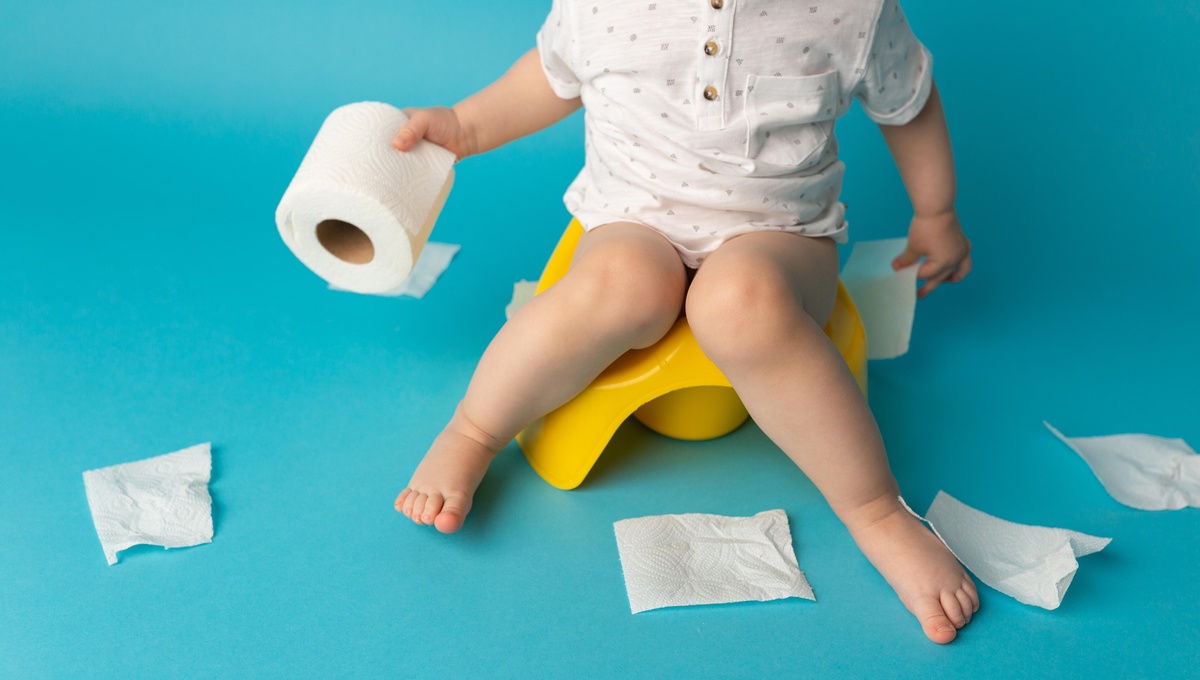
At a Glance
Most children begin showing potty training readiness signs between 18 and 36 months.
Seeing physical, cognitive, and emotional readiness signs together matters more than age when deciding whether to begin.
Nighttime dryness naturally develops an average of 6 months to 1 year after daytime toilet habits are established.
Using supportive language that recognizes small successes, rather than punishment or comparison, helps protect your child’s confidence throughout the process.
Moving out of diapers and gaining new control over their body is an exciting but sometimes confusing stage in your child’s development. Potty training is a nonlinear process shaped by each child and family’s individual dynamics. Many tired parents find themselves asking, “Is this the right time?” or “What approach should I use?” In this guide, you’ll learn the essential information you need—from when and how to start potty training to nighttime habits, step-by-step strategies, and common obstacles.


When to start potty training: what are the readiness signs?
The right time to start potty training and the readiness signs to look for are usually a combination of physical, cognitive, and emotional signals that appear between 18 and 36 months. Your child’s chronological age alone is not enough to determine whether to begin. The American Academy of Pediatrics (AAP) notes that starting before children are biologically and psychologically ready generally makes the process longer and more stressful. Every child’s nervous system and muscle control mature at their own pace, so the main focus should be on reading your child’s behavioral cues accurately.
The table below summarizes the readiness signs your child may show in different areas of development:
Developmental area | Observable signals |
|---|---|
Physical | Staying dry for up to 2 hours during the day, walking, and pulling clothes down. |
Cognitive | Understanding words such as “toilet,” “pee,” and “poop,” and following simple directions. |
Emotional | Discomfort with a dirty diaper and curiosity about adults using the toilet. |
When you begin observing most of these signals around the same time, you can consider it a sign that the foundation for the process is gradually developing.
Physical readiness signals
Physical readiness signals include being able to control the bladder muscles for a period of time, staying dry longer during the day, and showing bodily needs through posture. Physiologically, sphincter control—the control of the muscles that hold in stool and urine—usually begins developing from around 18 months. If your child’s diaper stays dry for two hours or longer than before, this is an important sign that bladder capacity is increasing. Similarly, physical cues such as hiding in a corner, squatting, or changing facial expressions may indicate that physical awareness is beginning.
Cognitive and emotional development signs
Cognitive and emotional development signs appear when your child can understand simple instructions, feels uncomfortable in a soiled diaper, and wants to act independently. The sense of autonomy that develops during this period can increase your child’s eagerness to join toilet routines, saying, “I can do it.” Pressuring children who are not psychologically ready simply because they are physically able to do something can lead to toilet refusal. Showing interest in going to the bathroom, wanting to flush, or asking to be cleaned after getting dirty indicates that your child is emotionally making room for this new step.
How to potty train in 8 steps
An eight-step potty training process involves waiting for the right time, choosing suitable equipment, helping your child get comfortable, creating a routine, modeling the behavior, and moving into practice calmly. Before beginning, it helps to make sure things at home are generally calm; a new sibling, a move, or an illness may not be an ideal time to start. When all caregivers—parents, grandparents, or babysitters—use the same language and respond consistently, it helps prevent confusion.
Preparation and choosing equipment
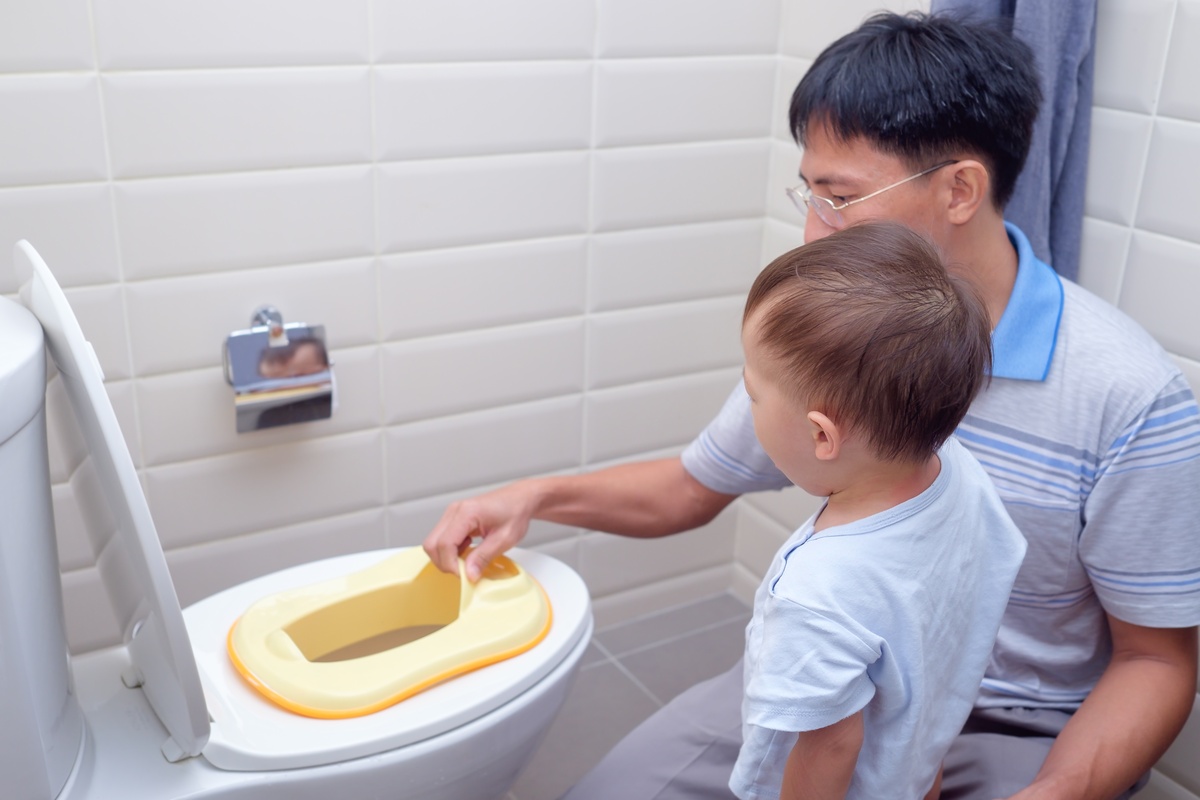
Preparation and equipment selection include choosing a child-sized potty or toilet seat and a step stool that allows your child’s feet to rest firmly on the floor. Secure support is important because dangling feet can make it harder for the muscles needed to empty the bowels to contract.
You can choose the equipment together and place it somewhere your child can reach easily at home.
During the first few days, let your child sit on the potty with their clothes on and explore it as if it were a play object.
Before moving into toilet routines, it helps to understand your child’s current elimination pattern. By entering whether each diaper change contains stool or urine, along with its consistency and color, in Yuppo, you can better understand your child’s digestive routine through the app’s interpretation of what these data mean.
Creating and following a routine
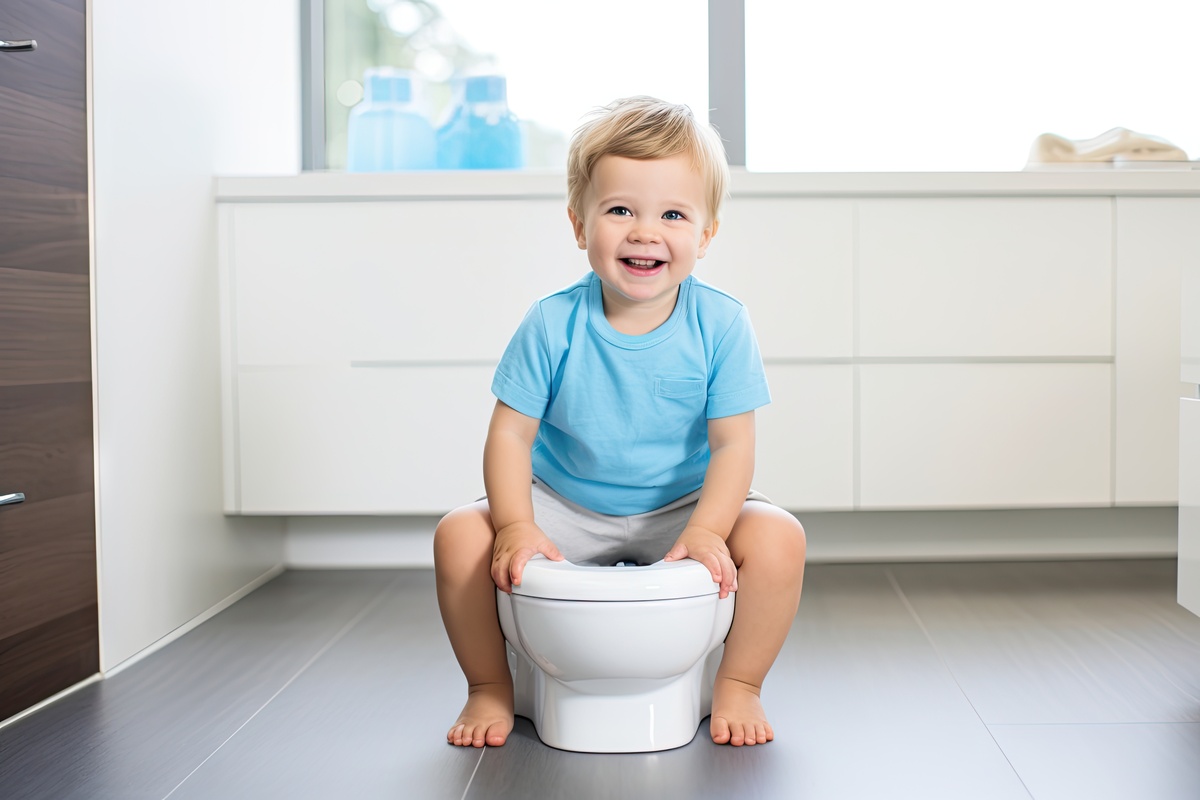
Creating and following a routine involves guiding your child to the toilet at regular intervals, acknowledging appropriate behavior, and staying calm when accidents happen. Breaking the process into small, achievable goals makes it easier to manage.
Choose easy clothing: Choose elastic-waist pants or sweatpants without buttons that your child can pull down and up easily.
Offer regular opportunities: At the start of the day, about 20–30 minutes after meals, and before sleep, encourage your child to sit on the potty.
Manage expectations: Don’t make your child sit on the toilet for more than 3–5 minutes. If nothing happens, let them get up by saying, “We can try again later.”
Use positive reinforcement: Instead of excessive rewards such as large toys or food, support successful attempts with verbal praise—“You used the potty all by yourself. I’m proud of you”—or small stickers.
Model the behavior: Children learn by imitation, so the parent’s role is important. Explain naturally that you use the toilet and wash your hands afterward.
Normalize accidents: Accidents are an expected and necessary part of the process. If your child regresses or wets their clothes, change them without showing disappointment and stay calm.
What strategies help with nighttime potty training?
Nighttime potty training strategies generally involve adjusting fluid intake before bed and waiting for bladder capacity to increase, usually six months to a year after daytime control is fully established. Staying dry at night depends largely on hormones and nervous-system development during sleep. It is therefore a capacity the body develops over time rather than a skill parents can teach. According to AAP data, bed-wetting may naturally continue for some children until ages 5 to 7.
To support the process, you can limit excessive water or milk about an hour before bed and make using the toilet the final step in the bedtime routine. A waterproof mattress protector can minimize sleep disruption for both you and your child when accidents happen at night. Waking a child from sleep to use the toilet is generally not recommended as a long-term solution because it may prevent them from sensing a fully full bladder.
What are common potty training mistakes?
Common potty training mistakes include comparing your child with other children, starting before they are fully ready, getting into power struggles, and overreacting to accidents. Forgetting that the process looks different for every family can make parents anxious. General developmental guidance from organizations such as the World Health Organization (WHO) shows that comparing children’s milestones can contribute to anxiety in children and feelings of inadequacy in parents.
Getting angry with or punishing your child for refusing to use the toilet can turn the bathroom into a source of stress. This may contribute to more difficult physical problems, such as stool withholding. Phrases such as “You’re a big kid now, not a baby” can also create emotional pressure. Communication that respects your child’s pace and boundaries is much more likely to lead to lasting results.
When should you consult a professional about potty training?
You may need professional support if your child shows intense resistance, develops a strong fear of the toilet, or family conflict becomes difficult to manage. Some children may be psychologically afraid of sitting on the potty or of stool leaving their body. Sudden, ongoing regression months after daytime control may also signal stress at home, starting daycare, or emotional strain. If every attempt ends in intense crying, pausing for a few months and then seeking help from a child-development specialist or child psychologist may be the healthiest approach.
Summary and next steps
Watch for readiness signs: Observe how long your child stays dry and their interest in the toilet for several weeks to identify the right time.
Set up the physical environment: This week, get a potty or a toilet seat and step stool combination that lets your child’s feet rest on the floor.
Create pressure-free routines: Invite your child to sit on the potty after meals, but if they don’t want to sit, drop the subject without insisting.
Don’t rush nighttime training: Don’t remove the nighttime diaper until daytime control is established, and use mattress protection to make things more practical.
When to call the doctor
Some physical signs during toilet learning may require medical evaluation. Contact your child’s pediatrician if you notice any of the following:
Your child repeatedly says that urinating causes pain, burning, or discomfort, which can be a sign of infection at any age.
You notice a change in urine color, blood, or an unusually bad smell.
Chronic constipation involving fewer than two bowel movements a week, straining during bowel movements, and severe abdominal pain.
Your child reaches age 4 without showing any daytime bladder control or awareness.
This content is for informational purposes only. Always consult your child’s pediatrician for diagnosis and treatment.
Supporting your child’s physical and emotional skills during important milestones such as potty training takes patience and thoughtful guidance. In Yuppo’s developmental analysis, you can see not only whether your child has a new skill, but also the level at which they perform it. Based on that level, you can receive a personalized plan of expert-designed activities that are easy to do at home with everyday materials.
To better understand your own emotional responses and approach during this sensitive transition, you can take Yuppo’s science-based parenting-style and temperament tests through Yuppo. Discover communication approaches that best fit your child’s world and manage the process more peacefully.
Frequently asked questions
How long does potty training usually take?
Potty training may take anywhere from a few days to several months, depending on your child’s readiness, temperament, and your consistency as a parent. Because every child’s nervous system matures at a different pace, giving an exact number of days is neither realistic nor helpful.
My child refuses to use the toilet. What should I do?
If your child refuses to use the toilet, accept that they may not yet be biologically or emotionally ready, and pause for a few weeks or months. Arguing or forcing the issue usually makes it harder. Reassure your child, remove the subject from the daily agenda, and return to it later.
What is the best age to start potty training?
The best time to start is generally when your child begins showing physical and emotional readiness signs together, often between 18 and 36 months. Age matters less than the ability to control the relevant muscles and follow simple directions. These readiness skills are the main factors supporting a successful start.
When is nighttime bed-wetting still considered normal?
Because nighttime dryness depends on nervous-system development and hormones, bed-wetting may be completely normal for some children until around ages 5 to 7. Nighttime accidents can continue for months or even years after daytime control is established and may still be part of typical development.
Should I use rewards during potty training?
Rather than using large or material rewards, use positive reinforcement and verbal praise that keep toilet learning feeling like a natural habit. Sticker charts or encouraging phrases such as “You did it” can support your child’s internal motivation and sense of autonomy without making the process feel pressured.
When should potty training be finished before daycare?
If the daycare has a specific requirement, aim to finish potty training at least 1–2 months before the start date, during a low-stress period. Starting daycare and potty training at the same time can create confusion and lead to regression, so allowing extra time can reduce pressure on your child.
References
American Academy of Pediatrics. (1999). Toilet Training Guidelines: Day Care Providers—The Role of the Day Care Provider in Toilet Training. Pediatrics, 103(Supplement 3), 1364-1366. https://pubmed.ncbi.nlm.nih.gov/10353957/
Toilet Training Guidelines: Parents—The Role of the Parents in Toilet Training. Pediatrics June 1999; 103 (Supplement_3): 1362–1363. 10.1542/peds.103.S3.1362. https://doi.org/10.1542/peds.103.S3.1362

Yuppo Lab
Pediatrician

Sleep
Learn 6 month sleep regression signs, likely duration, and practical ways to respond. Navigate your baby's changing sleep with Yuppo.
Sleep
Discover when sleep regressions strike and what to do at each stage, from 4 months to 2 years. Track your baby's sleep milestones with Yuppo.
Sleep
Learn why sleep regression strikes around 20 months and what you can do to help your toddler rest again. Track your toddler's sleep patterns with Yuppo.