A Yuppo Mom Shares: How Sleep Returned During the 4 Month Sleep Regression

This article is approved by Çiğdem İrem İleri
Published: 07 July, 2026
Updated: 25 August, 2026

A Yuppo Mom Shares: How Sleep Returned During the 4 Month Sleep Regression
Sometimes in parenthood, you wake up one morning when everything seemed fine and realize your routine has completely changed. What worked yesterday may not work today. Especially during periods when sleep deprivation tests you, you need more than a solution; you also need to understand why this is happening and feel that you're not alone. The 4 month sleep regression can bring exactly that kind of change.
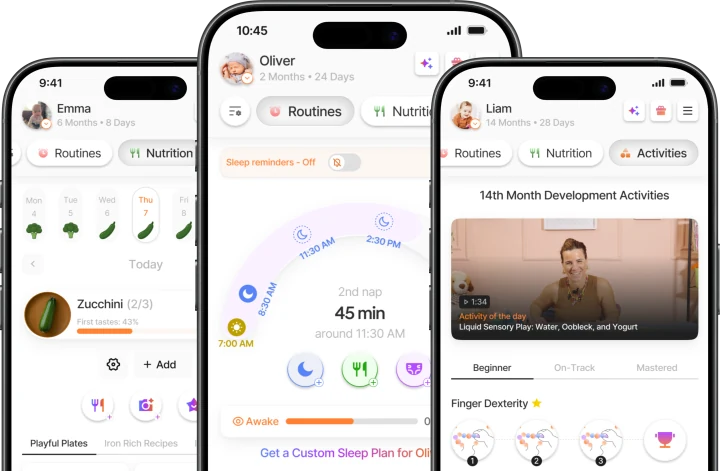


Four months is one of the most important milestones in a baby's development, and it's often known as a stage when routines built up until then can unexpectedly fall apart. The routine you've worked so hard to establish may feel permanent; then one morning, without warning, the familiar baby you knew seems to have been replaced by someone completely different. Let's hear about this upheaval from Melisa, a Yuppo mom:
"Honestly, everything was going so well until the fourth month. I was thinking, 'I've figured out this motherhood thing, I know my baby's personality now, and I can finally see what's ahead.' I was even giving advice to friends whose babies didn't sleep well. But one morning we woke up, and it was as if that easygoing baby had disappeared and an entirely different baby, one who never stopped fussing, had taken his place. Before I could understand what was happening, I found myself in complete chaos."
This is actually a sign of a major, positive change taking place in your baby's biological clock. Your baby's brain is beginning to develop a sleep structure more like an adult's; the transitions from light sleep to deep sleep become more complex. This stage isn't a "regression" at all, but neurological maturation. Parents may struggle to make sense of their interrupted routines and may feel anxious. Those worries behind the endless nighttime wake-ups showed up in Melisa's experience like this:
"First, our nighttime sleep started falling apart. I used to put the baby down in the evening, take a deep breath, and drink a cup of tea; now I hear a whimper from the room before I can even get to the kitchen. Just when I think the baby is finally asleep, not much time passes before he wakes up with his eyes wide open, as if someone had nudged him. The strange thing is, sometimes he doesn't even cry; in the middle of the night, in the dark, he makes odd little sounds to himself in his crib. While I'm trying not to pass out from exhaustion beside him, he's still looking at me with all his energy. That alert look drains me. As I whisper, 'Baby, please go to sleep. Why aren't you sleeping?' I have to fight back tears."

When you feel helpless as a parent, it can change your perspective to know that your baby may be busy practicing new skills learned during the day while asleep. Your baby's efforts to gain more control over their mind and body can keep the brain active even during sleep. When routines fall apart, it's hard to make sense of the process, but Yuppo's development-focused perspective reminds parents that this activity isn't only a sleep problem; it may be preparation for a new skill. That awareness can ease some of the anxiety created by uncertainty and help you feel calmer. On the other hand, when resistance to daytime sleep is added to sleepless nights, maintaining life's normal rhythm can still become a test of patience and energy. These are some of the 4 month sleep regression signs Melisa noticed during the day:
"Things got even worse during the day. Those beautiful, long naps were cut into pieces, replaced by half-finished catnaps. I'd think, 'I'll just tidy the kitchen and fold a couple of loads of laundry,' and then, boom, a sound from the room... I'd go in, barely able to stand, and find the baby wriggling around in the crib. He couldn't get enough sleep or stay content while awake. He was always cranky and dissatisfied. You really start questioning yourself: 'Is my milk not enough? Is he hungry? Is something hurting?' I thought through every possibility. If I put him down, he screamed; if I held him, my arms were worn out and my back ached. My clothes and hair were always a mess, and I had started being afraid to look in the mirror. I'd tell my husband, 'Hold him for a little while so I can take a shower,' but when the baby started crying within seconds of being in his arms, I couldn't stand it and would run back with wet hair and all. Rest had started to feel like a luxury."
These changes in daytime sleep come from your baby perceiving their surroundings much more clearly and experiencing a wider sensory world. As your baby explores the outside world, it's quite natural for them to expect more contact and support when falling asleep. During this process, your baby needing you more often than before can greatly affect your routine and leave you exhausted. Yuppo equips parents with evidence-based information to help you understand your baby's real needs during tiring moments and manage the process more calmly. Here are a few 4 month sleep regression tips reflected in the way Yuppo supported Melisa:
"During this time, I opened up to a friend who had gone through similar days with her own baby. She had used Yuppo with her second baby and said she had never found things this difficult. As soon as I heard that, I wanted to try it too. Before, if I thought my baby was sleeping so well, I couldn't bring myself to wake him. Thanks to Yuppo, I learned that when he slept longer than he should, it threw off the whole schedule and affected his next nap too. I also learned that his tummy needed to be full; falling asleep when he was hungry was very difficult. And if he didn't do activities during awake time that tired him physically and mentally enough, he wouldn't feel sleepy either. After I started using Yuppo, I saw that sleep itself wasn't the whole issue; what happened, or didn't happen, while he was awake also made a difference. With the games Yuppo suggested for his exact age and current skills, we had fun together, and by the end of the day my baby was tired, full, and peacefully asleep.
Once that first chaos settled, I started seeing tangible changes in my baby. It turned out his brain had been working hard during those difficult nights. My patience was tested many times, but when I saw these new skills, I understood that there was a reason for those sleepless minutes. Yuppo felt like more than a routine; it was a guide to understanding my baby's world. It helped me see that he was on a journey of growth."

As in Melisa's case, these fluctuations at four months reflect huge progress taking place in your baby's world. A routine that worked during the newborn stage may no longer suit a baby who has changed so much. Melisa needed to rebuild her daily rhythm around her baby's needs in this new stage. Yuppo made that reset easier with life-saving content and daily activity suggestions tailored to the month, teaching her to read her baby's cues correctly and make the most of wake windows.
The solution Melisa found may also be a starting point for you. Yuppo knows that your experience is personal; it understands what you need and works to make the challenges you face easier to solve. If you're wondering when does sleep regression end, or dealing with short naps at 4 months, download Yuppo to access trusted expert content and developmental tracking throughout your parenting journey, make sense of the remarkable growth behind every sleepless minute, and move through these milestones with more compassion and confidence!

Dr. Çiğdem İrem İleri
Developmental Psychologist
After graduating from Koç University in 2019 with a double major in Psychology and Media and Visual Arts, alongside track programs in Design, Gender Studies, and Media and Management, Çiğdem İrem İleri began her integrated doctoral studies in Developmental Psychology at the same institution that same year.

Sleep
Learn 6 month sleep regression signs, likely duration, and practical ways to respond. Navigate your baby's changing sleep with Yuppo.

Sleep
Discover when sleep regressions strike and what to do at each stage, from 4 months to 2 years. Track your baby's sleep milestones with Yuppo.

Sleep
Learn why sleep regression strikes around 20 months and what you can do to help your toddler rest again. Track your toddler's sleep patterns with Yuppo.