12 Month Old Development Red Flags: When to Consult a Specialist?

This article is approved by Çiğdem İrem İleri
Published: 30 July, 2026
Updated: 30 July, 2026

At a Glance
12 month old development red flags become noticeable when expected progress in motor, language, and social areas between 12–15 months is consistently missing.
Most babies move at their own pace; knowing that certain skills have a flexible timeframe offers peace of mind.
A lack of eye contact during social interaction around 10–12 months is a neurodevelopmental concern that requires close monitoring.
12 month old development red flags are concrete indicators showing potential differences in a baby's physical, social, or language skills. The first birthday is an exciting transition period when babies begin to move more independently and explore their surroundings thoroughly. During this stage, many parents may experience anxiety while observing their baby's growth rate and doubt their developmental progress. In this guide, you will learn about your baby's first-year developmental steps and when to consult a specialist without feeling guilt, grounded in scientific evidence.


What Are the Key 12 Month Old Milestones?
Key 12 month old milestones include walking and communicating with gestures, typically observed between 9 and 14 months. During this period, little ones' desire to explore the world increases rapidly, and their emotional bond with caregivers reaches a new level of interaction. Most babies can pull themselves up using furniture, grasp toys, and copy actions like waving bye-bye. The American Academy of Pediatrics (AAP) notes that around their first birthday, babies begin to actively participate in social play.
Each baby's 12 month old skills can vary depending on genetics, temperament, and environmental factors. Rather than strictly adhering to monthly charts, it is healthier to focus on the child's progress as a whole. Remembering that the 12-month-old baby development process spans a wide timeframe helps relieve parenting stress.

12 Month Old Development Red Flags: Motor Skills
Under 12 month old development red flags, warning signs in motor skills refer to a baby's inability to show expected flexibility in gross motor skills and body balance between 12 and 15 months. A one-year-old baby is expected to move their body with ease and use their muscles in a coordinated manner for specific goals. According to World Health Organization (WHO) data, motor development windows are flexible; some babies need more time to master core skills. However, clear deviations should be considered as signs of developmental delay in babies.
Delays in Walking and Crawling
Delays in walking and crawling refer to difficulty sitting unsupported or pulling to stand between 10 and 15 months on average. Most babies take their first independent steps between 9 and 15 months; however, not walking unsupported by 18 months may require clinical evaluation.
The answer to when babies crawl in the crawling stage depends largely on your baby's anatomical strength, and different movement styles other than classic four-legged crawling rarely pose a problem. If your baby struggles to bear weight on their legs for an extended period, you can contact your doctor.
Limitations in Hand and Finger Use
Limitations in hand and finger use refer to difficulty with the pincer grasp—picking up small objects using the thumb and index finger—expected between 9 and 12 months. Fine motor skills form a critical foundation for self-feeding and manipulating toys. Most babies at this stage can easily pick up a small piece of food and bring it to their mouth.
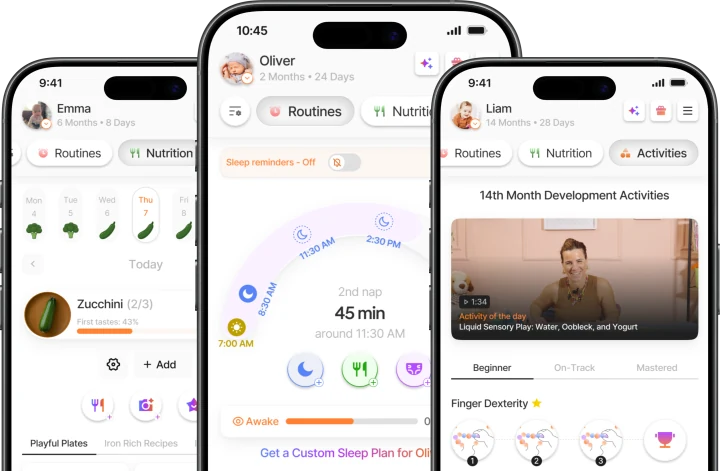
A baby constantly keeping their hands in tight fists or using only one hand when reaching for objects among 12 month old milestones are signs worth monitoring. While observing your child's motor skills, you can use Yuppo's activity module to analyze not just whether they perform a skill, but at what level, and support their development with practical activity suggestions made from household materials.
Critical Red Flags in Social and Language Development
Critical red flags in social and language development occur when 12–15 month old babies avoid vocal or gestural interactions with their environment and remain focused on their own world. Communication in infancy goes beyond speaking; gazes, reciprocal smiles, pointing, and emotional reactions are also powerful indicators. When disruptions in social skills are noticed, these are areas that can be positively encouraged through specialist interventions.
Absence of Eye Contact and Unresponsiveness
Absence of eye contact and unresponsiveness refer to the failure to establish joint attention and consistent response to their name, which are expected to consolidate between 6 and 12 months. Reciprocal interaction is the most important tool of trust for a baby in making sense of the social world.
If your baby rarely turns to look when their name is called or shows no interest in classic peek-a-boo games, this may indicate communication differences or potential early signs of autism. Reviewing early autism indicators can guide parents.
Lack of First Words and Vocalization
Lack of first words and vocalization refers to the complete absence of repetitive syllables or long babbling sounds in daily communication expected between 10 and 14 months. A 12 month old speech delay can be noted if meaningful words are missing, though most 12-month-olds begin to use a few meaningful words or babble melodically to express their desires.
A baby making no sound at all or not pointing at an object of interest with their index finger may reflect hearing issues. During this process, you can enrich your communicative play with your child by consulting a parent guide for children with delayed language development.

When to Consult a Specialist in Developmental Tracking?
The time to consult a specialist in developmental tracking is when parents do not observe expected progress in their baby's developmental areas usually between 12 and 18 months, or when previously acquired skills are lost. A baby's development follows a fluctuating curve rather than a straight line; experiencing a temporary pause in vocabulary while focusing on another domain is natural.
However, prolonged and significant deviations in basic functions require evaluation using developmental screening tools. Trusting parental instincts is invaluable. Early awareness and supportive strategies implemented under the guidance of a pediatrician are key steps in helping a child reach their full potential.
Summary: Parent Guide for 12-Month Developmental Tracking
A parent guide for 12-month developmental tracking includes ways to stress-freely support a baby's growth processes in the home environment during the 12–15 month period:
Encourage physical space: Allow your baby to spend time in a safe area and motivate them to crawl or move by placing a favorite toy slightly out of reach.
Fine motor practice: During mealtimes, support pincer grasp practice using age-appropriate cut vegetables while guarding against choking risks.
Increase social interaction: Maintain plenty of eye contact during daily routines and repeat the syllables your baby makes with a smile.
Keep records: Note down moments when your child displays new skills, and write down consistent concerns in a notebook to ask at your doctor's appointment.
When to See a Doctor?
Although your baby's development progresses at its own unique pace, certain concrete signs known as developmental red flags require medical evaluation. If you observe the following warning signs between 12 and 15 months, consulting your doctor is recommended:
Inability to sit unsupported: Most babies sit unsupported around 6–9 months; a baby constantly falling sideways or forward by 12 months warrants evaluation.
Inability to bear weight on legs: Babies bear weight on their legs between 9–12 months; a 12-month-old continuously refusing to stand on their feet by keeping their legs bent should be discussed with a doctor.
Lack of eye contact: Consistently avoiding eye contact during interaction when spoken to at 12 months is a red flag requiring neurodevelopmental evaluation.
Not pointing: Using no gestures in daily life by 15 months is a communicative warning sign.
Regression of skills: Complete loss of previously produced syllables or physical actions starting from the 12th month requires a physician examination.
This content is for informational purposes only; always consult your pediatrician for diagnosis and treatment.
Track your baby's precious firsts with care and ensure you are supporting them correctly along the way. Knowing that every skill emerges at different times for each baby helps you easily encourage these milestones with home resources.
To track your child's development from home based on scientific principles, you can try the Yuppo app for free. In the app's activity module, you can enter the skills your child displays to identify their exact developmental level and easily access expert-approved activity plans tailored to that level using simple everyday materials.
Frequently Asked Questions
Is it a problem if a 12-month-old baby is still not crawling?
If a 12-month-old baby is still not crawling, it may be considered normal as long as alternative movement forms (such as scooting or slithering) expected between 10–15 months are present. If your baby can bear weight on their legs, stand with support, or roll easily on the floor, skipping traditional crawling is generally not a concern.
Is it normal for a 12-month-old baby not to say any words?
It can be considered normal for a 12-month-old baby not to say any words if communicative gestures and babbling are present between 10 and 14 months. First meaningful words usually appear between 12 and 15 months; if your baby points to what they want and understands your commands, you can give them time.
What is the earliest developmental delay can be noticed in babies?
Developmental delay in babies can be noticed by parents as early as 6 to 9 months, when deviations in motor skills and social responses become noticeable. Early signs like excessive muscle flaccidity or unresponsiveness to sounds are evaluated in detail through developmental screening tests.
How are signs of autism identified in a 12-month-old baby?
Signs of autism in a 12-month-old baby are usually identified through communication deficits expected between 9 and 15 months, such as lack of response to name and disinterest in social play. If the baby cannot engage in joint attention and does not use pointing gestures to communicate, a neurodevelopmental evaluation is recommended.
Which doctor should be consulted for developmental tracking and evaluation?
For developmental tracking and evaluation, parents should consult general pediatricians providing routine preventive healthcare between 0 and 36 months. If your pediatrician identifies red flags, they will refer you to pediatric neurologists for a more detailed diagnostic process.
References
American Academy of Pediatrics. (2021). Normal Development and Developmental Surveillance, Screening, and Evaluation. AAP Publications. https://doi.org/10.1542/9781610023733-32
Gui et al. (2025). Genome-wide association meta-analysis of age at onset of walking in over 70,000 infants of European ancestry. Nature human behaviour, 9(7), 1470-1487.https://www.nature.com/articles/s41562-025-02145-1

Dr. Çiğdem İrem İleri
Developmental Psychologist
After graduating from Koç University in 2019 with a double major in Psychology and Media and Visual Arts, alongside track programs in Design, Gender Studies, and Media and Management, Çiğdem İrem İleri began her integrated doctoral studies in Developmental Psychology at the same institution that same year.