Developmental Red Flags by Age: Warning Signs at 18 Months

This article is approved by Yuppo Lab Developmental Psychologist
Published: 01 August, 2026
Updated: 05 August, 2026

At a Glance
Developmental red flags by age, particularly around 18 months, are early clues indicating areas where a child might need support rather than an immediate diagnosis.
Most children start walking independently and using at least a few meaningful words between 15 and 18 months.
An inconsistent response to their name or a noticeable lack of eye contact are considered developmental milestones red flags that require a doctor's evaluation.
The permanent loss of an acquired skill (such as saying a word or waving) is a primary sign requiring expert evaluation at any age.
One of the most common topics parents search for is 18 month old developmental red flags. These generally refer to the absence of certain expected milestones in language, communication, or motor skills. Every baby's growth journey progresses at its own pace, and the developmental process can fluctuate from time to time. In this guide for parents of children aged 0-6 years, you will learn about the signs of developmental delay in infants around 1 year and 18 months, expectations for motor and language skills, and which toddler development warning signs require consulting a professional. Understanding developmental red flags by age empowers parents to act early and provide the right support.


What Are the Normal Developmental Milestones for an 18-Month-Old?
An 18-month-old baby can generally engage in simple interactions with their environment, walk with little or no support, and express their desires using certain words. During this period, babies' quest for independence increases, and their desire to explore the world on their own grows stronger. Development is a process that spans over time rather than an event completed on a specific day; therefore, expectations are always evaluated within flexible ranges. According to World Health Organization (WHO) and Centers for Disease Control and Prevention (CDC) data, most babies start walking independently between 12 and 18 months.

Physical and motor skills expectations
Physical and motor skills expectations during this period mostly include gross and fine motor movements such as taking unsupported steps, carrying objects, and using fingers in a coordinated way to grasp solids or finger foods. Between 15 and 18 months, a large majority of babies discover how to walk on their own, attempt to climb furniture, and begin to balance better. For children who have passed the crawling stage and cruising phase, walking opens the door to perceiving the world from a broader perspective.
In terms of fine motor skills, the pincer grasp—where they comfortably hold objects using their thumb and index finger—usually becomes prominent. Your child trying to stack one block on top of another or attempting to turn the pages of a board book is part of normal motor development in this period.
Language and social interaction levels
Around the 18th month, language and social interaction levels progress to a point where children can use an average of 10 to 20 words and consistently respond to their own name. At this age, babies grasp the meanings of the words they hear much better than their capacity to vocalize them. The American Academy of Pediatrics (AAP) notes that children around this age can understand simple commands like "give it to me" and point with their index finger to objects they want. Joint attention, established by looking at the same book or toy together with a parent, is also one of the important social communication milestones of this period.
18 Month Old Developmental Red Flags to Watch For
Toddler development warning signs include the inability to walk independently, not using the index finger to point, noticeably avoiding eye contact, and not producing any words. Red flags are not diagnostic tools; they are signals that invite parents to monitor their child's development more closely and seek guidance from their pediatrician. Sometimes children may temporarily slow down in one area while focusing on another skill; however, certain key signs require professional observation.

Critical delays in language and communication
Critical delays in language and communication typically emerge when an 18-month-old baby does not yet use any meaningful words, does not try to show what they want using gestures, or does not seem to understand simple instructions. The worry of an "18 month old not talking" is quite common among parents. Although every child's vocabulary enriches at its own pace, at least a few meaningful words or sounds are expected to emerge between 15 and 18 months. If your baby shows no effort to communicate or consistently avoids joint attention, consulting an expert in language development is valuable for early support.
Warning signs in motor skills
Warning signs in motor skills refer to physical situations where a one-and-a-half-year-old baby still cannot take steps independently without support, or favors one side of their body while neglecting the other. While the act of walking not occurring by the 18th month does not always indicate a permanent disability, it is counted among the signs of developmental delay in infants that should be closely monitored. Difficulties in grasping objects or letting go of what they are holding are also physical clues that should be evaluated during doctor visits.
Developmental Milestones Red Flags to Watch in 1-Year-Olds (12 Months)
Developmental milestones red flags to watch for in 1-year-old babies include not crawling by 12 months, not attempting to pull up to a stand using furniture, and not using simple social gestures like waving "bye-bye." The developmental changes brought on by age accelerate how the baby connects with the outside world. Most babies begin to use simple gestures and imitate around 10-12 months. Not making eye contact, not turning to look when called, and not showing an interesting object to a parent are at the top of the 1-year-old developmental red flags list for early detection.
How Should You Monitor Signs of Developmental Delay in Infants?
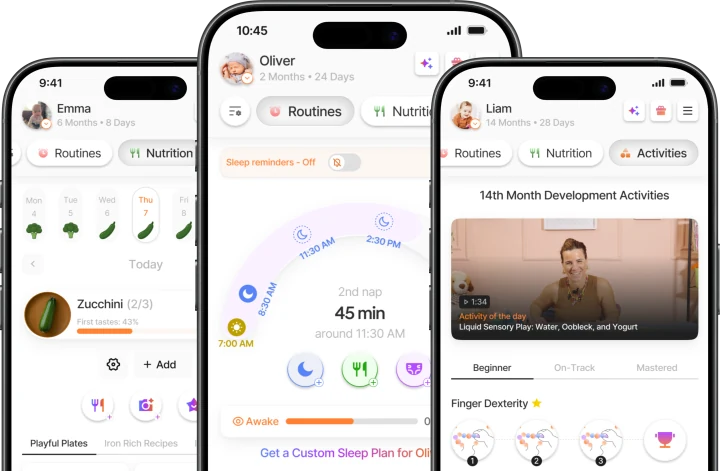
To effectively monitor developmental red flags by age, you can observe your child's daily movements, communication efforts, and motor skills broadly over the months and take brief notes. Focusing on flexible time ranges rather than fixing every skill to an absolute day or single month protects parents from unnecessary anxiety while giving the child the time they need. While observing your baby's skills, Yuppo's developmental analysis allows you to evaluate not only whether your child can perform a skill but at what level they do it; you can then receive a personalized plan consisting of activities prepared by experts suited to this level.
Here are the general ranges and early warning signs you can consider while monitoring your child's development:
Developmental Area | Generally Observed Age Range | Situations to Request Expert Opinion |
|---|---|---|
Gross Motor Skills | Starting to walk independently between 12-18 months | Still cannot take unsupported steps around 18 months |
Fine Motor Skills | Using thumb and index finger together between 10-15 months | Cannot grasp objects with a pincer grasp by 18 months |
Language and Communication | Emergence of first meaningful words between 12-18 months | Using no words or gestures by 18 months |
Social Interaction | Responding to name and joint attention between 9-14 months | Consistently not turning to name and lack of eye contact |
Using these ranges as a reference during the developmental tracking process provides you with a clear framework for determining when to request an additional referral from your pediatrician.
When to Consult a Professional Without Delay?
If there is an unexplained permanent loss of an acquired skill in babies or if there is no response to their name by the 18th month, a professional should be consulted without delay. These signs, often referred to as developmental milestones red flags, are not "problem" labels but opportunities that open the door to early intervention. Especially in cases of a lack of effort to communicate and social withdrawal, the pediatrician may request hearing tests or detailed developmental screening tools.

Summary and Next Steps
Monitoring Motor Skills: Most babies can take independent steps between 15 and 18 months; if your baby is approaching or has passed this period, provide safe opportunities for them to practice stepping without support and note your observations.
Communication and Words: Around 18 months, babies are expected to use gestures or produce their first meaningful words; if they are not using any words, add this to your pediatrician's checklist.
Supporting Social Responses: Turning to look at their name, making eye contact, and establishing joint attention play a key role in development; frequently get down to their level during the day to play interactive games.
Scheduling Doctor Visits: When you notice signs of developmental delay in infants or when an acquired skill is lost, do not hesitate to share your own observations with a specialist.
When to Call the Doctor?
The following situations, while not a diagnosis in themselves, are border signs that require a doctor's evaluation:
An 18-month-old baby not using any meaningful words or not trying to communicate through sounds/gestures (While delayed words can be normal, a complete lack of effort to communicate requires a doctor's opinion).
The baby not being able to walk independently despite being 18 months old.
Loss of acquired skills (A baby who previously said words, waved "bye-bye," or crawled permanently stopping these abilities requires expert evaluation at any age).
Inconsistent response to their name being called, not turning to look at the source of the sound.
Noticeably avoiding eye contact and failing to establish joint attention (both of you looking at the same object at the same time).
This content is for informational purposes only; always consult your pediatrician for diagnosis and treatment.
Consciously tracking your child's developmental milestones provides great convenience in recognizing areas that need support right on time. Through the app, you can evaluate not just which skills your baby can do, but at what level they perform them, and safely support their development at home with Yuppo's expert-approved activity recommendations. To create personalized activity plans tailored to your baby's cognitive, physical, social, and language development, check out the Yuppo app.
Frequently Asked Questions
Is it a risk if I have an 18 month old not talking yet?
An 18-month-old not speaking yet or not trying to communicate with gestures is generally considered a risk factor that should be closely monitored. While every baby acquires language skills at a different pace, at least a few meaningful words are expected around 15 to 18 months.
What exactly does the term "red flag" mean for babies?
In babies, the term "red flag" refers to early warning signs indicating that a child may need support or a doctor's evaluation in a specific developmental area. It is not a permanent disease diagnosis but a guide directing parents to observe more carefully.
What should I do if my 1-year-old doesn't respond to their name?
If a 1-year-old baby does not consistently turn to look when their name is called, it is recommended to repeat hearing tests and share this with the pediatrician. Most babies recognize their own names and respond with eye contact between 9 and 12 months.
Do signs of developmental delay in infants always mean a permanent disorder?
Signs of developmental delay in infants do not always mean a permanent disorder; with appropriate support and early intervention, many children can catch up to their peers. Children may focus on certain skills later in their developmental periods, and expert guidance is crucial during this process.
How can I spot toddler development warning signs in motor skills?
Toddler development warning signs in motor skills are mostly noticed when physical movements like sitting unsupported, walking, or grasping objects with a pincer grasp do not occur within the expected timeframes. Most babies are expected to walk between 12 and 18 months; delays beyond 18 months should be evaluated by an expert.
What should I do if my 18-month-old doesn't point at things?
If an 18-month-old baby does not use their index finger to point at an object they are interested in or want, you should discuss this lack of social communication with your pediatrician during a routine check-up. Pointing is a critical step in pre-linguistic communication and typically develops between 12 and 15 months.
References

Yuppo Lab
Developmental Psychologist