Inside Out Emotions for Kids: A Parent Guide

This article is approved by Çiğdem İrem İleri
Published: 08 April, 2026
Updated: 18 August, 2026
At a Glance
Children’s ability to recognize and express abstract emotions typically begins to develop noticeably between ages 3 and 5.
The film turns invisible feelings in the human mind into a concrete, understandable structure through five different characters.
It emphasizes that every emotion—including sadness, which often worries parents—is essential for a healthy psychological foundation.
Parents can use the visual language of this animated film to build a strong, non-blaming communication bridge with their children.
Understanding children’s changing, complex emotional worlds and guiding them in the right way is not always easy. However, the strong connection between Inside Out emotions for kids and emotional development can make this path much clearer. When a young child goes from laughing one second to bursting into tears the next, parents can feel pulled into an exhausting guessing game. This guide is for parents who want to better understand their children’s inner worlds and think about how to support them during difficult moments. Throughout the article, you’ll explore the film’s reflections of the child’s mind, the realities represented by its characters, and step-by-step ways to use this visual tool in everyday life.


How does Inside Out explain basic emotions to children?
Inside Out turns abstract, hard-to-understand feelings into colorful, entertaining characters, helping children understand the basic emotions they experience in their own inner worlds in a concrete way.
Created by Pixar Animation Studios, the film gives invisible feelings a visible form on screen and creates a reference point in children’s minds. Until around ages 3 or 4, many children have great difficulty naming the storms inside them and usually express them through physical reactions. Seeing characters run around, argue at times, and ultimately work together on screen teaches the idea of basic emotions in children in a natural, pressure-free way. When your child cannot express themselves or says, “The red person inside me is shouting,” they have begun to manage the intense, complicated feeling they are experiencing. This concrete framing can help the child feel safe and make it easier for the parent to understand what is behind the behavior.

What do the Inside Out characters represent?
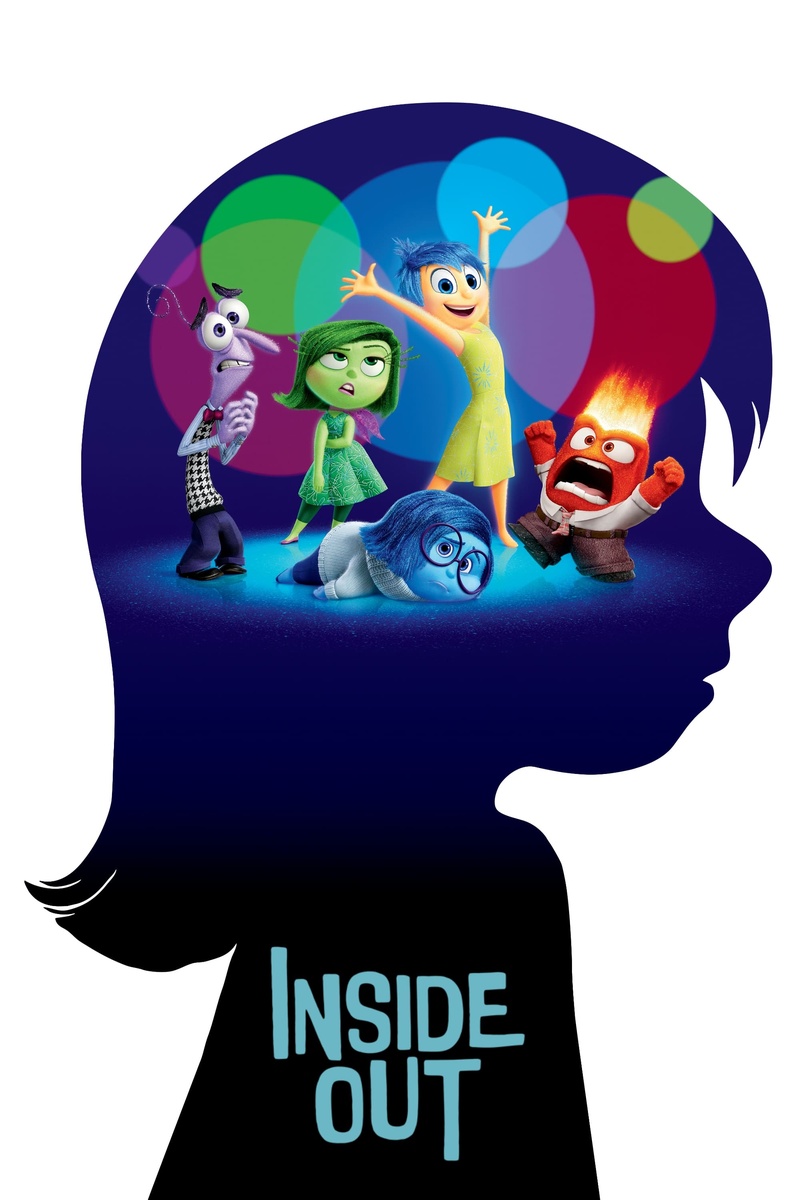
The characters in Riley’s mind are Joy, Sadness, Anger, Fear, and Disgust. Each represents a different protective psychological response that children experience in everyday life.
Inside Out characters and emotions show children that no feeling in the mind is bad or unnecessary on its own. Each character has a watch and a special job at the control center, and together they support the child’s survival and ability to adapt to new situations. Understanding these characters can also soften the way parents respond to their children’s behavior.
Joy and Sadness: A balance of opposites
Joy symbolizes the pleasure of living, motivation to solve problems, and positive energy. Sadness represents slowing down after a loss, seeking compassion from others, and the body’s need to relax.
Parents often want their children to be happy all the time, with Joy always at the controls. But these two opposites support and complete each other, much like night and day. Without one, the other loses some of its meaning; children need room for Sadness as much as Joy to cope with disappointment.
Anger, Fear, and Disgust: Protective mechanisms
Anger represents setting boundaries against unfairness. Fear helps protect against physical danger, while Disgust helps children avoid situations that could harm their health or social standing.
Adults often label these feelings as negative and try to suppress them, but they are actually some of a child’s most basic safety shields. Defiant outbursts, which often peak around ages 2 to 3 and challenge parents, are a natural part of a child’s effort to become more independent and test boundaries through Anger.
What does Sadness teach parents and children?
The Sadness character teaches that crying or feeling unhappy is not a weakness. Instead, it can be a healthy step toward healing, calming down, and receiving support from others.
When parents see a crying child, their instinct may be to quiet them, distract them, and cheer them up right away. But the importance of sadness becomes clear in those moments when tears are flowing. Tears are one way the body releases built-up stress and regulates itself. Rather than telling your child, “There’s nothing to cry about; it’s over,” allowing them to experience their feelings and cry safely with you can build inner resilience. Many experts say that, for children over age 3, creating a compassionate space for expressing difficult emotions instead of immediately suppressing them can support long-term psychological resilience.
How can Inside Out support emotional intelligence in children?
Parents can connect the film’s concrete characters with everyday events to help children name their feelings. In this way, the animation becomes an effective, nonjudgmental tool for teaching emotional intelligence with movies.
Early emotional intelligence (EQ) develops when children first learn to recognize their own feelings accurately. When your child gets angry over a toy, asking, “Is Anger at the control center right now?” can help them work through anger management in children without guilt, as an outside observer. These constructive approaches also support empathy—the ability to see situations from another person’s perspective—and overall cognitive development. You can use playtime at home to support these skills. Yuppo’s developmental analysis can assess not only whether your child performs social-emotional skills, but also the level at which they perform them. You can then use activity plans prepared for that level, using materials that are easy to find at home.
When should you seek help for a child’s emotional distress?
If emotional reactions such as anger or extreme anxiety do not settle for weeks, disrupt the family’s daily routines, and repeatedly prevent the child from communicating healthily with peers, it is important to consult a professional.
Every child’s emotional response differs in intensity and duration, and temperament plays an important role. The American Academy of Pediatrics (AAP) notes that children’s emotional development varies widely with age and that short-term changes in behavior, sleep, or appetite are often normal during stressful periods. However, lasting signs that parents struggle to resolve on their own and that reduce a child’s quality of life may indicate a need for professional guidance.
Summary and next steps
Name the emotions: When your child is having a difficult moment, help them describe what they feel by using the film’s colors or character names to reduce the intensity.
Make room for Sadness: When your child cries, instead of changing the subject right away, hug them and give them time to experience the emotion and calm down.
Don’t take reactions personally: Remember that outbursts, especially between ages 2 and 4, are not deliberate attacks against a parent but natural responses from a brain that is still developing.
Use play as a tool: If your child has trouble expressing emotional states, encourage them to act out the feelings with stuffed animals or simple drawings.
When should you call a doctor?
It is generally normal for children to experience intense feelings, especially during developmental leaps and periods of tiredness. However, support from a child psychiatrist, psychologist, or other qualified child-development professional is important when the following signs appear:
A child over age 3 has severe tantrums that take hours to calm, happen several times a week, and involve a tendency to physically harm themselves or others,
There are sudden, significant disruptions in sleep or eating habits that last longer than 2 weeks without an underlying physical illness,
A child age 4 or older continually avoids social settings such as a playground or peer group and shows intense anxiety for at least 3–4 months,
Clear signs of regression, such as a child who was fully toilet trained beginning to wet the bed for a prolonged period, appear without a traumatic or stressful event and do not improve.
This content is for informational purposes only. Always consult your child’s pediatrician for diagnosis and treatment.
To better understand your child’s unexpected emotional reactions and approach to everyday events, you can use a temperament test based on scientific research. By completing the temperament and parenting-style tests in the Yuppo app, you can better understand your child’s nature and access concrete strategies for handling difficult moments through expert-created “compassionate parenting” content tailored to their temperament.
Frequently Asked Questions
What age is Inside Out appropriate for?
Because Inside Out includes abstract mental concepts, it is generally better suited to children age 5 and older, who are more likely to understand the characters, subtext, and story. Younger children may enjoy the animation’s bright colors and movement but may have trouble processing its more complex emotional messages.
Could Fear in Inside Out upset my child?
In most cases, children are not negatively affected by Fear because the character is fearful himself, and his role in protecting the child from danger is presented in an exaggerated, funny way. However, children under age 4 who are especially sensitive to what they watch may experience brief anxiety.
How should I explain Sadness from Inside Out to my child?
You can describe Sadness as a soft, blue friend who tells us to slow down, rest, and hug the people we love when we are tired or have lost something. Explain simply that Sadness is not trying to hurt us; it helps give the body time to heal.
How can this movie teach my child to accept emotions instead of hiding them?
Bring the idea into everyday conversations by explaining that every emotion at the control center has an important job. Sometimes Anger takes over and sometimes Sadness does, and listening to each feeling is a natural part of being human.
Is Inside Out 2 helpful for children’s emotional development?
Inside Out 2 introduces more complex social emotions, including Anxiety, Envy, Embarrassment, and Ennui. It can be a useful visual tool, especially for children ages 8–12, as they make sense of the intense emotional changes that can come with the transition toward adolescence.
What should I ask my child about feelings after the movie?
To help your child express themselves without feeling judged, ask open-ended, non-blaming questions such as, “Which character ran the control center most today?” or “When Anger took over, what did you feel like doing?” Keeping the questions playful can make sharing easier.
References
Ekman, P. (1992). An argument for basic emotions. Cognition & emotion, 6(3-4), 169-200.
Keltner, D., & Ekman, P. (2015, July 3). The science of ‘Inside Out’. The New York Times.

Dr. Çiğdem İrem İleri
Developmental Psychologist
After graduating from Koç University in 2019 with a double major in Psychology and Media and Visual Arts, alongside track programs in Design, Gender Studies, and Media and Management, Çiğdem İrem İleri began her integrated doctoral studies in Developmental Psychology at the same institution that same year.