How to Teach Kids Empathy: Milestones and Everyday Strategies

This article is approved by Çiğdem İrem İleri
Published: 08 April, 2026
Updated: 13 August, 2026
Key Takeaways
Empathy development in children usually begins around 18–24 months with noticing another person’s sadness and reaches the ability to take another person’s perspective around ages 4–5.
Emotional responses do not appear overnight; they are built gradually over the years as a child’s cognitive development progresses.
To teach your child about emotions, start by naming your own feelings and theirs in simple words during the day, such as “You look sad right now.”
Young children’s reluctance to share their toys is not a lack of empathy. It reflects the egocentric stage that is a normal part of development.
Empathy development in children is usually a gradual process that unfolds over years as they learn to understand what other people feel and respect those feelings. From birth, babies focus mainly on their own needs. Over time, realizing that the people around them also have an inner world becomes one of the biggest steps in emotional growth. This journey can sometimes be challenging and require patience from parents. If you are wondering when your child will start thinking about others, this guide explains the milestones of empathy development by age and ways to support the process with compassion.


What Is Empathy in Children, and Why Does It Matter?
Empathy in children is the ability to notice what others are feeling and respond appropriately. It is an important skill that forms the foundation of healthy social relationships. When a young child goes to a friend who has fallen or offers them their own toy, this is more than a rule about being polite; it reflects a deeper understanding. This ability is one of the most important building blocks when it comes to supporting emotional intelligence development from birth to age 6. For the skill to become fully established, however, the relevant areas of the child’s brain need time to mature. Every child follows their own developmental path, learning empathy through practice, much like walking or talking.
Emotional vs. cognitive empathy
Emotional empathy means experiencing another person’s feelings internally, while cognitive empathy means mentally understanding that someone else may have a different point of view. In the early years, emotional reflection is more common. Developmental psychologists state that mirror neurons in the brain allow emotional imitation from birth, providing an early foundation for empathy. As children grow, cognitive empathy helps them begin asking themselves questions such as, “Why are they crying? What might have happened?”
How empathy supports healthy social relationships
Children who develop the ability to understand other people’s feelings are often better able to form strong relationships with peers and resolve group conflicts peacefully. When a problem arises, trying to understand why someone acted a certain way instead of reacting physically is a critical step toward healthy social skills.
How Does Empathy Development Progress by Age?
Children’s process of making sense of another person’s feelings progresses gradually, from reflexive crying in infancy toward genuine perspective-taking around ages 5–6. Parents often expect their children to care about other people’s feelings at every age, but empathy development by age depends largely on neurological maturity. According to Jean Piaget’s theory of cognitive development, children ages 2–7 naturally tend toward egocentrism and see the world mainly from their own perspective. Knowing the patterns of each age group can therefore help set realistic expectations.
The table below shows the general course of empathy development by age range:
Age Range | Developmental Milestone | Parent’s Role |
|---|---|---|
0–12 months | Starting to cry when hearing another baby cry (emotional contagion). | Clearly show your own emotions through facial expressions. |
1–2 years | Noticing that someone else is sad but not knowing how to help. | Start naming emotions with simple words (“They’re crying; they’re sad”). |
3–4 years | Offering a favorite object, such as their own blanket, to comfort someone. | Talk about other people’s feelings through stories. |
5–6 years | Understanding that another person may have a different feeling or need. | Ask open-ended questions that connect causes and effects. |
This table is only a general guide. It is important to remember that every child may experience these stages at different times according to their individual pace and personality.
Ages 0–3: Emotional contagion and awareness
During the first three years of life, babies mirror the emotional states of people around them, taking the first steps toward empathy through what is called emotional contagion. A toddler who giggles for no apparent reason when their mother laughs or pouts after seeing a peer crying at the park offers a clear example. According to the American Academy of Pediatrics (AAP), children around 18–24 months beginning to offer their own comfort strategies, such as a favorite toy, to someone who is sad is considered an important sign of early empathy.
Ages 3–6: Moving from egocentrism to perspective-taking
Preschoolers usually begin moving beyond focusing only on their own wishes and noticing that other people may think differently between ages 4 and 5. During this period, self-regulation skills increase. A child starts to understand that they should offer a sad friend the doll the friend likes, rather than their own toy car. Preschool empathy education takes shape during these years through guidance-based conversations between adults and children. Experts note that children ages 4–5 begin showing perspective-taking skills as they understand that other people may have different intentions.
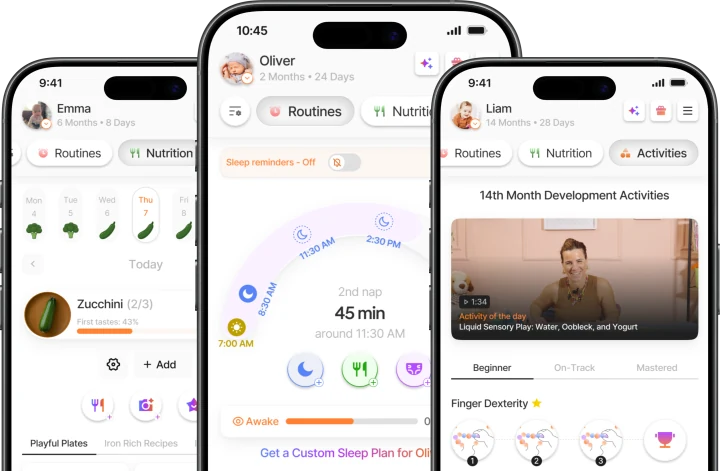
As you observe your child’s social-emotional skills, you can use the activity module in the Yuppo app to assess their current level and access activity plans designed for that level of difficulty using materials that are easy to find at home.
5 Effective Ways for How to Teach Kids Empathy
Parents can naturally teach children to understand others by naming emotions in daily life, modeling appropriate behavior, and asking open-ended questions. For parents wondering how to teach kids empathy, the most important step is to present it not as a demanding lesson but as a conversation woven into everyday life. Knowing that their feelings are valid helps children show the same understanding toward others.
Use books: Talk about the characters’ feelings while reading stories.
Offer responsibility: Give your child simple, age-appropriate tasks such as caring for a pet or plant.
Apply household rules with compassion and consistency: Explain the other person’s feelings while setting boundaries.
Use emotion boards: Match the feeling of the day with facial expressions.
Play together: Create scenarios in which the toys “talk” during play.
Practicing how to name and express emotions
For children to recognize their inner world and other people’s feelings, it is critical for parents to put immediate emotions into concrete words. Empathy in children is nurtured by validating statements such as, “You’re very angry because your sibling took the car from you. I can see that.” A child whose feelings are not dismissed gradually learns to recognize other people’s feelings as valid, too.
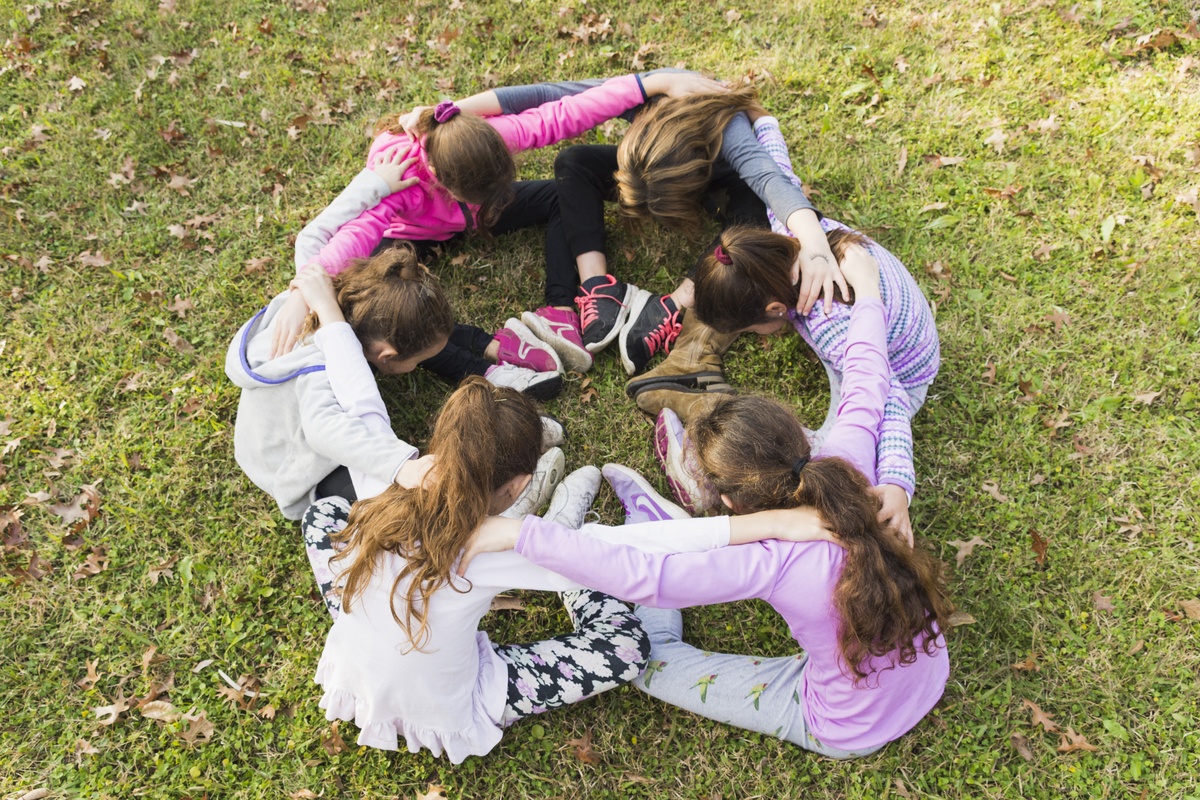
Be a role model: The impact of parent behavior
Children learn empathy less from theoretical warnings than from directly observing how their parents treat other people, animals, and the environment with compassion in daily life. The power of connecting with your child and supporting development is largely reflected in how you respond to events. The tone you use when you let someone merge in traffic or speak with a sad friend on the phone can be one of the strongest empathy lessons for your child.
Common Mistakes Parents Make About Empathy Development in Children
Expecting more maturity than a child’s age allows or telling a crying child to suppress their feelings can interfere with emotional understanding. Parents who worry that their child has a lack of empathy in children often expect 2- or 3-year-olds to share before they are cognitively ready. Forcing a child to say “sorry” does not create genuine remorse; it turns the word into a mechanical way to end the tension. Instead, offering concrete repair steps, such as “Your friend got hurt. Should we bring some ice to help them feel better?” supports more lasting learning.
When Should You Seek Professional Support?
If a child remains consistently and completely indifferent to peers’ pain or joy after age 5, or intentionally harms people or animals, professional guidance is warranted. Every child sometimes acts selfishly, has tantrums, or pushes a friend during play; these moments are a natural part of growing up. If such reactions become persistent, the child does not internalize reminders at all, and shows no sign of awareness of other people’s feelings, consulting a developmental specialist or child psychologist may support the child’s social adjustment.
Summary and Next Steps
Gradual development: Remind yourself that your child will not learn empathy in one day; it is a neurological process that develops with age.
Talk about feelings: This week, practice naming your child’s intense feelings without judgment.
Adjust expectations: When a child under age 3 does not share toys, view it as a natural developmental stage rather than a character problem.
Observe: Watch how your child treats other living beings, and notice and encourage positive behavior right away.
When Should You Call the Doctor?
If communication skills that support the foundations of empathy and social development, such as eye contact or joint attention, are not seen at the expected ages, a doctor’s evaluation is needed. Emotional unresponsiveness in young children may sometimes relate only to temperament and is often normal. However, some signs may indicate a need for developmental or neurological support:
A baby around 9–12 months who does not respond at all when called by name or does not make regular eye contact with you does not necessarily have a diagnosis, but should be monitored by a pediatrician.
Around 18–24 months, showing complete reluctance to look at an object or event you point to, an act known as joint attention.
Children over age 3 who consistently prefer playing in isolation with objects rather than showing interest in people.
A sudden or gradual loss of previously acquired social and communication skills.
This content is for informational purposes only. Always consult your child’s pediatrician for diagnosis and treatment.
During the parenting journey, it is valuable to closely follow children’s social-emotional development as well as their physical growth. If you would like to understand your child’s emotional responses and unique personality more closely, you can take the science-based temperament test in the Yuppo app. It can offer insight into how your child experiences the world and provide access to expert-created parenting content.
Frequently Asked Questions
Can babies show empathy?
Babies cannot immediately understand another person’s sadness mentally, but they begin building the foundations of empathy by reflexively copying emotions around them. Crying in response to another crying baby is an early, natural form of empathy expressed through emotional contagion. This response does not yet mean the baby understands why someone else is upset.
Does hurting others mean my child lacks empathy?
Because impulse control is still developing through ages 3–4, young children may hit or push during a toy dispute. This usually reflects developing self-regulation rather than a lack of empathy. With patient, consistent boundaries and help repairing the situation, these behaviors tend to decrease over time as emotional and impulse-control skills mature.
How can I teach empathy to a preschooler?
The most natural way to teach preschoolers to understand others is to talk about situations through play and picture books. Ask open-ended questions such as, “Why do you think this character might be crying?” This helps your child begin making connections between what happens, how people feel, and what they might need.
Can reading books help children develop empathy?
Reading emotion-focused books regularly lets children safely explore what people may feel in different situations. Seeing characters experience a range of events helps children look beyond their own world and consider other perspectives. Talking about the characters’ feelings and possible reasons for their behavior can make this activity even more meaningful.
Is empathy something children are born with or learn?
Empathy has a biological foundation and inborn aspects, including mirror neurons, but turning this ability into lasting, meaningful behavior depends on interaction and learning. Parenting responses, everyday modeling, and opportunities to talk about feelings all influence how fully a child can develop and use this potential over time.
Can a child who struggles to express feelings still be empathic?
Children who cannot name the confusion or sadness inside them may find it harder to accurately read another person’s feelings and respond appropriately. Emotional awareness begins with learning to recognize one’s own feelings. With guidance from parents, children can gradually build the vocabulary and understanding needed to notice and respond to others.
References

Dr. Çiğdem İrem İleri
Developmental Psychologist
After graduating from Koç University in 2019 with a double major in Psychology and Media and Visual Arts, alongside track programs in Design, Gender Studies, and Media and Management, Çiğdem İrem İleri began her integrated doctoral studies in Developmental Psychology at the same institution that same year.