Emotional Intelligence in Children: A Guide to Social Success from 0 to 6

This article is approved by Çiğdem İrem İleri
Published: 25 May, 2026
Updated: 31 July, 2026

At a Glance
Emotional intelligence (EQ): Emotional intelligence in children encompasses self-awareness, emotional regulation, and empathy skills, shaping the mental foundation between ages 0 and 6.
Developmental stages: Empathy development and emotional awareness in infants progress step-by-step according to age during early childhood.
Parental guidance: Allowing children to name their emotions without suppressing them builds the foundation for social adaptability in preschool years.
Play support: Various emotional intelligence activities and home role-playing games can help children acquire healthy strategies to cope with challenging feelings.
In early childhood, emotional intelligence is a key developmental area that enables individuals to make sense of their own feelings and build healthy relationships with their environment. This guide presents the emotional development stages from 0 to 6 years and concrete support strategies that parents can implement. By strengthening your child's social-emotional capacity, you can make a balanced contribution to their future school and life adaptation.


What is emotional intelligence (EQ) in children and why is it important?
Emotional intelligence in children refers to an individual's capacity to recognize, express, manage, and connect with the emotions of others. As emphasized by the American Academy of Pediatrics (AAP), emotional intelligence directly impacts a child's potential to cope with stress and adapt to social environments.

Foundations of self-awareness and empathy
The foundations of self-awareness and empathy are shaped between ages 0 and 6 as the child connects their bodily sensations with mental emotional states and notices social cues from people around them. Social-Emotional Learning (SEL) approaches show that children with developed self-awareness can more easily identify physical reactions during moments of anger or anxiety.
Emotional regulation skills acquired early can enhance a child's capacity to calm themselves down when facing challenging situations. For more detailed information on early self-identity formation, you can explore our guide on self-formation in childhood and infancy.
The impact of EQ levels on social relationships
High emotional intelligence levels in children contribute to resolving peer conflicts through consensus and adapting to social settings. As noted in psychologist Daniel Goleman's theoretical work, emotional intelligence helps children maintain a healthy balance of academic and social success in school life.
Social skills education in children begins with interactions within the family. Children who learn to understand others' feelings can more easily adopt rules such as cooperating and waiting their turn. For guidance on children entering educational life, you can review our tips on social and emotional adaptation when starting school.
Emotional Intelligence and Developmental Milestones in Children Aged 0-6
Emotional intelligence and developmental milestones in children aged 0-6 follow a gradual path, moving from simple expressions in infancy toward emotional regulation and empathy in preschool years. Each age stage has its own unique emotional needs and developmental thresholds.
Age Range | Core Emotional Skill | Example Developmental Expression |
|---|---|---|
0-1 Year | Basic Trust and Bonding | Turning toward caregiver's voice and reactions |
1-3 Years | Emotion Recognition and Autonomy | Seeking independence, expressing simple emotional reactions |
3-6 Years | Empathy and Self-Regulation | Naming emotions, waiting turn in games |
The developmental table above summarizes how children's emotional capacities expand by age group. Recognizing these stages helps parents set expectations appropriate to their child's developmental level.
0-2 years: Basic trust and first emotional expressions
The 0-2 year period in infants is a stage of building secure attachment with the caregiver and expressing basic emotional responses through facial expressions. According to data from the United Nations Children's Fund (UNICEF), meeting an infant's needs promptly and responsively forms the foundation for emotional resilience later in life.

Empathy development in infants can first be observed as "emotional contagion"; an infant hearing another baby cry may feel distress. Most children typically begin recognizing themselves in a mirror and understanding they are independent individuals between 18 and 24 months.
3-6 years: Naming emotions and peer interaction
The 3-6 age range is a period of naming emotions as verbal skills develop and sharing empathy-based interactions with peers. During this process, children can pair expressions such as "I am sad," "I am angry," or "I am surprised" with the situations they experience.
As peer interaction increases, cooperative play becomes increasingly important. To support your child's empathy capacity, you can draw from recommendations in our development of empathy skills in childhood guide.
Parenting strategies to support emotional intelligence at home
Parenting strategies to support emotional intelligence at home involve validating the challenging feelings a child experiences without rejecting them and offering guidance to manage those feelings. Teaching a child what emotional regulation is requires setting boundaries while acknowledging their feelings.
Emotion validation and labeling techniques
Emotion validation and labeling techniques involve labeling a child's intense feelings with verbal phrases to help them calm down mentally. Constructive phrases like "It is completely natural to feel angry right now because your toy broke" help the child feel understood.
To track your child's temperament structure and emotional needs tailored to their developmental period, you can take advantage of the developmental tracking features in the Yuppo app. Regularly recording your baby's and child's stages helps you easily understand the causes of emotional fluctuations.
Emotional intelligence activities and problem-solving through play
Emotional intelligence activities and problem-solving through play allow children to process daily emotional stress in a safe simulation environment. Symbolic play and role-playing activities enable children to express the stress they experience.
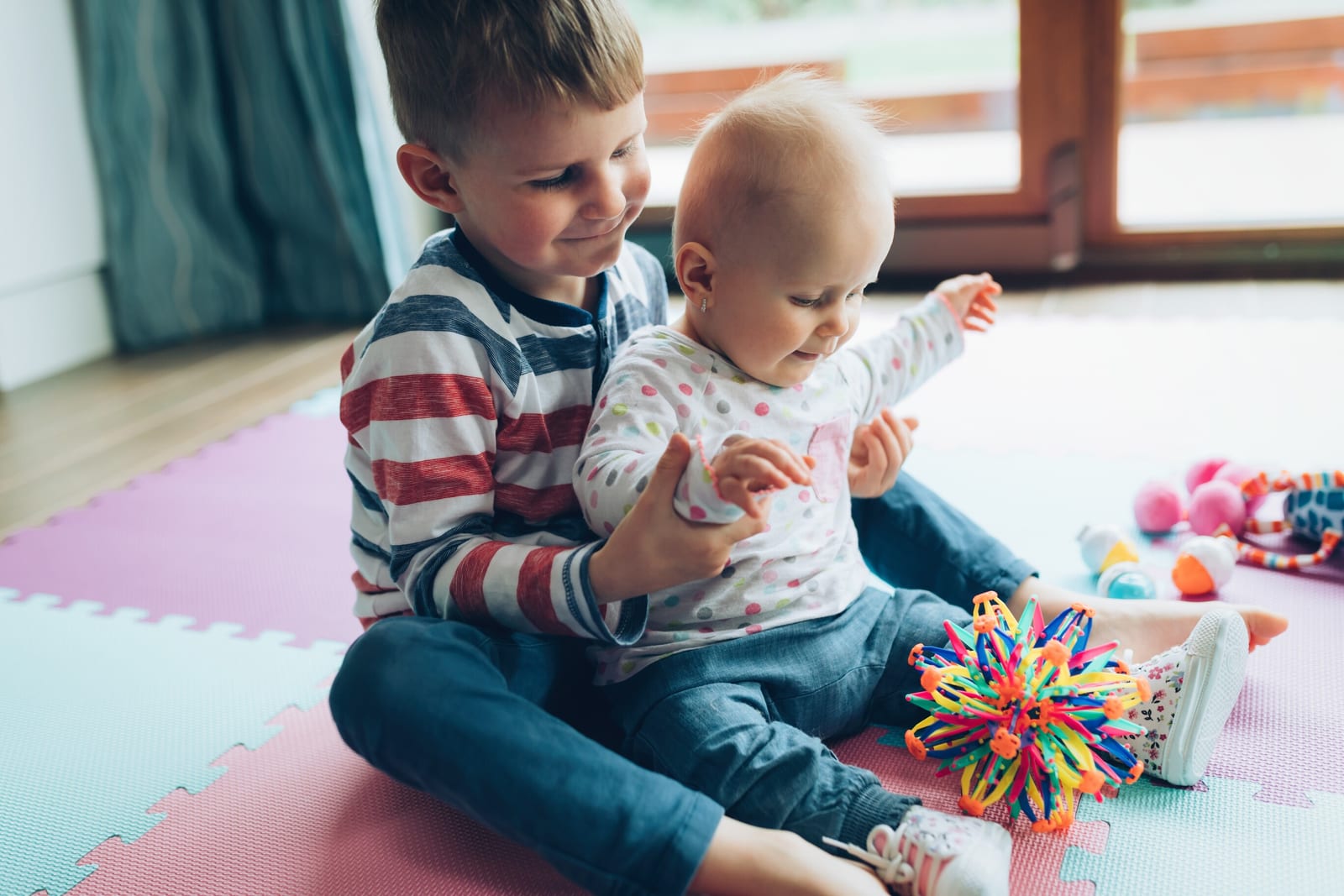
Within the scope of emotional intelligence activities at home, matching emotion cards with puppets can be preferred. To receive guidance on the effect of play processes on children, you can examine our article on the role of parents in play. Providing interactive content suggestions tailored to your child's age group, Yuppo offers practical alternatives when planning playtime.
Summary and Next Steps
Foundations of emotional intelligence built in early childhood offer a lasting framework that shapes an individual's social relationships and psychological resilience throughout life.
Developmental process: Emotional intelligence in children develops gradually between ages 0 and 6 with environmental support.
Emotion validation: Labeling emotions like anger, fear, and frustration rather than ignoring them reinforces secure attachment.
Modeling: How parents manage their own emotional responses serves as the most effective learning model for the child.
Activity support: Practice empathy by incorporating emotion cards or role-playing games into daily routines.
Action you can take this week: When your child experiences an intense emotion, help them describe physical sensations (e.g., "Do you feel a tightness in your tummy?") instead of intervening immediately.
When to Consult a Doctor?
It is generally natural for children to experience periodic emotional fluctuations or reactions during development. However, if symptoms are severe, developmentally inappropriate, or negatively affect daily life, an evaluation by a specialist is recommended:
Persistent crying and inability to be calmed: Excessive restlessness and inability to soothe lasting for weeks in infants aged 0-2 without an obvious physiological cause
Severe anger, self-harm, and aggression: Temper tantrums in children older than 3 that frequently reach the level of head-banging, biting, or causing harm to themselves or their surroundings
Social withdrawal: Complete avoidance of peer interaction, eye contact, or emotional unresponsiveness in children aged 3-6
Developmental regression: A noticeable and persistent decline in previously acquired self-care skills (such as toilet habits) or speech abilities
This content is for informational purposes only; always consult your pediatrician for diagnosis and treatment.
Closely tracking your child's social and emotional development steps helps you offer the right support when needed. You can manage this process more consciously with age-appropriate activities and developmental tracking tools.
To regularly record developmental steps and access temperament-focused content, discover the Yuppo app.
Frequently Asked Questions
At what age does emotional intelligence start to develop in children?
Emotional intelligence in children begins developing from birth through secure attachment with caregivers in infancy. In the first few months, infants sense feelings around them through emotional contagion, typically gaining self-awareness between 18 and 24 months to strengthen their emotional foundation.
How can I tell if my baby is showing empathy?
The first sign of empathy in a baby is often seen between 1 and 2 years old when they offer a toy to someone crying or approach them with a concerned expression. These behaviors indicate that they recognize another person's emotional state and are responding to it.
What games can be played for emotional regulation?
For emotional regulation, matching emotion face cards, blowing bubbles for breath control, and puppet role-playing games can be played. These activities help children recognize challenging feelings and acquire self-soothing skills.
How can I measure my child's emotional intelligence?
A child's emotional intelligence cannot be measured by a single numerical score like an academic exam. Daily observation in the home environment serves as a key tool for tracking emotional regulation and empathy. Detailed expert assessments are conducted by child psychologists using clinical observation and developmental scales when needed.
How do parent emotional reactions affect child development?
Parental emotional reactions serve as a primary model from which children learn to manage their own emotions. Children of parents who maintain a calm and accepting approach can develop healthy emotional regulation skills.
How should emotional intelligence be supported in introverted children?
Emotional intelligence support in introverted children should be provided by allowing the child to express feelings through drawing or play without pushing them. Respecting the child's temperament and validating their feelings supports self-confidence development.
References

Dr. Çiğdem İrem İleri
Developmental Psychologist
After graduating from Koç University in 2019 with a double major in Psychology and Media and Visual Arts, alongside track programs in Design, Gender Studies, and Media and Management, Çiğdem İrem İleri began her integrated doctoral studies in Developmental Psychology at the same institution that same year.