13 Month Sleep Regression: Signs, Causes, and What You Can Do

This article is approved by Yuppo Lab Sleep Expert
Published: 16 October, 2026
Updated: 16 October, 2026
At a Glance
The 13 month sleep regression is generally a temporary phase in which overlapping milestones like walking, emerging language, and separation awareness disrupt your toddler's established sleep patterns.
Most 13-month-olds need about 12 to 15 hours of total sleep in a 24-hour period, including naps.
Night wakings, nap resistance, and bedtime clinginess are the most common signs.
Consistent bedtime routines and small wake-window adjustments help most toddlers move through this phase, typically within two to six weeks.
The 13 month sleep regression is a temporary disruption tied to the developmental changes your toddler is moving through right now. As the NHS explains, all babies change their sleep patterns as they grow, and these shifts are a normal part of development. If your toddler was sleeping well and now wakes at 2 a.m. standing in the crib or fights bedtime after weeks of smooth evenings, a cluster of new skills is usually behind it.
Below you'll learn why sleep shifts at this age, how to spot the signs, and what you can do to help everyone rest again.


What is the 13 month sleep regression
Sleep regression at 13 months is a popular parenting term for the disrupted sleep that often accompanies developmental leaps around the first birthday. It is not a formal diagnosis, but it captures a real pattern many families recognize. After the first birthday, most toddlers need about 12 to 15 hours of total sleep per day, as the NHS notes. During a regression those hours feel fragmented, yet your child's overall sleep need stays the same.
How it differs from a rough night
A single bad night usually has a clear cause, whereas a sleep regression follows a repeating pattern over several days.
Lasts more than a few days. Several consecutive nights of disrupted sleep, not just one off night.
Affects both naps and nighttime. A rough night leaves daytime sleep untouched; a regression disrupts naps too.
Coincides with a developmental change. New walking, new sounds, or stronger separation protests appear alongside the sleep shift.
How long it typically lasts
Most toddlers move through a 13 month sleep regression in about two to six weeks, though every child's timeline differs. If you navigated the 8 month sleep regression, you know the arc: sleep gets bumpy, the new skill settles, and rest returns. The NHS advises being ready to adapt routines as your child enters each new stage.

Why your toddler's sleep changes around 13 months
Several developmental milestones tend to cluster around 13 months, pulling your toddler's attention away from rest even in the middle of the night.
Walking and motor milestones
Walking and other major motor milestones generally appear around the first birthday. The American Academy of Pediatrics (AAP) notes that toddlers at this stage begin walking alone, pulling toys, and starting to run.
Picture your 13-month-old waking at 2 a.m. to practice pulling up on the crib rail, staying alert for half an hour before drifting off. Growth spurts, teething, and illness can pile on further disruption, as the NHS points out. For more on how growth spurts interact with sleep, see our overview of baby growth spurts.
Language and cognitive leaps
Language development picks up speed around 13 months as your toddler experiments with new sounds and early words. A child in the middle of a language burst may wake overnight babbling new syllables, unable to settle for close to 20 minutes. Your toddler's circadian rhythm is still maturing, so cognitive excitement can temporarily shift sleep-wake timing.

Separation anxiety and object permanence
Your toddler's growing grasp of object permanence can make bedtime separations feel more distressing. The AAP notes that many toddlers experience a new wave of separation anxiety around 15 to 18 months; at 13 months, awareness of separations is already growing. As independence develops, protests at parting can become louder and harder to soothe, especially when your child is tired or unwell.
Common triggers at this age include:
Practicing motor skills in the crib instead of settling
Processing new words and sounds that keep the brain active
Protesting when a caregiver leaves at bedtime
Signs of the 13 month old sleep regression
Extra night wakings, nap resistance, and bedtime clinginess typically signal that a 13 month old is going through a sleep regression. If your child is fighting bedtime after weeks of smooth evenings, a regression is the likely cause. If you went through the 4 month sleep regression earlier, the pattern will look familiar.
Nighttime waking patterns
Nighttime wakings during a regression tend to differ from earlier hunger cries because your toddler is fully alert. You may find your child standing in the crib, chatting, or trying to climb, often during the first half of the night, for 20 to 40 minutes at a stretch.
Nap resistance and shorter naps
Nap resistance at 13 months often shows up as standing or bouncing in the crib instead of settling. A toddler who napped twice a day may suddenly refuse the afternoon session, playing happily in the crib instead. This does not automatically mean your child is ready for one nap; most 13-month-olds still benefit from two.
Increased clinginess at bedtime
Bedtime clinginess often intensifies during a regression because your toddler is more aware that you are leaving the room. Your 13-month-old may cling to your shirt and cry the moment you step toward the door. The AAP recommends keeping goodbye rituals short and loving so the transition does not drag on.
Quick checklist of signs:
Multiple night wakings while fully alert
Refusing or cutting short one or both naps
Crying or clinging when you leave at bedtime
Daytime overtiredness despite the usual schedule

Sleep regression or separation anxiety: how to tell the difference
A sleep regression and separation anxiety share visible signs but differ in triggers, timing, and daytime behavior.
Where the signs overlap
Night wakings, bedtime tears, and increased clinginess appear in both a sleep regression and separation anxiety, making them hard to tell apart at first. Around 13 months it is common for both to occur at once. The AAP notes that separations are harder when children are tired, so a regression that shortens sleep can intensify separation protests.
Key differences to watch for
The clearest way to distinguish a sleep regression from separation anxiety or teething is to watch what happens during waking hours. The table below compares the three most common sleep disruptors at this age.
| Feature | Sleep regression | Separation anxiety | Teething |
|---|---|---|---|
| Typical duration | A few weeks | Weeks to a few months | A few days per tooth |
| Main daytime sign | Nap resistance, shorter naps | Clinginess during play | Drooling, gum rubbing |
| Main nighttime sign | Awake practice sessions in crib | Crying when you leave | Fussiness eased by comfort |
| Mood when awake | Generally cheerful between wakings | Anxious without caregiver | Irritable near mealtimes |
| What helps most | Adjusted wake windows | Short goodbye rituals | Gum comfort measures |
Seeing signs from more than one column at the same time is very common and does not point to a problem.

How to handle the 13 month sleep regression
Predictable daily rhythms and small schedule tweaks are the most effective ways to guide your toddler through a regression without creating new challenges.
Keep a consistent bedtime routine
A consistent bedtime routine signals your toddler's body that sleep is coming. The NHS highlights that too much stimulation just before bed can wake your child up again, so wind down with quieter activities like reading. The AAP recommends keeping the same waking time, mealtimes, nap time, and play times on weekdays and weekends. Turn off all screens at least 60 minutes before bedtime, and dim the lights to create a sleep-supportive environment.
Adjust wake windows and nap timing
Wake windows may need a gentle stretch of 15 to 30 minutes if your 13 month old is fighting naps. Rather than dropping a nap, extend the awake period slightly so sleep pressure builds. Logging these shifts in Yuppo with the sleep tracking feature keeps nap and bedtime data in one place instead of scattered in tired memory. Give each adjustment a few days before evaluating.
Offer comfort without creating new sleep associations
Brief, calm check-ins reassure your toddler without building habits that are hard to reverse. Keep the room dim, your voice low, and the interaction short, since the AAP notes that insufficient sleep can lead to irritability and difficulty concentrating. Our guide to baby sleep associations explains why these small choices at night add up.
Common mistakes to avoid
Dropping a nap too early or pushing bedtime later are reactions that usually backfire. Other pitfalls include:
Introducing a new sleep crutch that outlasts the regression
Skipping the wind-down and jumping from active play to lights-out
Changing the routine every few nights before a single change has had time to work
If disruption stretches well beyond six weeks, daytime mood shifts markedly, or gained skills seem to regress, check with your pediatrician.

Summary and Next Steps
This phase passes. Most toddlers move through the 13 month sleep regression within a few weeks once new skills settle.
Same wake time every morning. A steady wake-up on weekdays and weekends anchors your toddler's internal clock.
Two naps usually still fit at 13 months. Resist dropping to one nap based on the regression alone; watch your child's energy for two weeks first.
Log nap start and end times, bedtime, and each night waking for five consecutive days. A few days of records reveal patterns tired memory misses.
Comfort without over-correcting. Short, calm check-ins support your toddler without creating habits that outlast the regression.
This content is for information only; always consult your pediatrician for diagnosis and treatment.
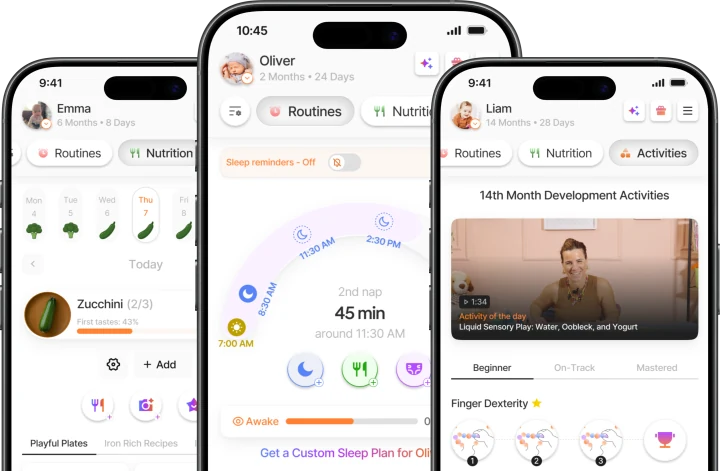
Keeping track of shifting nap times and overnight wakings is hard when every night feels different. In Yuppo, you enter your child's birth date and follow expert-prepared developmental milestones week by week, so you can see which motor or language leap may be behind tonight's extra wake-ups.
Frequently Asked Questions
How long does the 13 month sleep regression last?
Most toddlers move through the 13 month sleep regression in about two to six weeks when their daily rhythm stays steady. The exact timeline depends on which skills are developing at the same time. Keeping routines consistent and wake windows stable tends to shorten the disruption, while frequent schedule changes can stretch it.
Should I drop to one nap during the 13 month sleep regression?
Most 13-month-olds still benefit from two naps, and a sleep regression alone is not a reliable signal to switch. Nap refusal during this phase usually reflects developmental excitement rather than genuine readiness. Wait for at least two to three weeks of actual single-nap days before making the change.
Is the 13 month sleep regression the same as the 12 month regression?
The 13 month and 12 month regressions share similar triggers and generally fall within the same developmental window around the first birthday. One family might notice it at 12 months, another closer to 14 months. The underlying causes and practical strategies are essentially the same.
Can teething cause sleep problems at 13 months?
Molars often begin emerging around 13 months and can add discomfort on top of a sleep regression. Teething-related disruption typically lasts only a few days per tooth, unlike a regression that stretches for weeks. Heavy drooling and gum rubbing alongside the sleep trouble suggest teething is contributing.
Will my 13 month old go back to sleeping through the night?
Consolidated nighttime sleep usually returns once the new skills your toddler is practicing begin to feel automatic. Every child's timeline is slightly different, but families who previously had a solid sleeper tend to see that pattern re-emerge. Patience and a steady daily rhythm are the strongest supports while you wait.
References

Yuppo Lab
Sleep Expert

Sleep
Learn 6 month sleep regression signs, likely duration, and practical ways to respond. Navigate your baby's changing sleep with Yuppo.

Sleep
Discover when sleep regressions strike and what to do at each stage, from 4 months to 2 years. Track your baby's sleep milestones with Yuppo.

Sleep
Learn why sleep regression strikes around 20 months and what you can do to help your toddler rest again. Track your toddler's sleep patterns with Yuppo.