3 Month Sleep Regression: Signs, Timing, and What to Do

This article is approved by Yuppo Lab Sleep Expert
Published: 15 October, 2026
Updated: 17 October, 2026

At a Glance
The 3 month sleep regression is best treated as a description of changing sleep, not as the explanation for each waking.
Between 3 and 6 months, changing feeding needs may allow longer nighttime stretches, although many babies continue waking.
Night waking, variable naps, hunger cues, and temperature discomfort should be considered as separate pieces of the same pattern.
Predictable sleep cues, flexible expectations, quiet nighttime care, and a clear sleep space offer practical support.
Parents commonly use “3 month sleep regression” when sleep becomes less predictable between 3 and 4 months. If your baby’s manageable routine has suddenly become harder, this change does not mean you caused it or need to fix everything tonight.
You will learn how to describe the pattern, check for hunger or discomfort, respond to naps and nighttime waking, and keep the sleep space clear. You can also use the broader sleep resource library to understand sleep changes across infancy.


What is the 3 month sleep regression?
The 3 month sleep regression is a parent shorthand for noticeable sleep changes between 3 and 4 months, not a complete explanation for them. The phrase may describe harder settling, different waking patterns, or naps that no longer resemble last week’s naps.
A descriptive label, not an explanation
The label describes what you notice but cannot tell you why your baby woke. Feeding needs, temperature, and ordinary variation can produce similar nights, so it helps to record the actual change instead of assuming one cause.
Why the term “regression” can be misleading
The word “regression” suggests that your baby has lost progress, while sleep may simply look different from one period to the next. Research available through the National Library of Medicine (NLM) shows that between 5 weeks and 3 months, some infants develop longer nighttime stretches while many still wake and signal caregivers.
Describe the pattern in concrete terms:
Note whether the change affects bedtime, naps, or overnight sleep.
Record whether waking includes clear hunger cues.
Compare several days rather than judging one difficult night.
Notice how your baby feeds and behaves while awake.
A baby between 12 and 14 weeks who wakes repeatedly on one night may return to a familiar pattern the next night. That variation is more informative than the regression label alone.

Why does sleep change around 3 months?
Sleep between 3 and 4 months may change alongside shifting feeding needs, nighttime consolidation, and differences in comfort. These factors can overlap, which is why two similar wakings may need different responses.
Sleep cycles as pattern context
Sleep cycles offer useful language for describing periods of stirring and deeper sleep, but they do not identify the cause of an individual waking. Between 5 weeks and 3 months, some babies begin sleeping for longer nighttime stretches, while many continue to wake and signal, according to research indexed by the NLM.
Circadian rhythm as timing context
Circadian rhythm refers to the body’s day-night timing, but one unsettled night cannot show whether that timing has changed. Look instead at observable details, such as when sleep starts, whether the first nighttime stretch changes, and how naps vary across several days.
Changing feeding and growth needs
Feeding needs can shift between 3 and 6 months, sometimes allowing longer nighttime sleep but not producing the same pattern for all babies. The National Health Service (NHS) notes that fewer night feeds may allow babies in this age range to sleep longer.
Possible influences to check include:
A feeding need at that particular waking
Feeling too warm or too cold
A day with unusually different naps
Normal variation between consecutive nights
You may also hear these changes discussed alongside baby growth spurts, but that label cannot determine the reason for a specific waking.

What are the signs of a 3 month sleep regression?
Parents commonly describe 3 month sleep regression signs as a noticeable change in waking, settling, or naps between 3 and 4 months. No single sign confirms the reason, so your baby’s broader pattern matters.
Nighttime signs
Nighttime signs may include a different first sleep stretch, repeated stirring, or more difficulty returning to sleep after care. Compare these observations with your baby’s recent sleep rather than with another baby’s routine.
Nap-time signs
Changes called 3 month sleep regression naps may include shorter, longer, or less predictable daytime sleep. Nap variation alone does not reveal whether feeding, comfort, or timing contributed.
Daytime behavior that adds context
Daytime behavior helps you interpret a sleep change without assigning it one cause. Observe your baby’s alertness, feeding interest, comfort, and engagement during awake periods.
You might record:
When bedtime and naps began
How long settling seemed to take
Whether waking included hunger cues
What care your baby received
How your baby behaved after waking
For example, a baby between 12 and 14 weeks might take several brief naps one day and fewer, longer naps the next. A multi-day record shows the pattern more clearly than either day alone.

When does the 3 month sleep regression start, and how long does it last?
The 3 month sleep regression label is commonly used between 3 and 4 months, but the phrase cannot predict an exact start or finish. Focus on how your baby’s current pattern changes over time.
Typical timing range
Sleep changes described with this label may be noticed during the transition from the third to the fourth month. Because the name is an approximate parenting framework, it should not be treated as a calendar deadline.
If similar questions continue into the following month, the 4 month sleep regression guide addresses that age-specific label without implying that one phase begins on a fixed date.
Why duration varies
For the question “3 month sleep regression: how long does it last?” the label offers no reliable countdown. Hunger, temperature discomfort, and changes in the daily sleep pattern may resemble one another but resolve differently.
What improvement can look like
Improvement may first appear in one sleep period rather than across the whole day. Look for practical changes such as:
Settling becoming more familiar again
The first nighttime stretch becoming steadier
Naps varying less across several days
Fewer abrupt differences between consecutive nights
If a baby between 13 and 15 weeks has one unusually brief nap day, record it without redesigning the entire routine. The following few days will give you more useful context.
Is it a 3 month sleep regression, hunger, or discomfort?
You can interpret regression-like waking by checking hunger cues, temperature comfort, recent feeding, and your baby’s behavior while awake. One waking may not look like the next.
Sleep-cycle transitions
A sleep-cycle transition may look like stirring, movement, or brief sounds, but those behaviors alone do not reveal what your baby needs. Observe the full waking and respond to the cues you can see rather than relying on the regression label.
Hunger cues
Hunger is more likely when your baby puts hands to the mouth, turns toward the breast or bottle, or puckers, smacks, or licks the lips. The Centers for Disease Control and Prevention (CDC) identifies these behaviors as hunger cues.
A baby who roots and takes a full feeding after waking looks different from one who briefly stirs without clear hunger cues. Recent feeding history and your pediatrician’s individualized growth guidance provide additional context.
Temperature and comfort checks
Temperature discomfort can interrupt sleep alongside feeding needs. The NHS notes that babies wake to feed and that feeling too hot or too cold can disturb sleep.
Use a short review:
Look for specific hunger cues.
Check clothing and room comfort.
Recall the most recent feed.
Compare the waking with the rest of the day.
What can you do during the 3 month sleep regression?
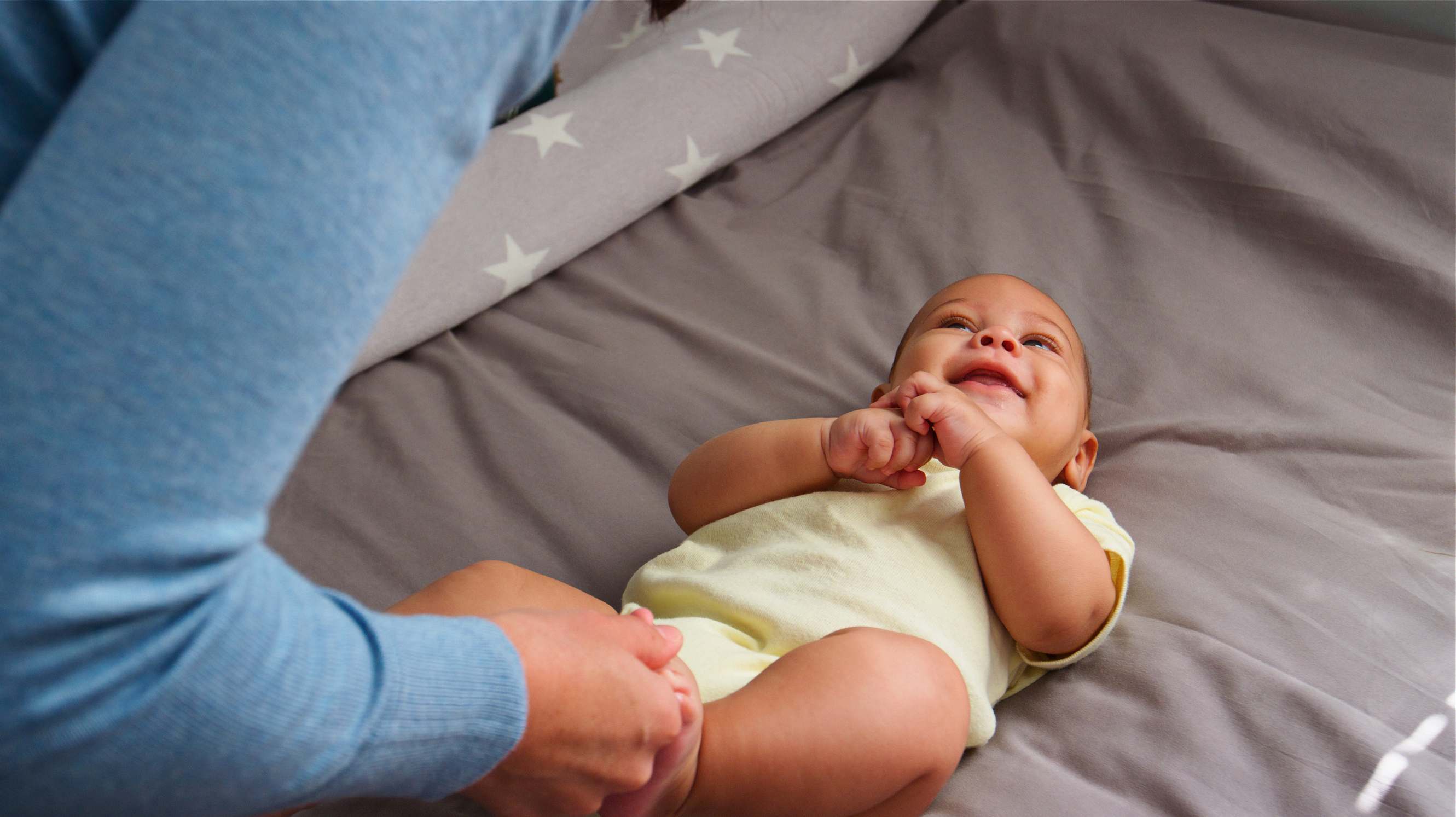
Useful 3 month sleep regression tips include repeating simple cues, keeping nighttime care quiet, allowing flexible naps, and maintaining a clear sleep space. Aim for a response you can sustain while tired.
Keep sleep cues predictable
Predictable cues can make naps and bedtime more familiar without requiring a rigid schedule. The American Academy of Pediatrics (AAP) recommends doing the same simple things in the same order at naptime and bedtime.
Your sequence might include a diaper check, dimmed lights, and one short song. These baby lullaby ideas can help you select a calm cue that is easy to repeat.
Respond to feeding and comfort needs
Responsive care means checking the likely need rather than labeling all waking as hunger or regression. During nighttime feeds or changes, the AAP advises staying calm and quiet and limiting stimulation.
Use age-appropriate nap flexibility
Flexible naps allow you to work with changing days instead of forcing an exact timetable. The United Nations Children’s Fund (UNICEF) explains that babies from birth through 4 months are not capable of learning a rigid routine.
Recording sleep can reveal whether brief naps and difficult bedtimes tend to occur together. In Yuppo, you can log your baby’s sleep and review the recorded pattern when several tired nights begin to blur together.
Keep the sleep space clear
A clear sleep space remains important when your baby needs repeated settling. The AAP advises keeping loose blankets, pillows, stuffed toys, bumpers, and other soft items out of the sleep space.
This table pairs each sleep period with one focused response:
Sleep period | Possible change | Supportive response | Safe sleep check |
|---|---|---|---|
Bedtime | Harder settling | Repeat familiar cues | Remove loose and soft items |
Overnight waking | Repeated stirring | Check needs and stay quiet | Keep the sleep space clear |
Naps | Variable daytime sleep | Follow the familiar sequence | Remove toys and pillows |
Early morning | Earlier waking | Keep care calm | Do not add comfort objects |
The response can change with your baby’s cues, while the clear sleep space stays consistent.
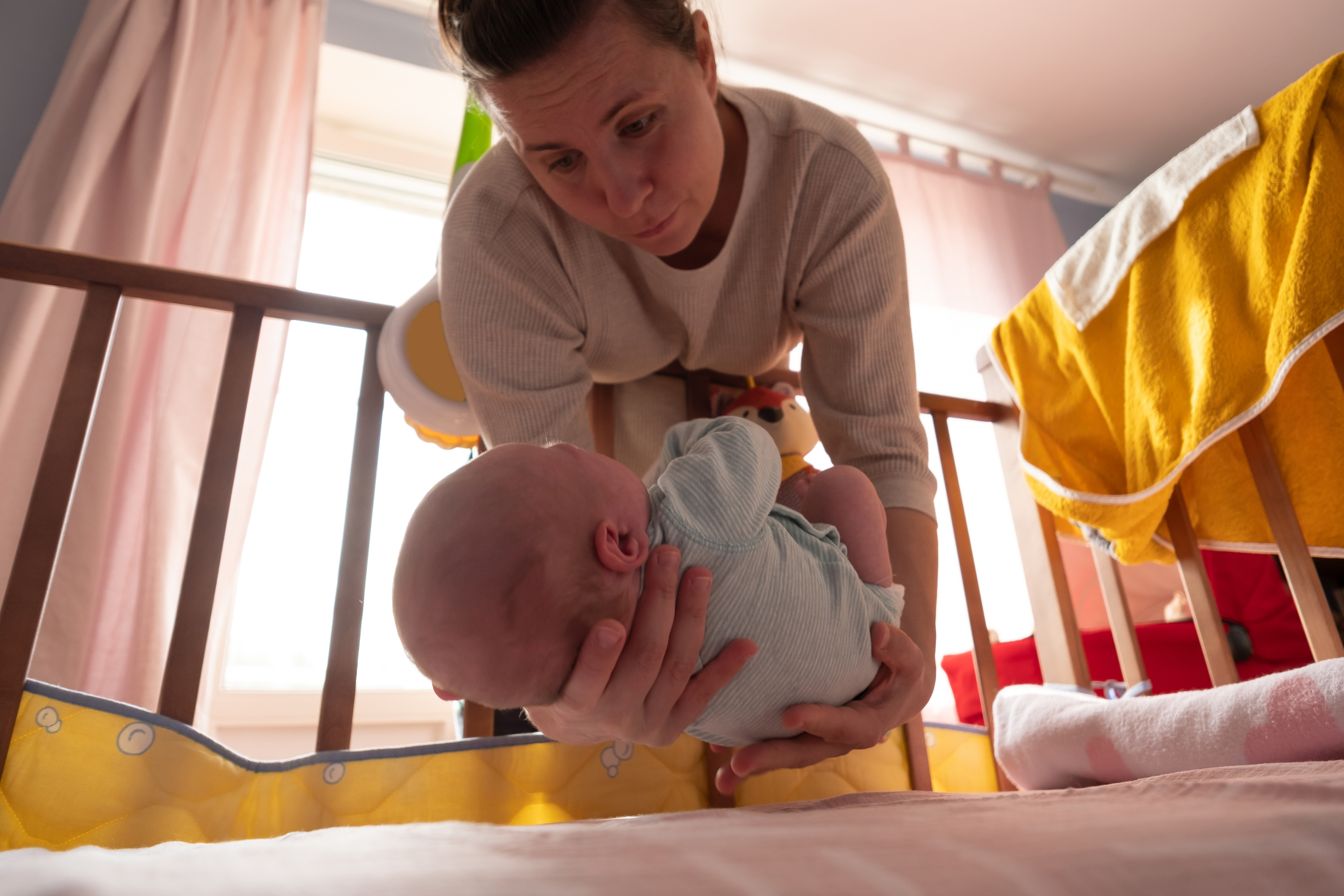
Seek medical help rather than assuming a sleep regression if your baby shows any of these signs identified by the NHS:
Your baby is difficult to wake or will not wake.
Your baby is not feeding.
Your baby has no wet diapers.
Summary and Next Steps
Your next steps are to describe the pattern accurately, respond to visible needs, and keep sleep support manageable.
Name what changed: Record waking, settling, feeding cues, and naps instead of using “regression” as the cause.
Compare several days: A multi-day pattern gives you more context than one difficult night.
Keep care simple: Repeat a short sleep sequence and limit stimulation during nighttime care.
Try this week: Note when sleep began, what happened before waking, and what helped afterward.
Maintain the sleep space: Remove loose blankets, pillows, toys, bumpers, and other soft objects.
Watch the overall picture: Feeding and alertness matter more than whether sleep matches a particular schedule.
This content is for information only; always consult your pediatrician for diagnosis and treatment.
Connecting variable naps, feeds, and nighttime waking can be difficult when you are exhausted. In Yuppo, you can enter your baby’s birth date, follow expert-prepared developmental steps week by week, and receive age-based activity and content suggestions.
Frequently Asked Questions
Can a sleep regression happen at 3 months?
Sleep can become less predictable between 3 and 4 months, and parents often call that change a 3 month sleep regression. The label may describe different waking, settling, or naps, but it does not identify the cause. Consider feeding cues, temperature comfort, and the pattern across several days.
How long does the 3 month sleep regression last?
The 3 month sleep regression label cannot provide a reliable duration. Rather than counting toward a fixed endpoint, watch for gradual changes in settling, nighttime stretches, and nap patterns. If disruption persists, review feeding, comfort, the sleep environment, and your baby’s overall behavior with your pediatrician.
Does the 3 month sleep regression affect naps?
Naps may be included in the pattern parents describe as a 3 month old sleep regression. You might notice that daytime sleep is shorter, longer, or more variable than it was recently. Compare several days and use a familiar nap sequence instead of expecting identical naps.
Why is my 3 month old fighting naps?
A baby between 3 and 4 months may resist a nap for several possible reasons, including hunger, temperature discomfort, or a day that unfolded differently. Look at recent feeding, visible cues, and the surrounding sleep pattern. One difficult nap does not explain the entire day.
Can the 4 month sleep regression start at 3 months?
The 3 month and 4 month labels can overlap in everyday parenting conversations because they describe approximate periods rather than precise start dates. Whichever phrase you use, focus on observable changes and your baby’s current needs instead of assuming a specific developmental mechanism.
Should I feed my baby at every night waking?
Not necessarily, although some nighttime wakings reflect hunger. Look for hands moving to the mouth, turning toward the breast or bottle, and puckering or smacking the lips. Consider recent feeding history and follow the individualized feeding and growth guidance you have received from your pediatrician.
References
National Health Service. (n.d.). Your baby’s sleep patterns. NHS.
Centers for Disease Control and Prevention. (2026). Signs your child is hungry or full. CDC.
National Health Service. (2025). Helping your baby to sleep. NHS.
UNICEF. (n.d.). What you need to know about newborn sleep. UNICEF Parenting.
American Academy of Pediatrics. (2024). Getting your baby to sleep. HealthyChildren.org.
American Academy of Pediatrics. (n.d.). Safe sleep. American Academy of Pediatrics.

Yuppo Lab
Sleep Expert

Sleep
Learn 6 month sleep regression signs, likely duration, and practical ways to respond. Navigate your baby's changing sleep with Yuppo.

Sleep
Discover when sleep regressions strike and what to do at each stage, from 4 months to 2 years. Track your baby's sleep milestones with Yuppo.

Sleep
Learn why sleep regression strikes around 20 months and what you can do to help your toddler rest again. Track your toddler's sleep patterns with Yuppo.