Baby Sleep Schedule by Age: A Practical Guide

This article is approved by Yuppo Lab Sleep Expert
Published: 19 August, 2026
Updated: 19 August, 2026

Highlights
Babies' sleep needs change with age. Newborns sleep an average of 14-17 hours a day, decreasing to 11-14 hours by around age one.
A healthy sleep schedule supports the release of hormones directly linked to physical growth.
Sleep regressions may occur around 4, 8, and 12 months. These periods are a natural, temporary part of development.
Creating a dark, quiet, and safe sleep environment is one of the key steps that can help reduce night waking.
Understanding your baby's changing sleep needs and planning ideal rest periods are important steps toward healthy growth. For parents who often feel tired and sleep-deprived at night, understanding baby sleep schedule by age expectations month by month can make a meaningful difference to the well-being of the whole family. In this guide, families with children ages 0-6 will learn how to establish a baby sleep schedule, what to know about a newborn sleep schedule, and practical, realistic ways to improve nighttime sleep.


Why Is a Healthy Sleep Schedule Important for Babies?
A healthy rest routine is essential for supporting brain development, strengthening the immune system, and promoting physical growth. The World Health Organization (WHO) states that babies who get enough sleep tend to have more positive overall health and cognitive outcomes. During sleep, the body actively repairs itself, new information learned during the day is consolidated, and energy stores are replenished for the next day. Sleep is not simply a break for rest; it is a fundamental part of your baby's development.
Growth Hormone and Physical Development
Because growth hormone is generally released at its highest levels during deep sleep, uninterrupted periods of rest support physical development. Bone and muscle tissue form rapidly, much of it during babies' nighttime sleep. Especially in the first years of life, increases in body mass and developing motor skills are directly related to sleep quality. Every baby differs in how long it takes to fall asleep and how quickly they enter deep sleep.
Mental and Emotional Development
Well-rested babies are more eager to explore their surroundings. During sleep, they process the sensory input of the day and build their mental capacity. Sleep acts as a natural regulation center for memory formation and emotional regulation. A baby who is not overtired and has slept well is usually calmer while learning new skills and may respond to events more positively and flexibly.

Baby Sleep Schedule by Age: Sleep Needs at a Glance
Babies' total daily sleep gradually decreases from an average of 14-17 hours at birth to 12-15 hours by one year of age. The table below reflects generally accepted rest needs.
Age Range | Total Daily Sleep (Average) | Nighttime Sleep | Daytime Sleep (Naps) |
|---|---|---|---|
0-3 months | 14-17 hours | Interrupted, short blocks | 3-5 naps |
4-6 months | 12-16 hours | 9-11 hours | 2-3 naps |
7-12 months | 12-15 hours | 10-12 hours | 2-3 naps |
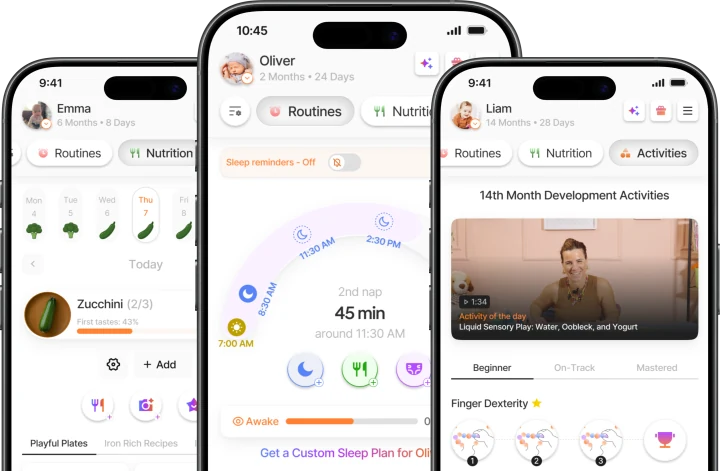
These ranges recommended by the American Academy of Pediatrics reflect broad averages. Where your own baby's sleep falls within these ranges depends entirely on their temperament. Instead of tracking your baby's daily wake-up time and calculating everything manually, enter the morning wake-up time in the Yuppo app to see nap and nighttime sleep times personalized to their age and individual habits. You can also manage daily flexibility from the same plan.
The Newborn Sleep Schedule: 0-4 Months
Newborn sleep times are usually made up of short 1-3-hour cycles spread throughout the day because the difference between night and day has not yet developed. Since the circadian rhythm is still maturing, babies wake mainly to feed, pass gas, or have a diaper change. Melatonin production, which helps regulate sleep, generally begins to become more balanced around 3 months, and babies gradually start to sleep in longer nighttime blocks. In the early months, following your baby's rhythm is the healthiest approach.
Building a Routine from 4-12 Months
From around 4 months, babies' sleep becomes more predictable. Daytime sleep develops into clearer naps, while nighttime sleep blocks grow longer. This is an ideal time to plan a baby sleep schedule by age and build healthy sleep habits, as often recommended during 6-month baby development. As babies become much more aware of their surroundings, they need time to disconnect from the outside world and settle before sleep. A consistent wind-down process makes the transition from daytime activity to nighttime calm much easier.

Tips to Help Your Baby Get Quality Sleep
For more peaceful rest, it helps to create a dark environment, establish a calming baby bedtime routine, and read your baby's tiredness signals accurately. Sometimes babies become overtired and overstimulated, making it much harder to fall asleep. Noticing early signs of sleepiness, such as playing with their ears, rubbing their eyes, or giving small yawns, and taking them to bed then can make the process much easier.
How Do You Prepare an Ideal Sleep Environment?
When preparing a safe sleep environment, basic standards include keeping pillows and toys out of the crib, maintaining a room temperature of about 20-22°C (68-72°F), and making the room as dark as possible. According to AAP recommendations, babies should always be placed on their backs to sleep during the first year of life, on a firm sleep surface, to minimize the risk of sudden infant death syndrome (SIDS). A low-volume white-noise machine may also remind babies of the rhythmic, muffled sounds of the womb and help them feel secure and settle.
Steps for Creating a Sleep Routine
A warm bath starting about 30 minutes before bedtime, a gentle baby massage, and reading a book signal to your baby's body that it is time to sleep. Routines clearly show children who are still learning to understand the world what to expect and help them feel secure. Keeping the steps in the same order each evening strengthens the calming effect and can noticeably reduce resistance at bedtime.
Common Baby Sleep Problems and What Can Help
Frequent night waking, resisting sleep, and skipping naps often result from temporary developmental changes or changes to the daily routine. Illness, teething, or weeks when a baby is learning a new motor skill, such as sitting without support or rolling over, can directly interrupt sleep. On complicated days like these, staying flexible instead of expecting a perfect schedule is the most reassuring and realistic approach for parents.
What Is Baby Sleep Regression?
Baby sleep regression refers to temporary periods when a baby who previously slept fairly regularly suddenly starts waking often at night or resisting sleep because of a developmental leap. These periods most commonly begin with the 4-month baby sleep regression and become noticeable again around 8 and 12 months. A baby's brain is actively practicing new skills, such as rolling, crawling, and making sounds, day and night, which can interrupt sleep. Seeing these periods not as true regression but as an acceleration of healthy growth may ease your worries.
Night Feeding and Baby Sleep
Babies younger than 6 months physically need night feeds because their stomachs are still small. This need often decreases as solids are introduced. If your baby's weight gain is following the curve expected by their doctor, you may gradually space out night feeds as the months go by. Still, it is worth remembering that the connection between feeding and sleep can sometimes be emotional. Some babies may continue wanting to nurse at night for a while because it helps them feel secure and settle.

When Should You Consult a Sleep Professional?
If sleep problems take away your baby's daytime happiness, their growth curve stalls, or the whole family is exhausted from lack of sleep, support from a sleep consultant or pediatrician may help. Parenting is a long, uneven marathon, and an objective professional perspective can sometimes break a tiring cycle that has lasted for months. Asking for support is not a shortcoming; it is a thoughtful step for your mental health and your baby's well-being.
Summary and Next Steps
Sleep needs: Review your baby's total sleep needs for their age, and try adjusting daytime naps this week by following their signals.
Safe environment: Remove extra items such as pillows, blankets, and stuffed toys from the crib today and make the sleep space consistently safe.
Calming routine: Starting tonight, try a 30-minute routine of a bath, massage, and gentle lullaby before bed, following the same order every day.
Developmental awareness: During weeks of frequent waking, remind yourself that this may be a sleep regression and a sign of growth. Respond with compassion and flexibility.
When Should You Call the Doctor?
Changes in a baby's sleep schedule and night waking are usually an expected part of normal development. However, some specific signs require prompt medical evaluation. If you notice any of the following in a baby older than 3 months, contact your doctor:
Pauses in breathing during sleep, possible sleep apnea, unusual wheezing, or very loud snoring.
Extreme sleepiness during the daytime hours when the baby would normally be awake, including being unresponsive to the surroundings or difficult to wake.
A fever above 38°C (100.4°F) accompanying a sudden disruption in sleep. (Important: In babies younger than 3 months, a rectal temperature of 38°C (100.4°F) or higher requires immediate medical attention, regardless of age or sleep pattern.)
Repeatedly waking from sleep screaming and appearing to be in physical pain, with no way to soothe them for a prolonged period.
This content is for informational purposes only. Always consult your pediatrician for diagnosis and treatment.
Knowing that every baby has their own pace of rest and adapting to daily changes can make parenting much easier. If you would like to enter your baby's morning wake-up time and track nap times calculated specifically for their age, individual needs, and habits, you can try the app's routines module for free. Download the Yuppo app to manage daily changes on one screen and support your baby's rest with age-specific routine suggestions.
Frequently Asked Questions
How many hours should a 4-month-old sleep in 24 hours?
Four-month-old babies generally need 12-16 hours of sleep in total each day. Most of this, usually around 9-11 hours, occurs at night, while the rest comes in 2 or 3 daytime naps. Every baby's overall sleep needs are different, so these ranges are a guide rather than a strict target.
When do babies start taking fewer daytime naps?
Daytime sleep usually starts to decrease noticeably around 6 months, when many babies move from three naps to two. After 12 months, many transition to one midday nap. This change may happen anywhere from 15-18 months, depending on how much awake time your baby can comfortably manage.
How can I help my baby settle into nighttime sleep?
To make the transition to nighttime sleep easier, keep the room completely dark and at a comfortable temperature of 20-22°C (68-72°F). Calming steps such as a warm bath and gentle massage at the same time each evening signal that bedtime is approaching and can make settling much easier.
At what ages does baby sleep regression happen?
Baby sleep regression is most commonly seen around 4, 8, and 12 months, alongside developmental leaps. Sleep disruptions during these months, when babies learn new motor skills and become more aware of their surroundings, are temporary and a normal reflection of healthy brain development.
When do babies start sleeping through the night?
From around 6 months, many babies begin to have less physical need for night feeds and may develop uninterrupted nighttime sleep blocks of 6-8 hours. Teething, illness, and developmental leaps can temporarily disrupt this pattern. Every baby's timing depends on their individual rhythm.
References

Yuppo Lab
Sleep Expert

Sleep
Learn 6 month sleep regression signs, likely duration, and practical ways to respond. Navigate your baby's changing sleep with Yuppo.

Sleep
Discover when sleep regressions strike and what to do at each stage, from 4 months to 2 years. Track your baby's sleep milestones with Yuppo.

Sleep
Learn why sleep regression strikes around 20 months and what you can do to help your toddler rest again. Track your toddler's sleep patterns with Yuppo.