What Is Baby Led Weaning? Safe Starting Solids Guide and Menu

This article is approved by Yuppo Lab Pediatric Dietitian
Published: 01 August, 2026
Updated: 04 August, 2026
At a Glance
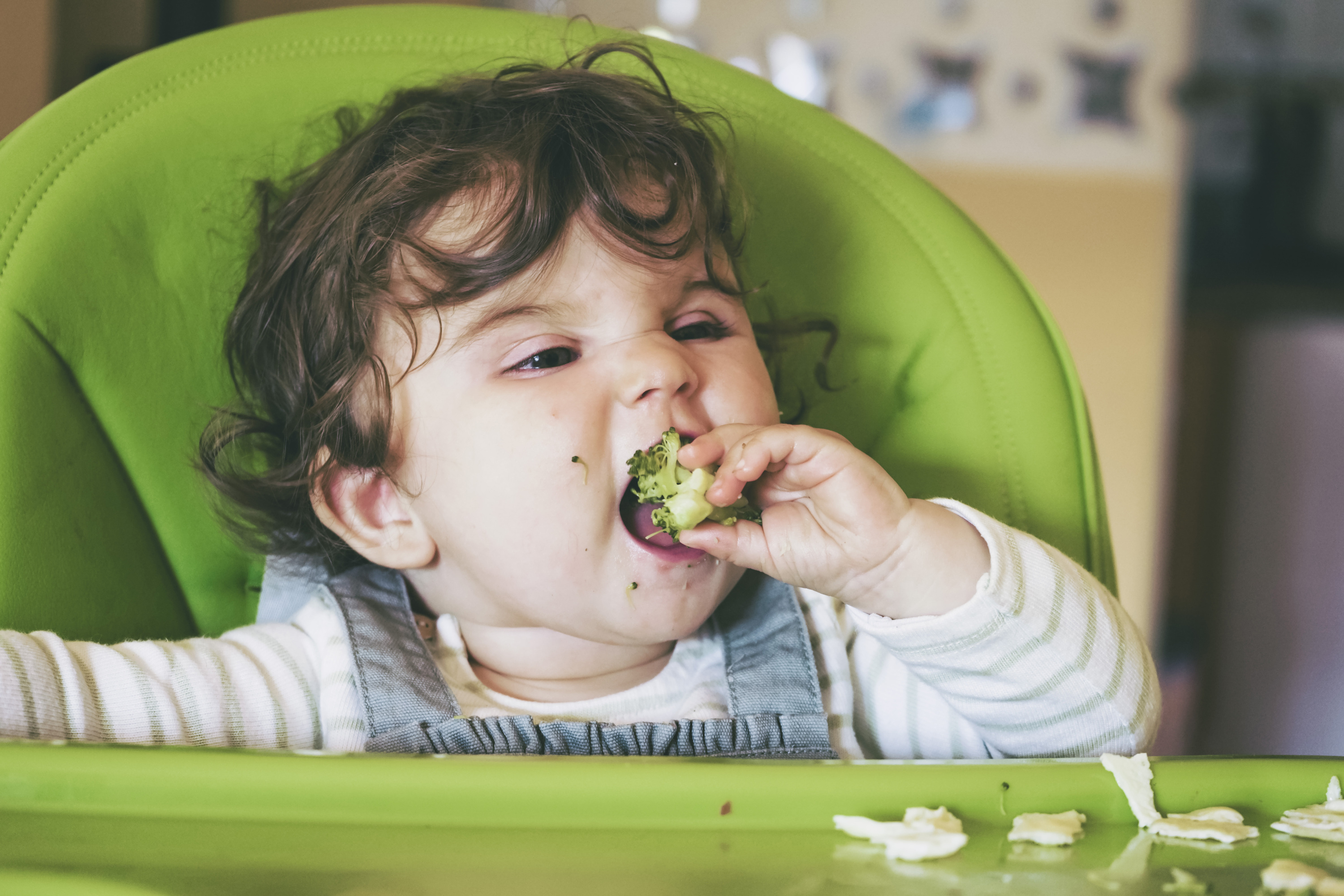
BLW (Baby-Led Weaning) is a method of complementary feeding that encourages babies, usually between 6-8 months, to self-feed soft solids rather than being spoon-fed purees.
For a safe start, the baby is expected to be able to sit unsupported and reach for food, typically between 5.5-7 months.
At 6 months, tasting portions of 1-2 teaspoons a day are sufficient; the main source of energy remains breast milk or formula.
Offering water usually begins with the transition to solids and is kept around 30 to 60 ml (1 to 2 fl oz) per day.
Parents researching the transition to solids frequently ask what is baby led weaning. At its core, it is an approach that allows the baby to take charge of their own feeding process. In this starting solids guide for your six-month-old, you will find safe starting steps, a blw first week meal plan, and portion expectations. Our goal is to reduce your stress in the kitchen and support your baby in discovering new tastes and textures entirely at their own pace.


What Is Baby Led Weaning: Method and Practice
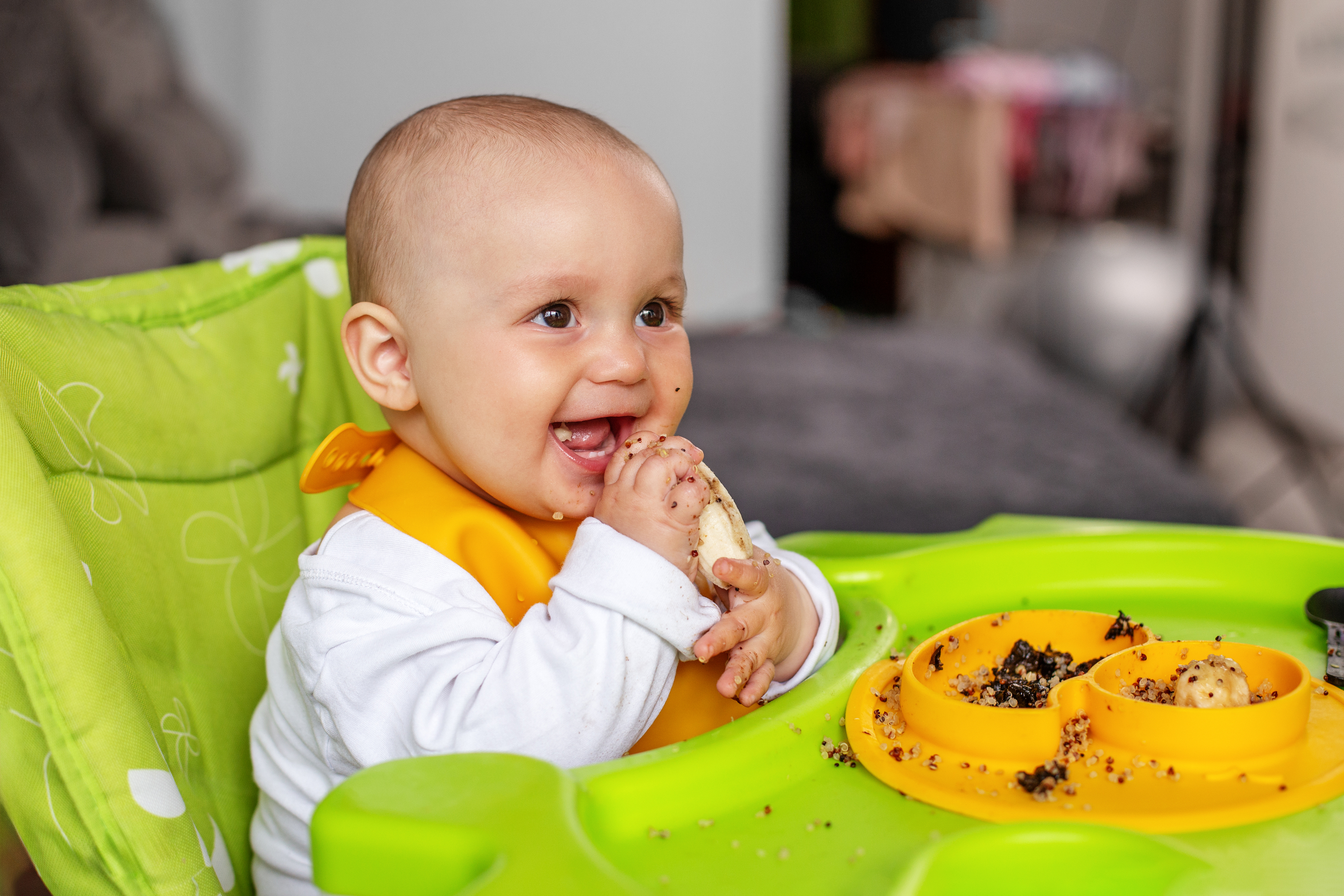
The simplest answer to what is baby led weaning is that it is a method allowing babies, usually starting at 6-8 months, to self-feed with finger foods rather than purees. This approach is based on letting the baby decide what, how much, and how fast they eat. Sitting at the table with the family, the baby uses their motor skills by examining appropriately sized foods placed in front of them. Most babies between 6-8 months are quite eager to grasp first foods for baby led weaning and bring them to their mouths. You can ease your own expectations by remembering that in the first few months, the goal is to introduce textures, colors, and flavors rather than to fill them up.
Readiness Signs for a Safe Start
For a safe start to solids, babies are generally expected to be able to sit unsupported, have good head control, and reach for food between 5.5-7 months. The milestone of when do babies sit progresses at a different pace for every child; therefore, not rushing before the physical readiness signs are complete is the safest path. The risk of food going down the windpipe can increase in babies who cannot fully establish sitting balance or who slide backward.
Differences Between BLW and Traditional Methods
The main difference between BLW and the traditional method is allowing the baby to consume solids at their own pace instead of spoon-feeding purees. While the adult is in control in the traditional method, managing the transition to solids with BLW allows the baby to learn by touching, squeezing, and trying to chew. During this process, the gag reflex, located at the front of the tongue in 6-8 month old babies, is frequently observed and is a natural mechanism that prevents large bites from going down the throat. As babies practice, they grasp how to manage food in their mouths.
6 Month Old Feeding Schedule and Portion Sizes
If you are wondering about a 6 month old feeding schedule, an average of 1-2 teaspoons of solids per day is sufficient, provided that the main meal remains breast milk or formula. According to the World Health Organization (WHO), the majority of the daily energy needs of babies aged 6-8 months should be provided by liquid nutrition. It is a natural part of their development and exploration of textures if your baby drops what is on their plate on the floor or just licks it instead of swallowing.
The table below gives a general idea of how the frequency of solids progresses by age:
Age Range | Primary Food Source | Average Solids Frequency |
|---|---|---|
6 - 8 Months | Breast milk / Formula | 1 - 2 small tasting meals a day |
9 - 11 Months | Breast milk / Formula + Solids | 2 - 3 main meals, 1 snack a day |
12 - 24 Months | Family meals (Mainly solids) | 3 main meals, 2 snacks a day |
These ranges in the table are flexible, and the appetite of your baby during their 6-month-old baby development stage can vary from day to day. To understand when they are hungry, you can watch for baby hunger cues such as bringing their hands to their mouth, reaching for food, and leaning forward with their mouth open.
BLW First Week Meal Plan and Starter Foods
The blw first week meal plan consists of offering easily digestible and soft starter foods once a day, with three-day trials. To monitor possible allergies during the transition to solids, the "3-day rule" is applied, and each new vegetable is given alone for three consecutive days. To avoid tiring your baby in the first few days, you can try this only at noon when they are neither too hungry nor too full.
7-Day Sample Vegetable and Fruit Menu
The first 7-day sample vegetable menu is based on the principle of giving each new food alone for three days to observe the allergy risk.
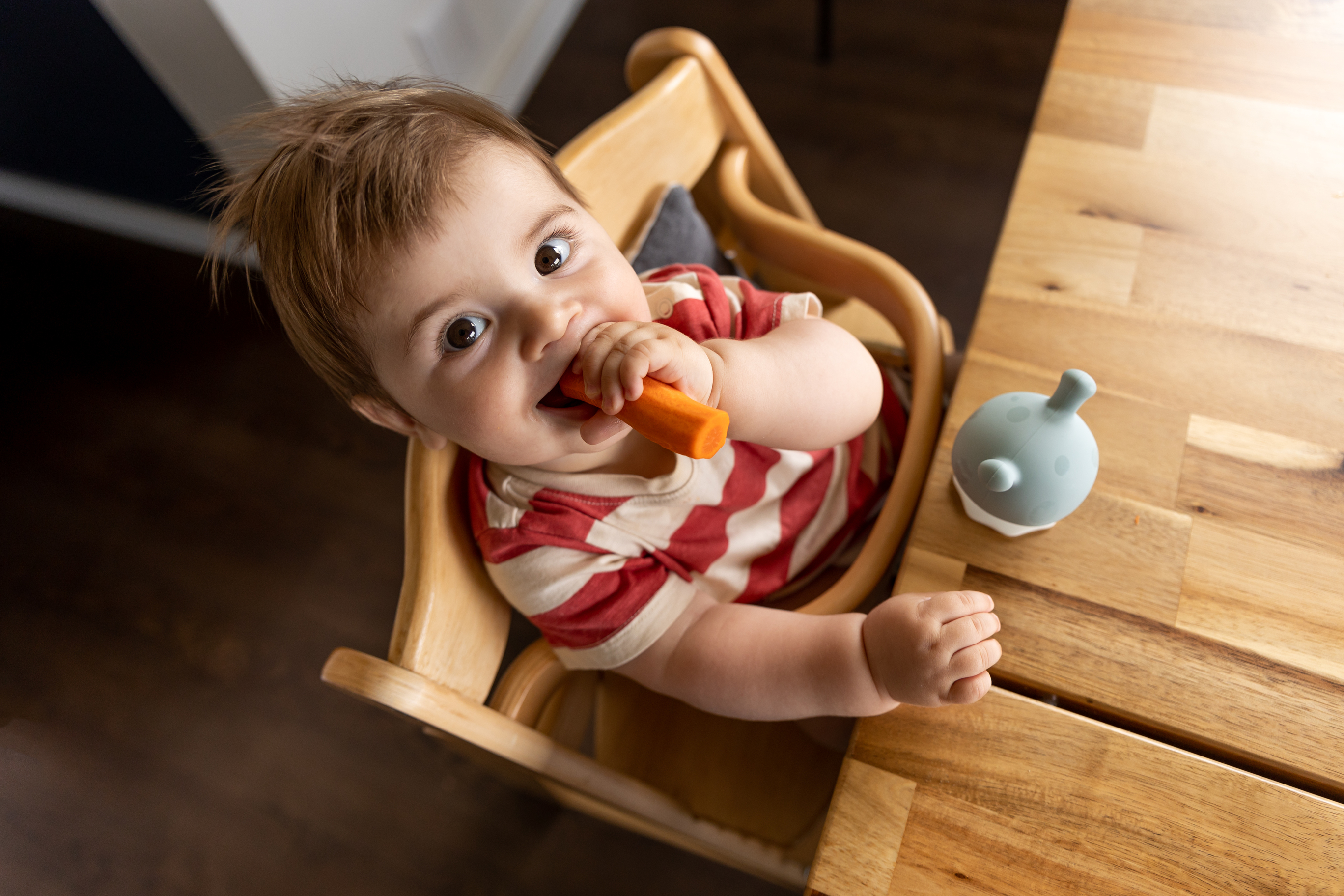
Days 1-3: Steamed carrot sticks that can be easily mashed on the roof of your mouth.
Days 4-6: Thoroughly steamed broccoli florets or green zucchini slices.
Day 7: Soft avocado sliced into long finger shapes with the pit removed.
It is normal for portions to seem almost untouched; as their grasping ability strengthens toward the 7-month-old baby development stage, the amount swallowed will naturally increase.
Proper Cutting and Preparation Techniques
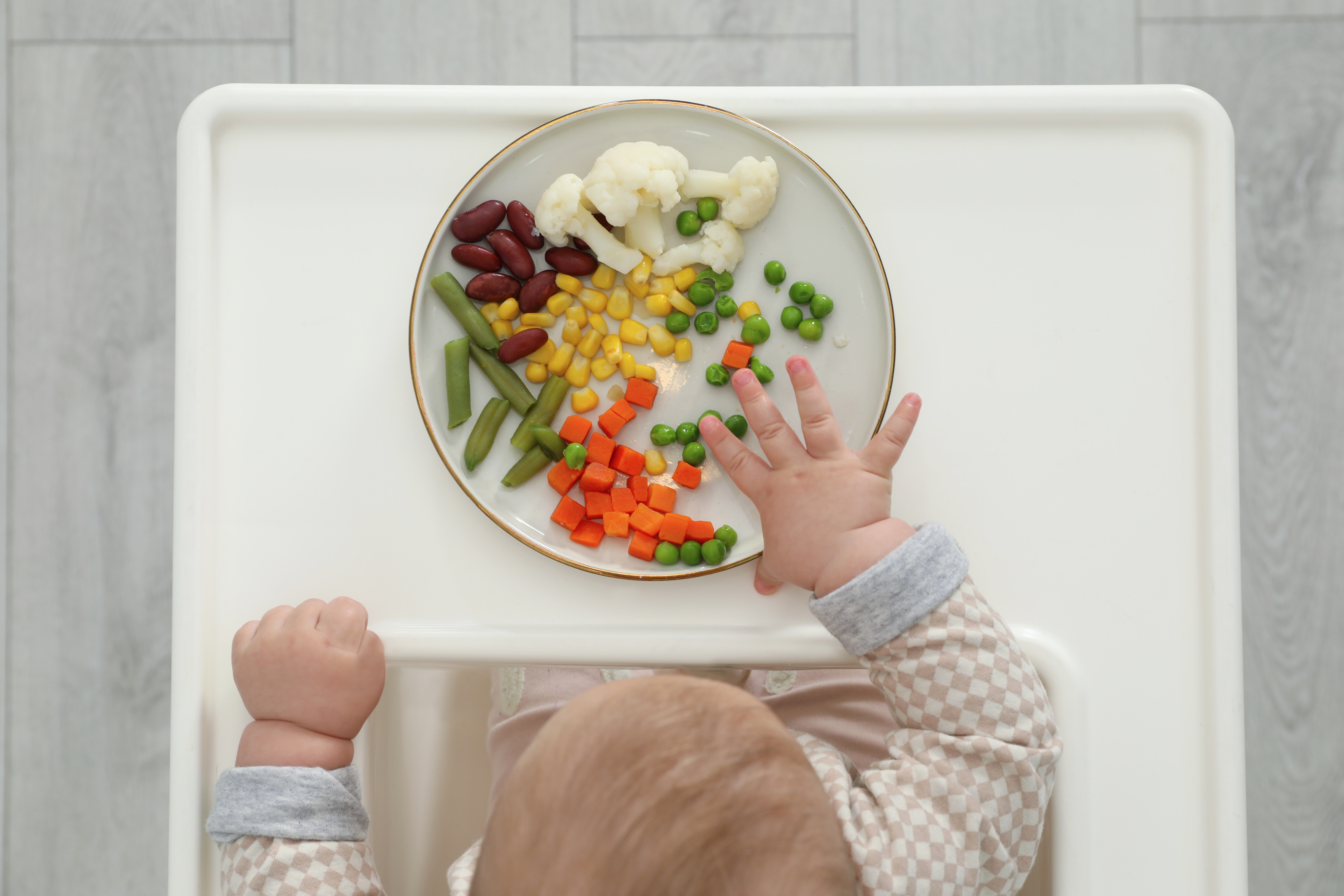
For six-month-old babies, foods should be cut to the thickness of an adult's index finger and steamed to a softness that can be mashed when pressed against the roof of the mouth. Since the pincer grasp, which brings the thumb and index finger together, does not develop until the 8th-10th month, they grab food with their palms. Small and round pieces (grapes, cherry tomatoes, nuts) pose a serious choking hazard and should absolutely not be given without being cut. In the following weeks, you can also offer protein-rich foods in long and soft forms to reduce the risk of iron deficiency.
Water Consumption During Complementary Feeding: When Can Babies Have Water?
The answer to when can babies have water is usually around 6 months when solids are introduced, offering 30-60 ml (1-2 fl oz) of water per day alongside meals. The American Academy of Pediatrics (AAP) does not recommend water consumption for babies under 6 months and emphasizes that their hydration needs are fully met by breast milk or formula. The small amount of water offered when starting solids is not so much to quench thirst as it is to help the baby learn to use a training cup and assist with swallowing.
When to Consult a Specialist During BLW?
A pediatrician should be consulted for babies who have difficulty swallowing or completely refuse solids despite being 8-9 months old. Although every baby's pace is different, babies who are interested in food on some days may only want milk when slightly tired. However, if food refusal is accompanied by a deterioration in the baby's overall mood or if you notice a stall in the weight gain curve, your doctor will help you evaluate the process from a different perspective.
Summary and Next Steps
Watch for readiness signs: Ensure your baby can sit upright without support between 5.5-7 months.
Don't stress over portions: Remind yourself that 1-2 teaspoons of tasting a day are sufficient for palate development.
Create safe sizes: Prepare foods about the size of your index finger and soft enough to mash with the roof of your mouth.
Take the first step: Start the process this week by offering a single slice of steamed carrot at a time when your baby is in a good mood.
When to Call the Doctor?
The gag reflex is generally normal during the transition to solids, but if this is accompanied by an inability to make sounds, turning pale, and turning blue, it means the airway is blocked and immediate medical attention is required.
A slight redness around the mouth after trying a new food is usually a skin reaction; however, if facial swelling is added and respiratory distress begins within 2-4 hours, a doctor should be consulted without delay.
Occasional mild constipation after solids is usually normal; but a pediatrician should be consulted in case of recurrent severe vomiting or blood in the stool.
Picky eating in babies up to 8-9 months is generally normal; however, showing no interest in any solid foods and signs of difficulty swallowing require a doctor's check.
This content is for informational purposes only; always consult your pediatrician for diagnosis and treatment.
You might want to make the process of introducing new foods more organized in your baby's feeding journey. On Yuppo, you can record the foods your baby tries and their reactions day by day; you can create a personalized plan on what order and how to present new foods depending on your preferred approach, whether BLW or spoon-feeding.
Also, if you are wondering how to use leftover ingredients at home, you can enter the ingredients you have into the app's nutrition tool and get expert-prepared recipe suggestions tailored to your child's age, allergies, and feeding style. This way, you can make the time spent at the table with your baby much more enjoyable and productive with Yuppo.
Frequently Asked Questions
What are common baby hunger cues?
Common baby hunger cues between 6-8 months usually include bringing hands to their mouth, reaching for food, and opening their mouth when they see a spoon. Following these physical signs helps you feed them while respecting their own cycle.
How to distinguish between choking risk and gag reflex in the BLW method?
In the BLW method, choking risk is understood when the baby cannot make a sound and turns blue, while during the gag reflex, the baby coughs and makes sounds. Gagging is a natural protective mechanism; it is important to stay calm and wait without intervening during these moments.
How many times a day should a 6-month-old try solids?
A six-month-old baby should generally only have short solid food trials 1 or 2 times a day, as their main energy source continues to be breast milk or formula. The most important thing at this stage is for them to get to know new tastes without stress.
What prohibited foods should not be given in the first week?
During the first week and throughout the first year of life, honey, cow's milk, salt, added sugar, and round/hard foods that pose a choking hazard, such as whole grapes and nuts, should absolutely not be given. Only soft-prepared vegetables and fruits should be preferred in the beginning stage.
When can babies have water?
The best time to start giving babies water is usually around 6 months when they are introduced to solids, and offering 30-60 ml (1-2 fl oz) alongside meals is sufficient. Before this, babies get all their hydration needs from breast milk or formula.
What should I do if my baby throws food on the floor?
Your baby throwing food on the floor between 6-9 months is a developmental part of their effort to explore gravity and should be met with patience. Putting only a very small amount of food on their plate at a time makes this process easier to manage.
References

Yuppo Lab
Pediatric Dietitian

News
Learn how parallel play supports toddlers and find simple developmental activities for toddlers at home. Follow your child’s progress with Yuppo.
News
Learn why a child growth chart is more useful over time than one weight check—and how Yuppo helps you follow your child's growth. Track growth with Yuppo.

News
Learn why picky eating happens and how to support your child with calm, practical steps. Track meals and nutrition with the Yuppo app.