15-Month Sleep Regression: Signs, Causes, and What You Can Do

This article is approved by Yuppo Lab Sleep Expert
Published: 16 October, 2026
Updated: 16 October, 2026

At a Glance
The 15-month sleep regression is a temporary phase, typically lasting two to six weeks, in which a previously good sleeper begins waking at night or refusing naps.
Most toddlers need about 12 to 15 hours of total sleep per 24-hour period after their first birthday, including daytime naps.
Developmental milestones, teething, and separation anxiety often overlap around this age, making the source of disrupted sleep harder to pinpoint.
Consistent bedtime routines and calm, brief responses to nighttime waking are the most effective ways to ride out this phase.
The 15-month sleep regression is a temporary disruption, usually lasting two to six weeks, driven by developmental leaps in mobility, language, and emotional awareness. It does not signal a problem; your toddler's brain is simply doing a lot of growing at once.
If your 15-month-old was sleeping through the night and now the wakings are back, or bedtime has turned into a nightly standoff, you are in good company. In this article you will learn what triggers this regression, how to tell it apart from teething or separation anxiety, and practical steps to help everyone in the house sleep a little better.



What is the 15-month sleep regression?
The 15-month sleep regression is a temporary stretch, usually appearing between roughly 14 and 16 months, when a toddler's settled sleep patterns briefly fall apart. It is not a medical diagnosis but a popular framework that describes a recognizable cluster of sleep disruptions tied to rapid development. According to the NHS, all babies change their sleep patterns, and shifts like these are a normal part of growing through different stages.
Your toddler may start waking more often overnight, fighting bedtime, skipping naps, or all three at once. If last week bedtime was smooth and this week your child protests the moment they touch the mattress, the regression may be starting. Typical features include:
More frequent nighttime wakings
Resistance at bedtime or naptime
Wide-awake periods in the middle of the night
How it differs from earlier sleep regressions
Your toddler's greater mobility and independence set the 15-month regression apart from earlier sleep disruptions. The 4-month regression revolves around sleep-cycle reorganization in a largely immobile baby, while the 8-month regression often ties to emerging separation awareness. At 15 months your toddler can stand, climb, and protest with a much wider behavioral range, which makes bedtime resistance feel more intense than anything you have seen before.
When it typically starts and how long it lasts
Most families notice sleep changes somewhere between 14 and 16 months, and the disruption generally resolves within two to six weeks. The NHS notes that growth spurts, teething, and developmental changes can all affect how a baby sleeps, so the duration may shift when more than one factor overlaps. Every toddler moves through this on their own timeline.

Why does sleep regression happen around 15 months?
Rapid brain development and emotional growth combine to trigger the sleep regression many toddlers experience around 14 to 16 months. Knowing what is happening behind the scenes can make the rough nights feel a little less baffling.
Developmental leaps that disrupt sleep
Walking, climbing, and early language often consolidate near 15 months, and your toddler's brain may rehearse these skills even during sleep. A common scene: your toddler wakes around 2 AM and practices cruising along the crib rail for 30 or more minutes before finally lying back down. This motor-milestone intrusion is temporary and fades as the novelty wears off.
Your toddler's circadian rhythm is also maturing, which can briefly destabilize nap timing. When a growth spurt lands in the same window, restlessness often intensifies. Overnight behaviors you might notice:
Standing or cruising inside the crib
Babbling or practicing new sounds
Resisting lying down for long stretches
Emotional changes and growing independence
Your 15-month-old understands more about the world but cannot yet manage the big feelings that come with that awareness. Object permanence is fully in place: your child knows you exist even when you leave the room, yet lacks the words to ask you to stay. Bedtime, which used to feel routine, can suddenly trigger a tearful protest simply because it means being apart from you. The American Academy of Pediatrics (AAP) notes that many toddlers first show separation anxiety around 15 to 18 months, and their growing independence can make the protests louder and harder to stop.

Signs your 15-month-old is going through a sleep regression
The clearest sign of the 15-month sleep regression is a sudden shift in a toddler who was previously sleeping well, usually showing up in three overlapping areas.
Nighttime waking patterns
Your toddler may wake one or more extra times per night and seem fully alert rather than briefly fussing. The NHS notes that babies need about 12 to 15 hours of total sleep after their first birthday, so extra wakings can eat into that total quickly. You might find your child standing in the crib or calling out instead of settling back down on their own.
Nap refusal and bedtime resistance
Nap refusal often appears when your toddler suddenly protests a nap they previously took without a fight. A 15-month-old who napped twice daily may flatly refuse the afternoon nap yet become visibly overtired and fussy by 5 PM. At bedtime, a toddler who once fell asleep independently may stand in the crib and cry for 20 to 30 minutes before settling. Watch for:
Pushing nap or bedtime later than usual
Crying the moment they are placed in the crib
Seeming wired right when sleep usually begins
Daytime mood and behavior shifts
Overtiredness from disrupted nights usually spills into daytime behavior, bringing more clinginess and shorter patience. Extra fussiness or a dip in attention during play are common. These shifts tend to ease on their own once nighttime sleep stabilizes again.

Sleep regression, teething, or separation anxiety: how to tell them apart
Sleep regression, teething, and separation anxiety can all disrupt a 15-month-old's nights, but each one leaves different clues. The table below puts the most common signs side by side.
| Sign | Sleep Regression | Teething | Separation Anxiety |
|---|---|---|---|
| Timing of waking | Variable; often wide-awake episodes | Fussy waking, often early in the night | Waking and calling for caregiver right away |
| Physical symptoms | None | Drooling, chewing, possible mouth rash | None |
| Response to soothing | May self-settle after practicing skills | Calms with gum pressure or cold teether | Calms quickly once caregiver appears |
| Typical duration | 2 to 6 weeks | A few days per tooth | Days to weeks, easing with routine |
Physical discomfort is the biggest giveaway for teething, while the need for your presence is the hallmark of separation anxiety.
Clues that point to teething
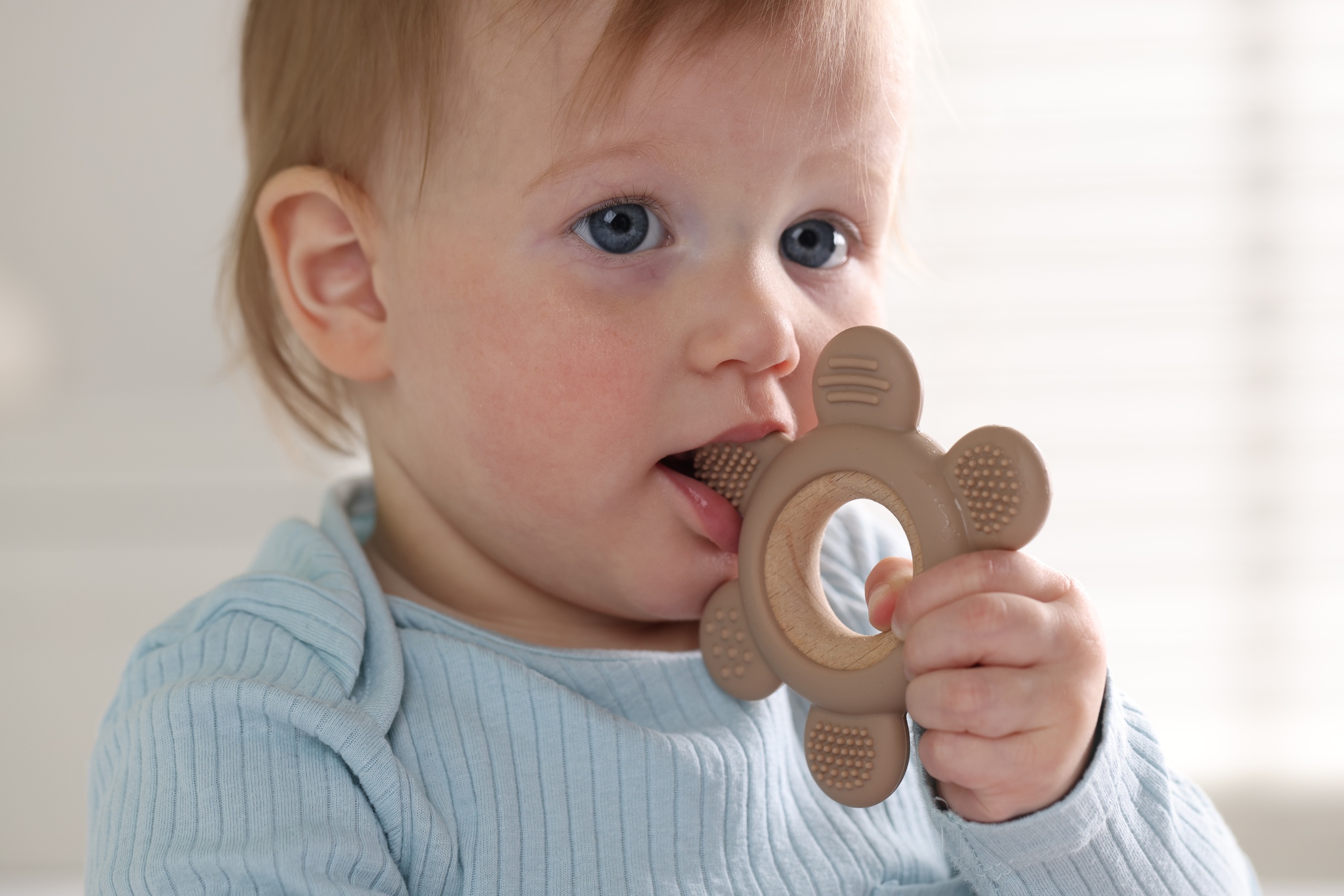
Teething around 12 to 15 months often involves the first molars, which can cause more gum discomfort than earlier teeth. The AAP describes typical signs as drooling, increased chewing on objects, and a possible rash around the mouth, but notes only mild pain. The AAP also emphasizes that teething does not cause fever; a fever during this time may point to illness instead. You can learn more in our guide to baby teething symptoms.
Clues that point to separation anxiety
Separation anxiety shows up as intense crying the moment you leave and relatively quick calming once you return. The AAP notes that separations are harder when children are hungry, tired, or sick. A consistent goodbye routine, done at the same time each day, helps build your toddler's trust and eases the intensity over time.
Practical tips to help your toddler through the regression
Consistent routines and calm responses are your two strongest tools during the 15-month sleep regression.
Keep your bedtime routine consistent
A predictable bedtime routine gives your toddler a clear signal that sleep is coming, even on rough nights. The AAP recommends putting toddlers to bed drowsy but still awake so they learn to fall asleep on their own. Turning off all screens at least 60 minutes before bedtime also helps, according to the AAP.
Keep the routine to about 20 to 30 minutes.
Dim lights progressively through each step.
End in the room where your toddler sleeps.
Adjust nap timing without dropping naps too early
Many 15-month-olds still need two naps, and a regression alone is not a reliable reason to drop one. If the afternoon nap is the battleground, try shortening it slightly or pushing it a bit earlier rather than cutting it altogether. Removing a nap too soon often increases overtiredness, which tends to make nights worse.
Respond calmly to nighttime waking
A brief, low-key check-in often works better than extended rocking or feeding when your toddler wakes at night. The AAP notes that children need time to learn to put themselves back to sleep and that rushing in is not always necessary. Offer a quiet pat or a few calm words, then step back.
Tracking naps and wake-ups can reveal patterns that are hard to spot on broken sleep. In Yuppo, you can record each sleep period and review the logged pattern over several days, making it easier to judge whether a schedule change is actually needed.
You may want to check in with your pediatrician if:
Disrupted sleep continues beyond about six weeks with no improvement
Your toddler seems to be in persistent pain at night
You notice a sudden loss of skills your child had already mastered

Summary and Next Steps
This regression is temporary. Most toddlers return to their previous sleep patterns within two to six weeks without special intervention.
Steady routines carry you through. A predictable wind-down sequence helps your toddler feel secure and signals that sleep is expected.
Hold off on dropping a nap. Many 15-month-olds still benefit from two naps; wait until the regression passes before making permanent changes.
Physical clues help you separate causes. Drooling and chewing suggest teething; crying only at your departure points to separation anxiety; wide-awake skill practice points to the regression.
Start a sleep log this week. Write down wake times, nap lengths, and nighttime wakings for five to seven days to spot trends or confirm improvement.
This content is for information only; always consult your pediatrician for diagnosis and treatment.
Sorting out whether tonight's wake-up was a milestone rehearsal or a molar pushing through is tough on four hours of sleep. When you enter your child's birth date in Yuppo, you see expert-prepared developmental milestones week by week, helping you connect emerging skills to the disrupted nights.
Frequently Asked Questions
How much total sleep does a 15-month-old need?
Most 15-month-olds need about 12 to 15 hours of total sleep in a 24-hour period, including one or two daytime naps, according to the NHS. The right amount varies from child to child, so watch your toddler's mood and energy rather than chasing a single number.
Should I drop to one nap during the 15-month sleep regression?
A regression alone is not a reliable reason to eliminate a nap. Many toddlers still benefit from two naps at 15 months. Try adjusting the timing or length of the second nap first, and wait until sleep has stabilized before making a permanent switch.
Will the 15-month sleep regression go away on its own?
Yes, the 15-month sleep regression typically resolves within two to six weeks as your toddler's brain adapts to new motor and cognitive skills. Keeping routines consistent and responding calmly at night supports a smoother return to stable sleep. Every toddler moves through this phase at their own pace.
Is it okay to use cry-it-out methods during this regression?
Graduated check-ins work for some families, but the key is a consistent, responsive approach that fits your child's temperament. Whatever method you choose, consistency matters more than the specific technique. Your pediatrician can help you find a strategy that feels right.
Can the 15-month sleep regression affect my toddler's appetite?
Temporary appetite changes are common because overtiredness can dull hunger cues. Eating usually returns to normal once sleep improves. If appetite has not bounced back within a few weeks, mention it at your next well-child visit.
References

Yuppo Lab
Sleep Expert

Sleep
Learn 6 month sleep regression signs, likely duration, and practical ways to respond. Navigate your baby's changing sleep with Yuppo.

Sleep
Discover when sleep regressions strike and what to do at each stage, from 4 months to 2 years. Track your baby's sleep milestones with Yuppo.

Sleep
Learn why sleep regression strikes around 20 months and what you can do to help your toddler rest again. Track your toddler's sleep patterns with Yuppo.