Key Takeaways
Most 7 week old baby milestones center on a stronger head lift during tummy time, the first true social smile, and early cooing sounds.
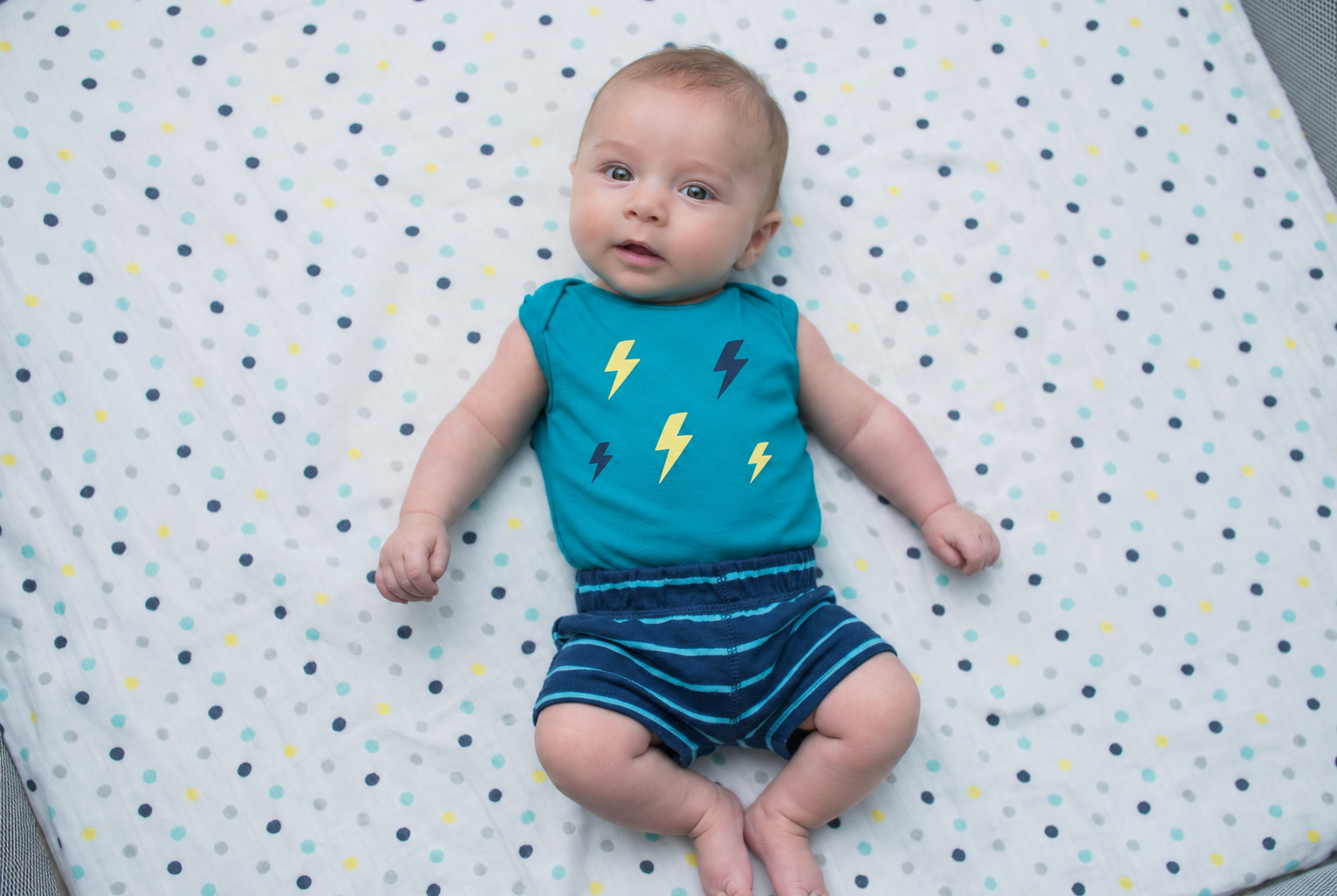
By around 2 months, most babies can hold their head up briefly, move both arms and legs, and open their hands for short moments.
Breastfed newborns generally nurse about every 2 hours, totaling 10 to 12 sessions in 24 hours.
Crying often peaks around 6 to 8 weeks and gradually eases over the following months.
At 7 weeks your baby is likely flashing a first social smile, gaining neck strength during tummy time, and experimenting with soft vowel sounds. These 7 week old baby milestones signal a real shift from sleepy newborn to someone who actively engages with you.
If you are wondering what is typical during baby development week 7, you are in good company. Below you will find what to expect across developmental domains, how feeding and sleep may be changing, and simple activities to try at home. For a broader view of each stage, see our baby development month by month guide.

What 7 week old baby milestones look like across domains
Most 7-week-olds are building head control, beginning to smile socially, and producing their earliest vowel-like sounds. The Centers for Disease Control and Prevention (CDC) defines milestones as things 75% or more of children can do by a certain age, so some skills may appear before others.
Motor and reflex milestones
By 2 months most babies hold their head up on their tummy, move both arms and legs, and briefly open their hands, according to the CDC. The Moro reflex is still present at 7 weeks but typically begins softening soon.
Brief head lifts during supervised tummy time
Active limb movement while lying on the back
Hands opening and closing for short moments
Sensory and cognitive milestones
Your baby can focus on a face from about 20 to 30 cm (8 to 12 in) away and prefers high-contrast patterns. The American Academy of Pediatrics (AAP) notes that this focal range and fully mature hearing are typical from around 1 month. By 2 months babies also watch a caregiver move and gaze at a toy for several seconds, per the CDC.
Social and communication milestones
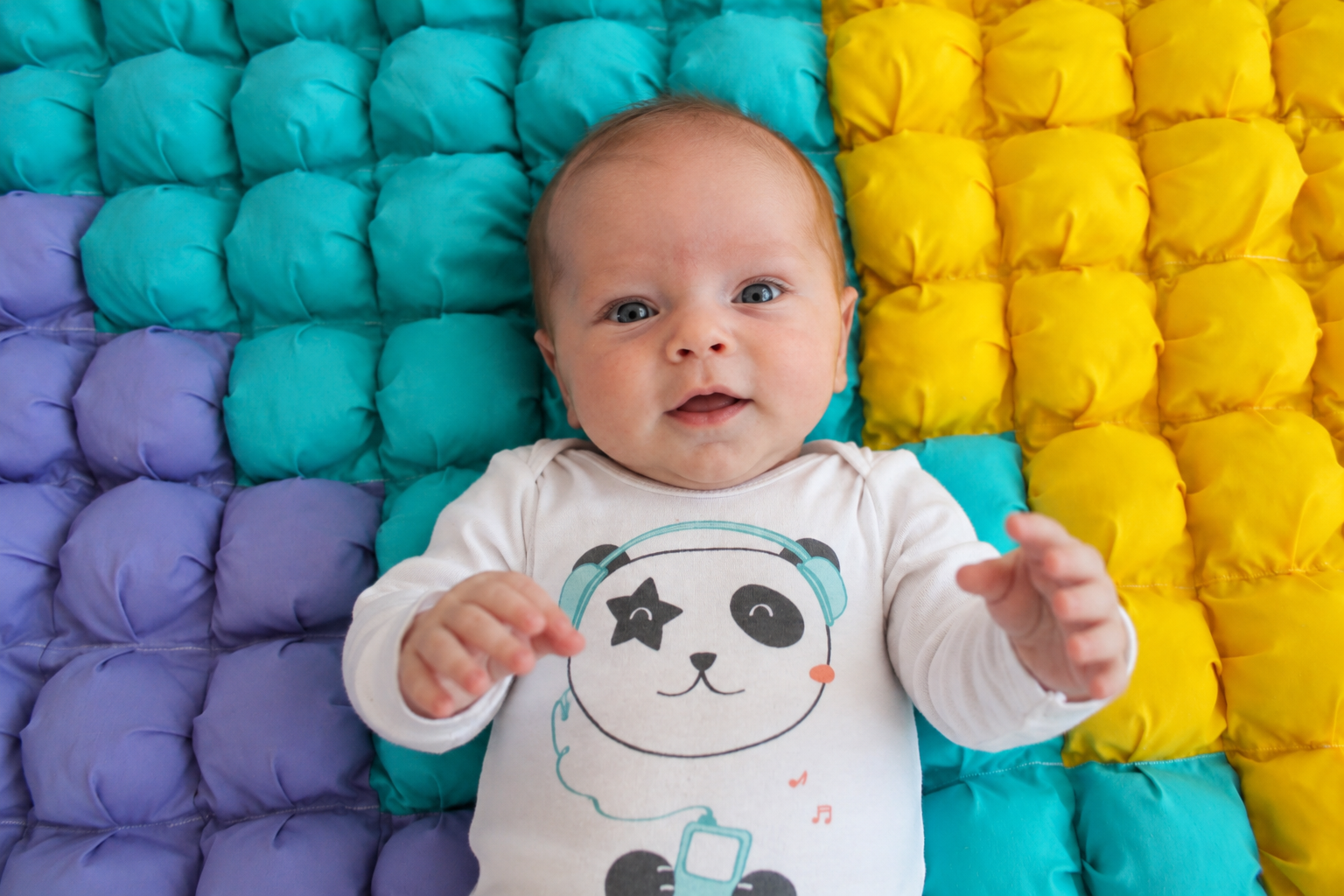
The social smile marks a turning point: early expressions become genuine signals of pleasure, as the AAP explains. Around the same time many babies begin cooing with vowel sounds like "ah-ah-ah," according to the AAP. Smiling gives your baby a way besides crying to express needs.
The table below summarizes what you may notice this week.
| Developmental Domain | Typical Milestone | What You May Notice |
|---|---|---|
| Motor | Brief head lift during tummy time | Head rises roughly 45 degrees for a few seconds |
| Sensory | Focuses on faces and high-contrast patterns | Watches your face intently at close range |
| Social | First social smile | Smiles when you talk to or smile at your baby |
| Communication | Early cooing | Soft vowel sounds during alert moments |
| Cognitive | Visual tracking | Eyes follow a slowly moving object toward midline |
Physical growth and tummy time progress at 7 weeks
Growth at 7 weeks is rapid, and your baby's head lifts are getting noticeably stronger. Your baby's personal curve matters more than any single number.
Expected weight and length ranges
Many 7-week-old babies weigh roughly 4 to 5.5 kg (9 to 12 lb) and measure about 52 to 58 cm (20.5 to 23 in), though healthy ranges extend above and below these figures. A consistent upward trend on your baby's own percentile line is the most meaningful indicator. Regular wet diapers and growing alertness between naps are reassuring everyday signs. You can plot measurements over time with a percentile calculator.
Head lift and neck strength during tummy time
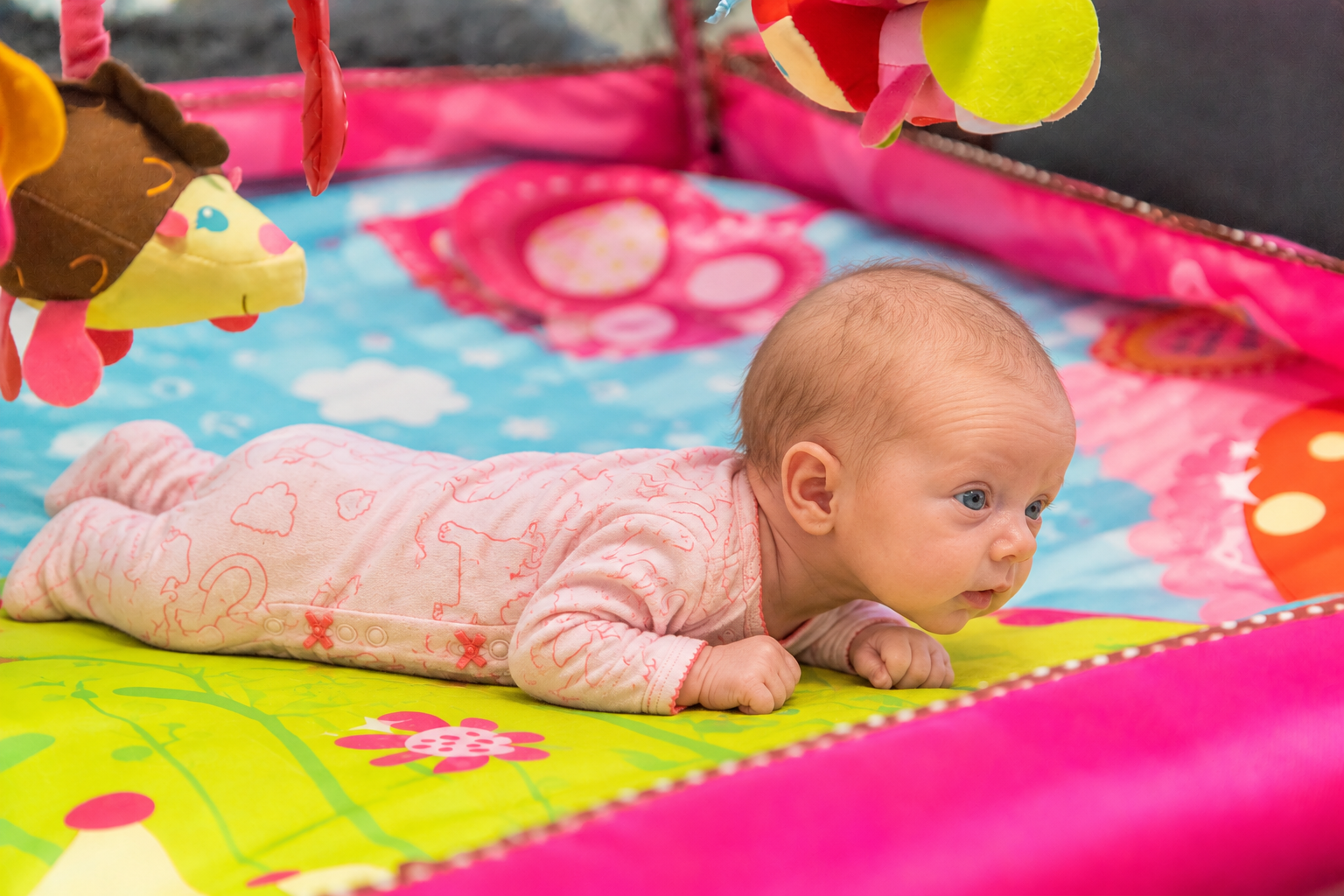
Many 7-week-olds raise their head to roughly 45 degrees for a few seconds before resting back down. You may notice your baby turning to one side during a lift or pushing lightly against the surface with their arms. This daily practice builds upper-body strength needed for rolling and eventually sitting later on.
First social smiles and early cooing
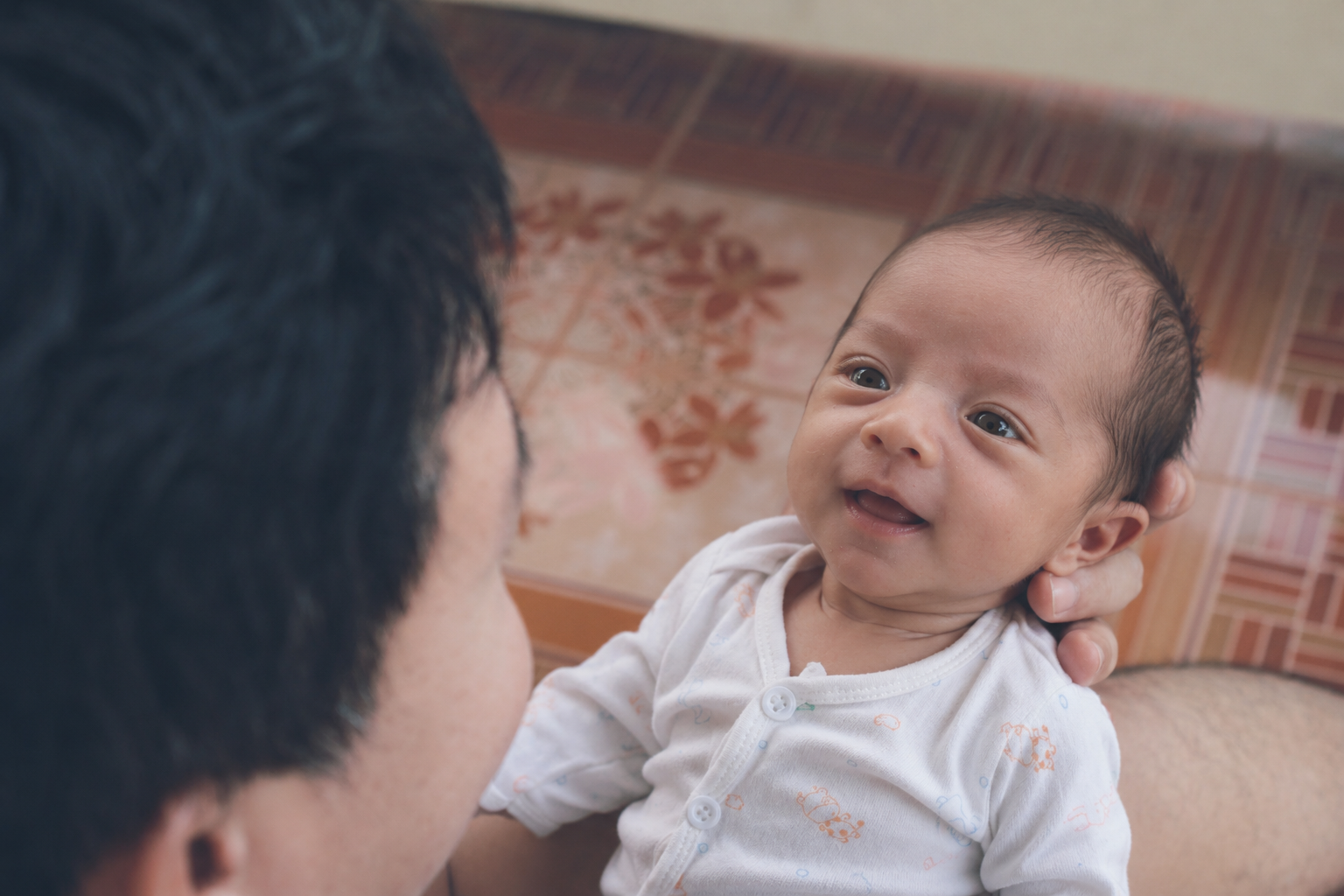
Your baby's social smile typically appears between about 6 and 8 weeks, marking intentional communication for the first time. The AAP notes that by the second month, early grins become genuine signals of pleasure, giving your baby a channel beyond crying to express needs.
How to tell a social smile from a reflex smile
A social smile appears in direct response to your voice or face, setting it apart from the fleeting reflex smiles of earlier weeks. Look for eye contact and timing: if your baby grins right after you speak or lean in, that is a social response.
Reflex smile: brief, no clear trigger, common during sleep
Social smile: directed at a person, paired with eye contact
Sounds your 7-week-old may make
Cooing usually starts around this age with soft vowel repetitions like "ooh-ooh-ooh," according to the AAP. Between about 1 and 3 months babies also begin turning their head toward sound. During a diaper change you might hear your baby coo right back after a sing-song greeting, an early glimpse of conversational give-and-take. These seven week old baby milestones in communication build quickly; for what comes next, see our 2-month-old baby development guide.
Feeding, sleep, and growth spurt signs at 7 weeks
Most 7-week-olds eat frequently throughout the day and still sleep in scattered blocks. Both routines may feel unpredictable, which is completely normal.
Typical feeding frequency and amounts
Breastfed babies generally nurse about every 2 hours, with around 10 to 12 sessions in 24 hours, according to the AAP. Bottle-fed babies typically take at least 90 to 120 ml (3 to 4 oz) per feeding, about every 3 to 4 hours by the end of the first month, per the AAP. By week 7 portions may edge slightly higher as your baby grows.
What a 7-week-old sleep schedule looks like
Most 7-week-olds sleep roughly 14 to 17 hours in a 24-hour period, spread across blocks of about 2 to 4 hours. Some babies manage one longer stretch at night, while others still wake more frequently. Longer consolidated periods develop gradually over the coming months, so there is no need to force a schedule right now.
Signs of a growth spurt around weeks 6 to 7
A growth spurt often shows up as a temporary jump in feeding demand. After nursing or bottle-feeding as often as every 90 minutes for a day or two, many babies settle back into their usual 2.5- to 3-hour rhythm. This cluster feeding helps signal the body to adjust milk supply. For more on these phases, see our guide to baby growth spurts.
Activities to support 7 week old developmental milestones
Tummy time, talking, and high-contrast visuals are three simple ways to support 7-week-old newborn development. Even a few minutes a day adds up.
Tummy time tips for week 7
Short supervised sessions build the neck and upper-body strength your baby needs for future milestones. The CDC suggests placing your baby on their tummy when awake, with toys at eye level, and staying close throughout. Aim for a few rounds per day, each lasting 1 to 5 minutes or as long as your baby tolerates. Laying your baby on your chest counts too.
Talking, singing, and face-to-face play
Responding with enthusiasm when your baby coos or smiles teaches early conversational turn-taking. The CDC recommends talking, reading, and singing throughout the day to support language development.
Narrate daily routines like feeding and bathing
Mirror your baby's expressions and sounds
Sing softly during quiet alert periods
In Yuppo, you can enter your baby's birth date and browse weekly activity suggestions matched to their current developmental stage, from face-to-face games to sensory play ideas.
High-contrast visuals and tracking games
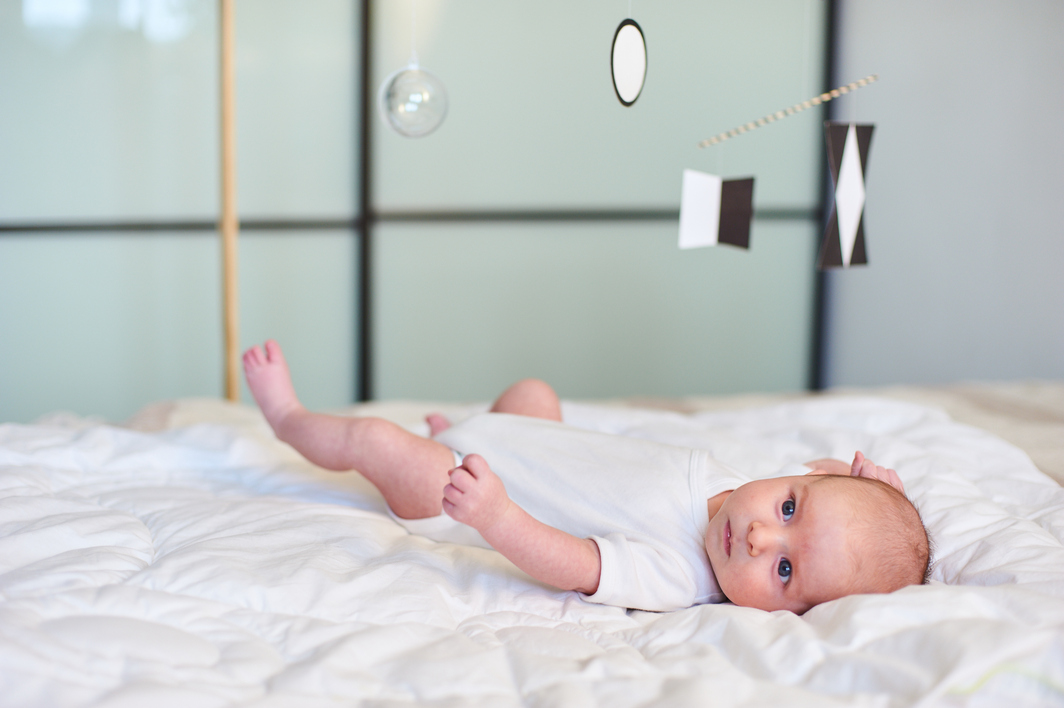
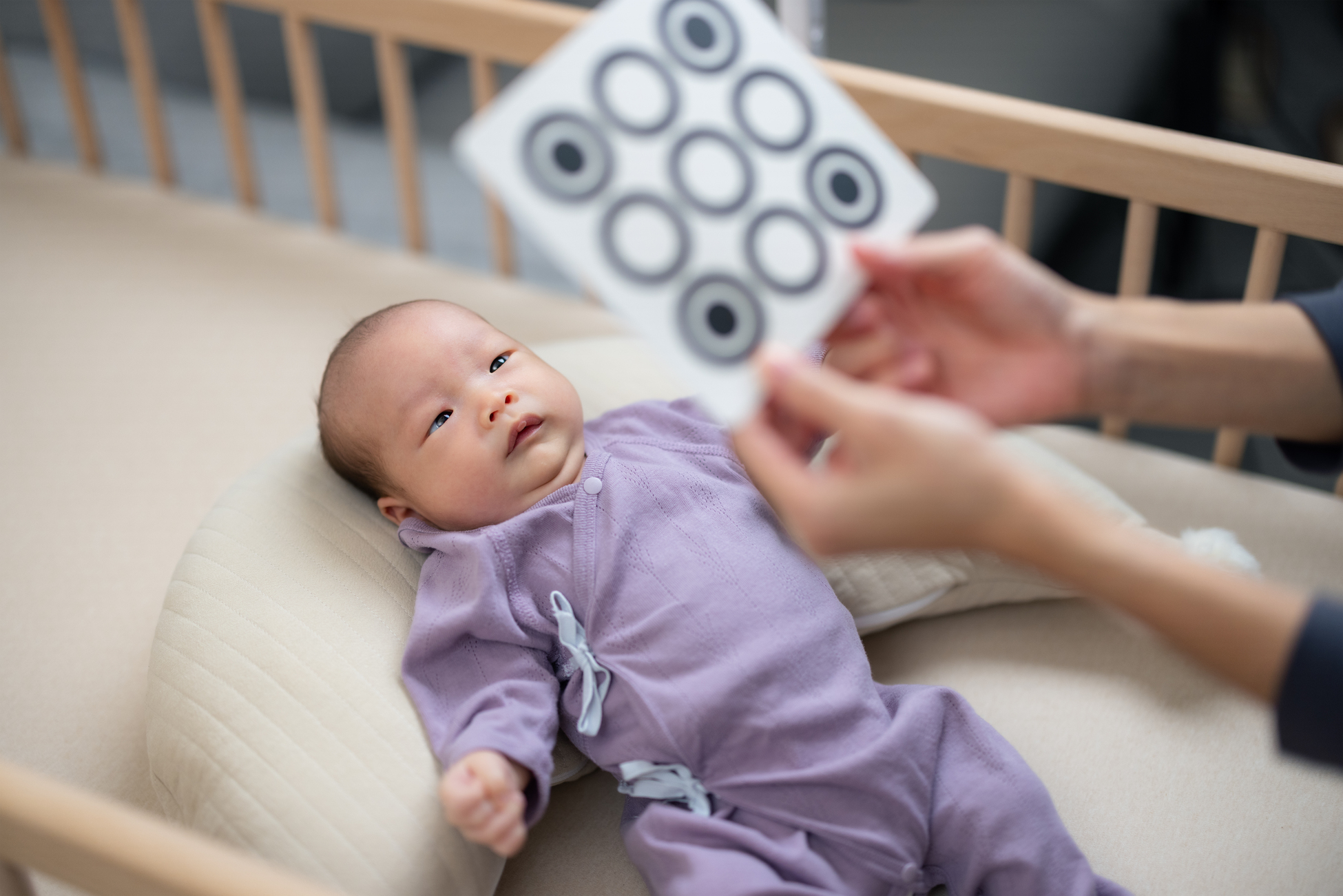
Holding a high-contrast card at close range encourages visual tracking. The CDC recommends looking at pictures with bright colors or faces and talking about them. Move the card slowly from one side toward the center and watch your baby's eyes follow. A 7-week-old tracking a bold image to the midline is a small but meaningful sign of growing coordination.
Why 7 week old developmental milestones come in ranges
Every baby moves through milestones at their own pace, and week 7 is no exception. Understanding the natural spread can ease unnecessary worry.
Why milestones come in ranges, not on a fixed date
The CDC describes milestones as benchmarks that most children reach by a certain age, not targets every baby hits on the same day. Some 7-week-olds have been smiling for days; others will get there a little later. The changes ahead are covered in our 3-month-old baby development guide.
Peak fussiness and the period of PURPLE crying
Crying in young babies often peaks around 6 to 8 weeks and then gradually eases, as the CDC notes. The period of PURPLE crying is a well-known educational framework describing this intense but temporary phase. If you feel overwhelmed, place your baby safely in their crib and step away for a few minutes. Never shake a baby.
Talk to your pediatrician if, by around 2 months, your baby:
Does not react to loud sounds
Does not follow your face or movement with their eyes
Has not shown any hint of a social smile
Makes no sounds other than crying
Summary and Next Steps
Social smile window: Most babies smile socially between 6 and 8 weeks; if yours hasn't yet, the coming days may bring that first grin.
Daily tummy time: A few short supervised sessions each day build neck strength for rolling and sitting later.
Cluster feeding is temporary: A sudden uptick in feeding demand usually signals a growth spurt and resolves within a day or two.
Talk through your day: Narrating routines exposes your baby to language patterns and supports early turn-taking.
Watch the trend: Expect more vocal experimentation, longer alert periods, and steadier head control in the weeks ahead.
This content is for information only; always consult your pediatrician for diagnosis and treatment.
Sorting out whether a fussy evening means a growth spurt or a shifting routine is hard when every day blends together. In Yuppo, you can log your baby's height and weight over time and view the growth curve on a percentile chart, making it easier to spot steady progress between checkups.
Frequently Asked Questions
Most 7-week-olds focus on a face at close range and often respond with a social smile. Your features are the sharpest image in your baby's world at that distance, and a brightening expression when you lean in signals growing recognition.
Aim for a few short sessions per day, each lasting about 1 to 5 minutes or as long as your baby tolerates. Starting with just a minute is perfectly fine; increase gradually as neck strength improves.
Feeding every 1.5 to 3 hours is common at this age, especially for breastfed babies. During a growth spurt near weeks 6 to 7, cluster feeding can push the frequency even higher for a day or two.
Crying typically peaks near the 6- to 8-week mark and decreases gradually. This pattern is well documented and often described through the PURPLE crying framework. Placing your baby safely in a crib and stepping away briefly is a healthy response when it feels overwhelming.
Many babies start cooing between 6 and 8 weeks, though some begin a little earlier or later. Responding with smiles and sounds of your own encourages your baby to keep experimenting with those early vowel sounds.