Baby Brain Development Activities: Play Ideas by Age

This article is approved by Yuppo Lab Developmental Psychologist
Published: 01 September, 2026
Updated: 01 September, 2026
Highlights
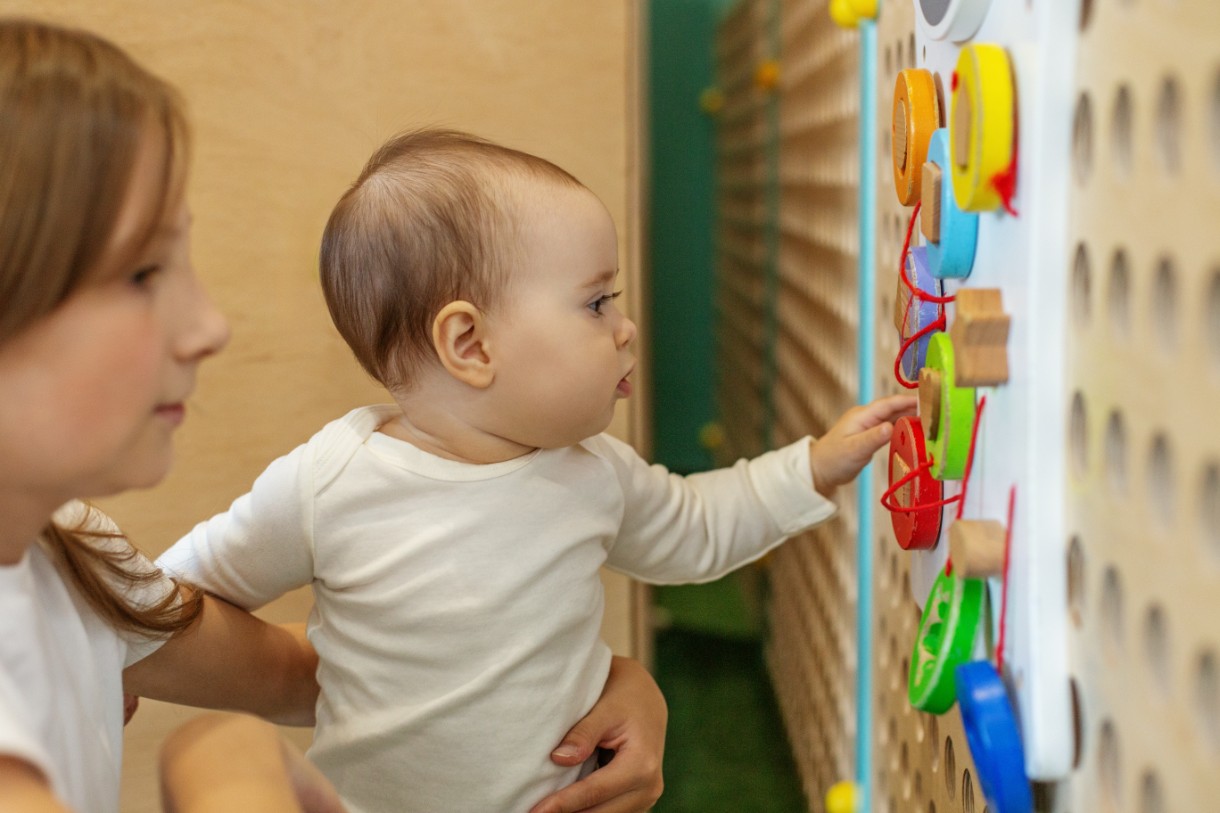
A baby's brain reaches about 80% of the average adult brain volume in the first three years, and this process is supported by simple interactions with parents.
In the first 6 months, tummy time and singing lullabies build the foundations of neurological development while strengthening secure attachment.
Classic games such as peekaboo generally help babies between 6 and 12 months develop an understanding of object permanence.
From ages 1 to 3, activities such as matching and sorting objects help children develop problem-solving skills.
Baby brain development activities are everyday play routines that build the foundation for exploring the world, understanding cause and effect, and forming emotional connections. This exciting process begins at birth and can fit into small, natural moments with guidance from you—the tired parent who wants the best for your baby. In this article, you’ll learn how baby brain development works and how to introduce sensory play and cognitive activities that support your baby’s progress at their own pace.


Why are baby brain development activities especially important in the first 3 years?
Baby brain development is especially important in the first three years because more than one million new synapses form between brain cells, called neurons, every second during this period. This remarkable pace determines which neural pathways will grow stronger through a baby’s interactions with their surroundings and which will gradually be pruned over time.
World Health Organization (WHO) states that the early years are when cognitive development happens fastest and stimuli from the outside world shape the brain most strongly. However, every baby reaches new skills at a different time. The goal is not intensive training; it is providing a safe, loving, supportive environment where babies can explore the world. Warm parental interaction during this period helps your baby feel secure, which supports their capacity to learn. Being aware of what play is, why it matters, and how it supports development can help you nurture your baby’s natural curiosity.
Infant sensory activities for babies 0–6 months
During the first half of life, infant sensory activities generally involve calm, face-to-face interactions that gently stimulate touch, hearing, and sight. A baby’s nervous system is especially open to stimulation from the outside world during these months, so a parent’s face and voice are more valuable activity tools than overly complicated toys.
Simply talking while making eye contact or touching your baby gently during a diaper change is enough to strengthen communication between brain cells. Smiling in response to your baby’s sounds sends the message, “I hear you, and you are safe.”
Tummy time activities and visual focus
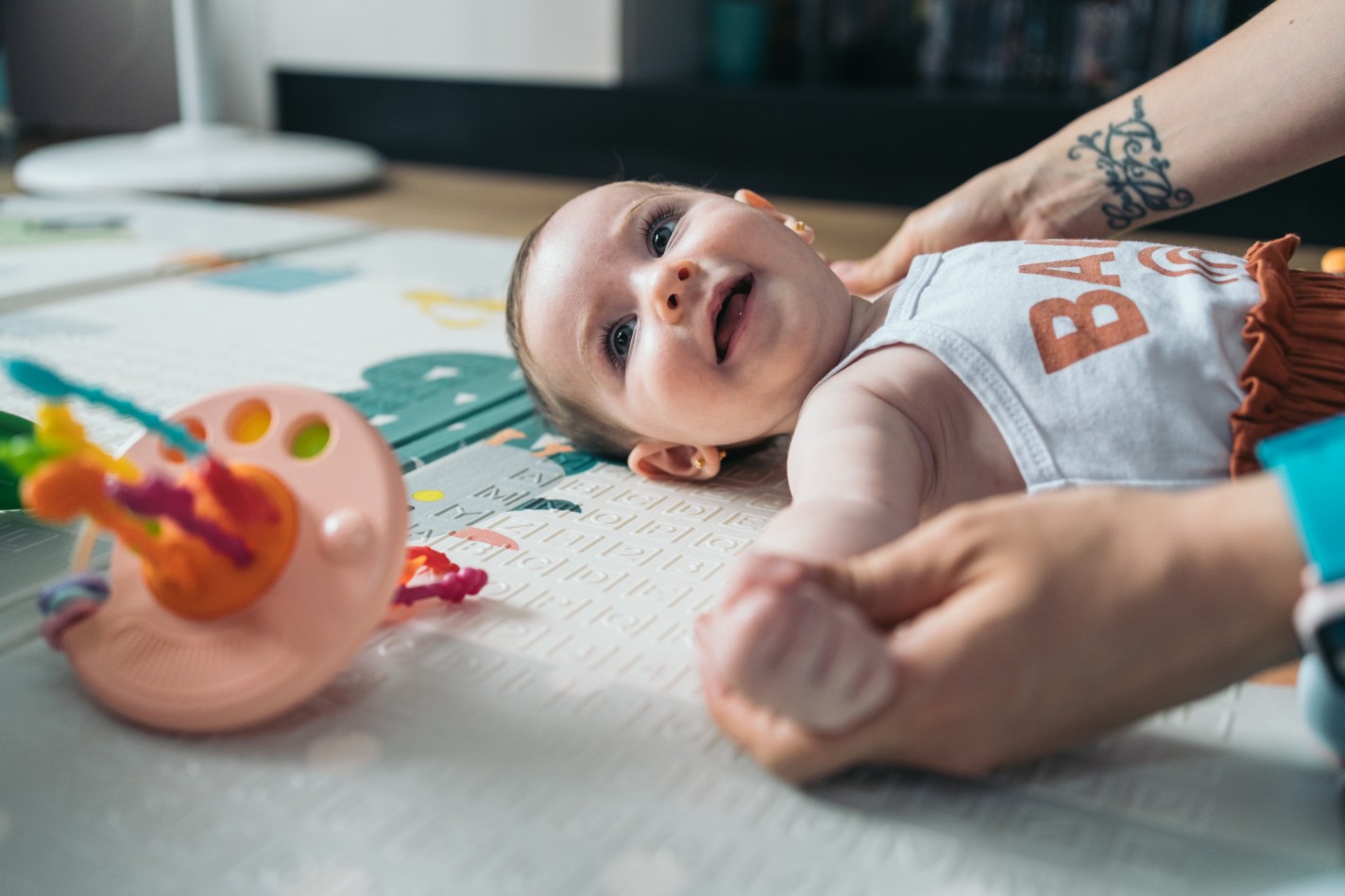
Tummy time activities and visual-focus games strengthen the neck muscles while helping babies track objects with their eyes, laying the foundation for spatial awareness. Most babies can gradually get used to tummy time by starting with a few minutes a day when they are awake and supervised by a parent.
Placing high-contrast black-and-white cards nearby or bringing your face to your baby’s eye level is a great way to capture their attention. Babies may object to this position at first, which is very normal; you can gradually adjust the length based on your baby’s responses and tolerance. During 4-month-old baby development, you may notice visual tracking becoming much more obvious as head control improves.
The neurological effects of reading aloud and singing lullabies
The neurological effects of reading aloud and singing lullabies include stimulating a baby’s auditory cortex and helping them recognize sound patterns needed for language development. Even before they understand the meaning of words, the rhythm of your speech or singing can help calm their brain waves.
The American Academy of Pediatrics (AAP) recommends reading to babies starting at birth. Simply looking at pictures and describing them in your own words is enough. The benefits of reading to babies and singing lullabies also include making it easier to settle to sleep and encouraging the release of hormones that help reduce stress.
Games that build cognitive skills from 6–12 months
Games that build cognitive skills in babies between 6 and 12 months usually involve dropping, hiding, and finding objects, allowing them to explore cause and effect. These months are an active period for child development activities: your baby is becoming more physically mobile and wants to interact more with their surroundings.
Dropping a spoon from the high chair to hear its sound or putting everything in their mouth are ways of learning about the world and testing the properties of objects. You do not need expensive or light-up materials for brain-building games; safe plastic containers or wooden spoons from the kitchen can be excellent tools for discovery.
Peekaboo and object permanence
Peekaboo helps teach object permanence, the understanding that objects still exist even when they are out of sight, which usually begins developing around 7–9 months. Hiding behind a blanket and then showing your face while saying “peekaboo” exercises prediction and memory skills.
At first, your baby may think you have truly disappeared when they cannot see you and may be surprised when you return. As you repeat the game, they learn that something does not disappear completely just because it leaves their field of vision. This developmental step also lays important groundwork for easing separation anxiety.
Discovering textures with touch-and-feel cards
Touch-and-feel cards support a baby’s ability to distinguish and categorize tactile differences in the brain by stimulating nerve endings in the fingertips with different textures. Feeling ridged, soft, fuzzy, or smooth surfaces is one of the most practical forms of sensory play.
These activities are also part of the Montessori philosophy and support the development of fine motor skills. Using descriptive words such as “Look, this is very soft” while exploring the cards also supports language development. Rather than focusing on traditional milestones as you observe your baby’s skills, Yuppo’s developmental analysis can assess not only whether your child performs a skill, but also the level at which they perform it, then create a personalized plan with activity suggestions at just the right level of difficulty.
Toddler problem-solving games for ages 1–3
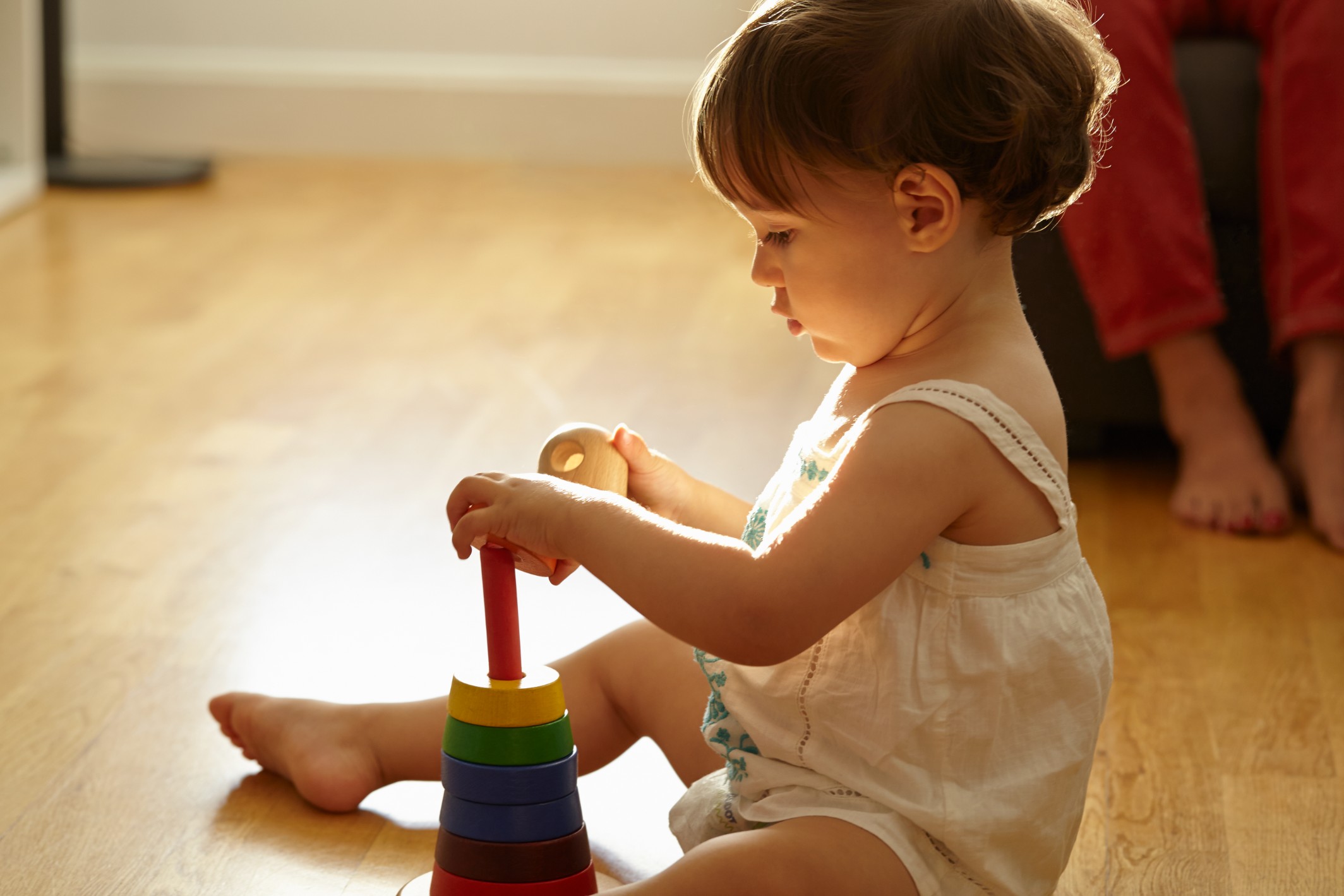
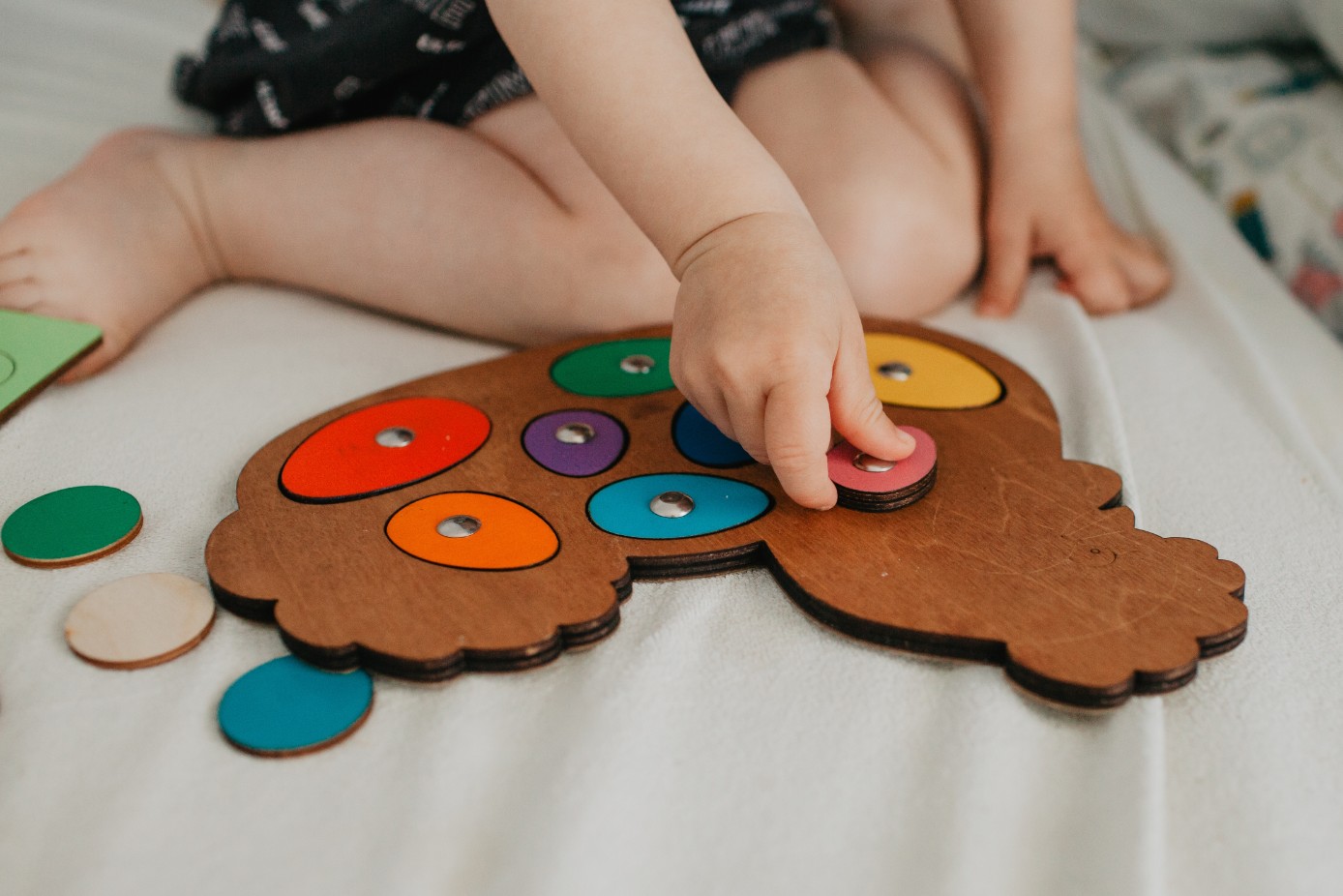
Toddler problem-solving games include fitting shapes, completing simple puzzles, and grouping objects by color or size. Children between 1 and 3 begin to assert their independence and want to figure out for themselves how things work.
Building a tower or sorting items from largest to smallest supports logical thinking and hand-eye coordination. Children may sometimes become frustrated when they cannot place a piece correctly. Instead of immediately showing them the answer, giving them time to try on their own can strengthen cognitive flexibility and confidence.
The focus of cognitive development and the activities that best support it generally differ across age groups.
Age Range | Main Cognitive Focus | Suggested Activity Type |
|---|---|---|
0–6 Months | Sensory perception and spatial foundations | Face-to-face talking, high-contrast cards, tummy time |
6–12 Months | Cause and effect and object permanence | Peekaboo, putting objects in and taking them out of a container, touch-and-feel play |
1–3 Years | Problem-solving and symbolic thinking | Simple puzzles, matching games, pretend play |
The skills listed in the table may emerge at different times in each child’s unique growth journey, so avoiding comparisons with other children is the healthiest approach.
Summary and next steps
The power of the early years: Your baby’s brain goes through its fastest growth during the first three years, and your caring communication and secure relationship support this process best.
Daily routines are play: Without special materials, making eye contact and talking during diaper changes or feedings is already a valuable brain-building activity.
Respect your baby’s pace: Every baby gains new skills at different times. Instead of trying to speed them up, enjoy where they are now and the small successes they reach.
A weekly action plan: This week, plan a screen-free, one-on-one play break suited to your baby’s age, such as 5 minutes of tummy time or a simple game of peekaboo.
When should you call the doctor?
Every baby develops in their own way, and the timing of milestones can vary by weeks or even months. However, some signs may indicate that you should speak with your child’s doctor:
Eye contact and responses: Most babies begin making eye contact around 2 months. If your baby still does not make eye contact with you or does not respond to loud sounds by startling, an evaluation is appropriate.
Loss of motor skills: Permanently losing a skill that has been learned, such as sitting without support, waving, or babbling, is generally not typical and should be evaluated.
Physical asymmetry: Consult a doctor if your baby uses only one side of the body actively or cannot lift their head at all during tummy time, even after 6 months.
Limited social interaction: Most babies respond to smiles around 2 months. If, after 3 months, your baby does not smile back at a parent or respond to sounds with cooing, speaking with a specialist may be helpful.
This content is for informational purposes only. Always consult your child’s doctor for diagnosis and treatment.
Tracking your baby’s daily routines and making sure their physical needs are consistently met can sometimes be tiring. Daytime naps in particular directly affect the quality of learning during wakeful periods because the brain processes new information during sleep.
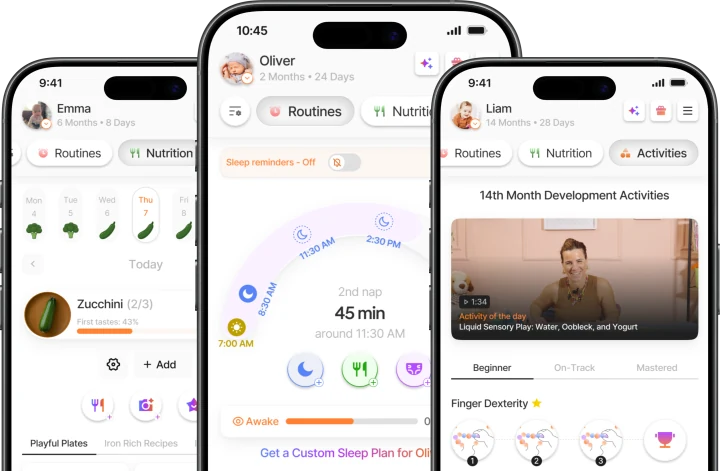
By entering your baby’s wake-up time in the app, you can see nap and nighttime sleep times created specifically around their sleep habits and routine as well as their age. You can also try the Yuppo app for free to track changes during the day in the same plan. This helps you meet your baby’s need for rest between activities with a schedule calculated specifically for them, rather than relying on experts’ broad age ranges.
Frequently asked questions
Do brain-building toys really help babies develop?
Claims that brain-building toys develop babies’ brains on their own are usually overstated. Neurological development is supported more by active interaction with a parent than by complex electronics. Everyday household objects, boxes, and simple blocks can encourage creativity and may be more useful than battery-powered, noisy toys.
When should I start reading to my baby?
It is generally recommended to start reading to your baby soon after birth, within the first few weeks. Even before babies understand the meaning, hearing a parent’s tone and word emphasis lays the foundation for language development and strengthens a sense of mutual security.
How does screen time affect a baby’s brain development?
Screen use may negatively affect a baby’s brain development because rapid visual changes early in life can shorten attention spans and encourage passive viewing. The American Academy of Pediatrics recommends avoiding screen media for children younger than 18 months, except for video chatting, and introducing it gradually thereafter.
What nutrients support a baby’s brain development?
For the first 6 months, the most important nourishment for a baby’s brain development is breast milk or infant formula. Around 6 months, solids can add iron, zinc, and healthy fats, including omega-3s. A nutritious diet supports the foundations of cognitive development as babies grow.
Can music make babies smarter?
There is no conclusive evidence that playing music directly increases a baby’s intelligence, but hearing rhythm may support auditory memory and language skills. Rather than playing music from a device, a parent singing a song or lullaby directly provides a much more engaging form of stimulation.
References

Yuppo Lab
Developmental Psychologist