Toddler Screen Time: Recommendations, Limits, and Healthy Habits

This article is approved by Çiğdem İrem İleri
Published: 08 April, 2026
Updated: 13 August, 2026

Key Takeaways
Screen use is generally not recommended for children younger than 18–24 months. From ages 2–5, limiting it to about 1 hour a day is considered ideal.
More than the length of screen time, the quality of the content matters. Interactive, age-appropriate content has a more direct effect on development.
Turning screens off at least 1 hour before bedtime supports healthy melatonin release and improves children's nighttime sleep quality.
When parents watch with their children and talk about what they see, they can significantly reduce the potential negative effects of digital media.
Screen use in early childhood is a parenting process that should be managed with age-appropriate time limits and high-quality content to support healthy development. When raising a child in a digital age, finding the right place for screens in your home is often more realistic than trying to remove them completely. This article is for parents of children ages 0–6 who are often managing their own fatigue as well. You’ll learn about screen time recommendations toddlers can follow, ideal limits for different age groups, the difference between passive consumption and interactive content, and practical strategies for managing this process without conflict.


Screen Time Recommendations for Toddlers: What Are the Ideal Limits by Age?
Screen time for children is generally kept close to zero until 18–24 months, while children ages 2–5 are usually advised to have no more than 1 hour per day.
The World Health Organization (WHO) recommends limiting sedentary screen time to support young children's physical and cognitive development. In the rush of daily life, trying to keep up with household tasks or simply needing a few minutes to breathe may lead you to turn on a screen. That is completely human, and you do not need to feel guilty as a parent. The main goal is for your child not to spend the entire day in front of a screen and to be able to move freely during much of their waking time.
Screen exposure from birth to age 2
For babies from birth to age 2, screen time is generally not recommended except for video calls with family members who live farther away.
The American Academy of Pediatrics (AAP) recommends avoiding digital media for babies younger than 18 months. Babies in this age group make sense of the three-dimensional physical world by touching and tasting objects and making eye contact with their caregivers. Establishing healthy habits around your child's screen use from ages 0–3 early on can make setting limits much easier as they get older.
Recommended limits for children ages 3–6
For children ages 3–6, it is generally considered ideal to limit screen use to an average of 1 hour a day, focusing on high-quality digital content.
During this stage, children begin to understand the world in more complex ways, and limits can become somewhat more flexible. Even so, physical play, drawing, and running are important so your child can keep learning at their own pace. Dividing this 1-hour period into short 15–20-minute sessions can make it easier for your child to regain focus without becoming overstimulated.
How Do You Choose Quality Digital Content, and What Is Passive Screen Time?
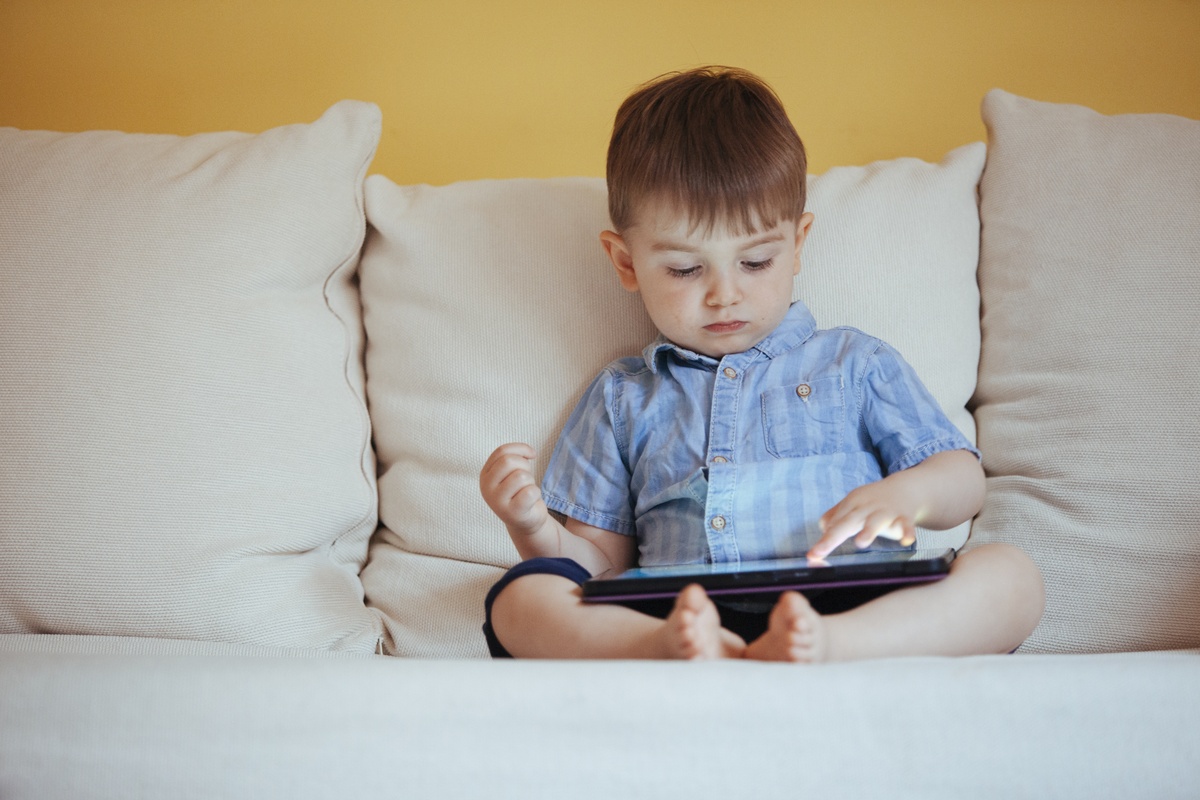
Quality digital content includes interactive features that encourage children to think and respond. Passive screen time refers to moments when a child only looks at the screen without physical or mental engagement.
The quality of content is often much more important than how long the screen stays on. Rapidly changing scenes, loud sounds, and overly bright colors can overstimulate children's developing nervous systems and cause restlessness. Programs that children can watch gradually, at their own mental pace, are more likely to support learning.
Educational content versus passive viewing
Educational screen time for kids offers an active experience in which children answer questions and sing along with characters on the screen, while passive viewing is a one-way stream of videos watched one after another.
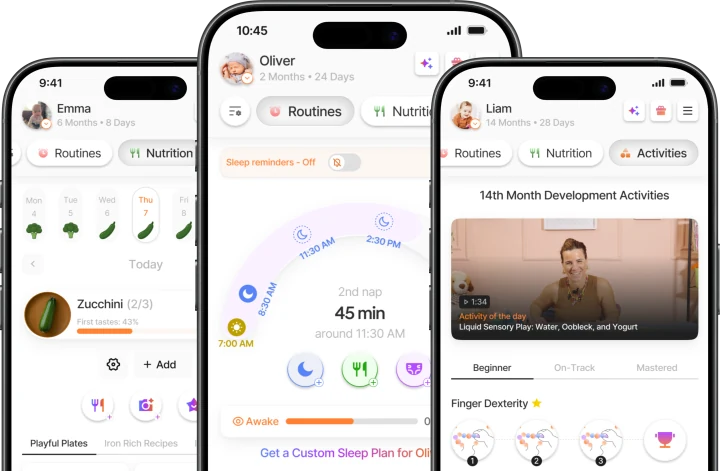
Interactive content encourages children to explore the world and helps them understand cause and effect. Watching a slow-paced program with a warm story can support learning, while randomly selected short videos that play automatically may shorten a child's attention span. If you want to make your child's limited digital time more meaningful, you can choose interactive stories and mini-games in the Yuppo app, created by experts for cognitive and social-emotional development and matched to your baby's age.
What to look for in age-appropriate apps and videos
When choosing age-appropriate content, prioritize digital media that is ad-free, free of violence or frightening elements, slow-paced, and built around a clear message.
When selecting an app or video, focusing on developmental benefits rather than commercial goals helps protect your child. It also helps when the language on screen is close to the natural language and pace your child hears in everyday life, making new words and concepts much easier to understand.
What Are the Developmental Risks of Excessive Screen Use in Early Childhood?
Excessive screen use at an early age may contribute to language delays, poorer sleep quality, and motor-skill difficulties related to too little physical activity.
Screens are not inherently harmful. The main concern is when screen time takes away from running, exploring, doing puzzles, and, most importantly, talking with you. Children reach developmental milestones through trial and error in the real world.

Effects on language development and social skills
Excessive, uncontrolled screen exposure can reduce back-and-forth communication and may slow vocabulary growth and the development of babies' and children's ability to socialize with peers.
Babies learn to talk not from words they hear on screens, but by observing human faces, lip movements, and emotional expressions in real time. No matter how many words appear on screen, they cannot replace you smiling and saying, “That’s a red car.” If you have concerns about communication or socializing, these tips on when to seek support for a speech delay may be reassuring.
Sleep patterns and limited physical activity
Blue light from screens in the hours before bed can suppress melatonin, the hormone that helps us fall asleep, reducing children's nighttime sleep quality and daytime activity.
Many experts recommend turning off screens at home 1–2 hours before bedtime and moving into a calm bedtime routine. Sitting in front of a screen for long periods does more than make it harder to fall asleep. It can also limit the use of large muscle groups and delay the development of physical coordination.
Strategies for Building Healthy Screen Habits as a Family
To build healthy screen habits, parents can add screen-free free-play time to daily routines and avoid using technology as a way to calm their child.
Sometimes you may need to turn on a screen to take dinner off the stove or make a quick phone call. That is okay. The important thing is not to let a screen become the only way you cope with every difficult moment or crying spell.
Screen-free areas and shared-use rules
Creating screen-free areas at home, such as the dining table, bedrooms, and play areas, is an effective way to help children focus on experiences beyond technology.
For example, having a screen on during meals can keep a child from noticing when they feel full. Reserving family meals for conversation and being together strengthens your connection and creates a safe setting for developing healthy digital habits later on.
Modeling healthy digital habits
Because children learn by imitating their parents, limiting your own phone or tablet use is an important part of being a positive digital role model.
If you are looking at your phone while your child excitedly tries to tell you something, you may unintentionally send the message that “the screen is more interesting than what you’re saying.” Leaving your phone in another room or silencing it during playtime helps you connect fully and enjoy the moment together.
Summary and Next Steps
Recommended limits: Aim for a life that is as screen-free as possible until 18–24 months, followed by no more than 1 hour a day of high-quality, interactive content.
Active participation: Sit beside your child while they use a screen and ask questions about the characters or events to make the experience interactive.
Bedtime routine: Turn off screens at least 1 hour before bed to signal to the brain that it is time to sleep.
Set boundaries: Designate “screen-free areas,” such as the dining table and bedrooms, for face-to-face communication only.
This week, try keeping all family members’ phones and tablets away from the table during meals and notice whether communication with your child improves.
When Should You Consult a Professional About Screen Use?
Although children's screen use can often be managed with parental guidance, in the situations below, working with a professional on your child's developmental follow-up is the healthiest next step.
Eye contact and communication: Not responding to you briefly while watching television may simply reflect focused attention and is usually normal. However, if your child does not respond to their name even when the screen is off or avoids eye contact with you,
Difficulty stopping screen use: Brief protest, crying, or fussiness when a screen is turned off is expected. However, if your child strongly refuses to return to daily activities after screen time ends, has intense tantrums, and takes hours to calm down,
Language and expressive delay: Children naturally begin speaking at different rates. However, if a child with heavy screen use is over age 2 and cannot form simple sentences of at least two words,
Physical symptoms: Rubbing the eyes occasionally may be a sign of sleepiness. However, if your child blinks frequently, needs to sit very close to screens, or complains of headaches, contact your doctor.
This content is for informational purposes only. Always consult your child's pediatrician for diagnosis and treatment.
Enriching your child's time away from screens with age-appropriate activities can sometimes feel complicated or tiring. With Yuppo's developmental analysis module, you can assess your child's level of cognitive, physical, language, and social-emotional skills, then access expert-approved activity plans suited to their current skill level and easy to do at home with everyday materials—without the pressure of “your child should be doing this at this age.”
To spend more quality time with your child and follow healthy developmental steps without added stress, try the Yuppo app for free and find a trusted companion for your parenting journey.
Frequently Asked Questions
When can babies start watching TV or using a tablet?
Experts generally do not recommend television or tablet use before 18–24 months, except for brief video calls with family members. Until then, babies learn much more effectively by touching real-world objects and engaging physically with you and other caregivers.
Can too much screen time delay a child's speech?
Excessive, one-way screen time can reduce the back-and-forth interaction children need and may contribute to speech delays or slower language development. Language is a living skill learned through reciprocal practice, so passive viewing cannot replace a real conversation.
Is it bad to let kids use a tablet while they eat?
Using a tablet during meals can keep children from noticing fullness cues and shift their attention from food to the screen, which is not supportive of healthy eating habits. Eating together while talking with a parent is a more supportive alternative.
How does blue light affect children's sleep?
Blue light from screens can suppress melatonin, the hormone that promotes sleep, by signaling to the brain that it is still daytime. This can make it take longer for children to fall asleep and reduce sleep quality. Turning off devices about 1 hour before bed is recommended.
Do parental-control apps help manage children's screen time?
Parental-control apps can be effective for limiting screen time, filtering age-inappropriate content, and supporting digital safety. They are not enough on their own, though. Your child's habits also need clear communication and a parent who models healthy digital behavior.
References

Dr. Çiğdem İrem İleri
Developmental Psychologist
After graduating from Koç University in 2019 with a double major in Psychology and Media and Visual Arts, alongside track programs in Design, Gender Studies, and Media and Management, Çiğdem İrem İleri began her integrated doctoral studies in Developmental Psychology at the same institution that same year.