Signs of ADHD in Toddlers: A Guide for Preschool Years

This article is approved by Çiğdem İrem İleri
Published: 31 July, 2026
Updated: 31 July, 2026

At a Glance
Signs of ADHD in toddlers and preschoolers often appear as short attention spans, excessive hyperactivity, and difficulty following simple instructions.
Attention Deficit Hyperactivity Disorder (ADHD) is typically diagnosed between ages 4 and 6 through a comprehensive evaluation as behaviors become more evident.
Focus capacity depends on age; a 3-year-old is normally expected to stay focused on a structured activity for about 5–10 minutes.
Lack of sleep and excessive screen time are among the most significant external factors triggering focus problems in young children.
Signs of ADHD in toddlers involve difficulty paying attention, hyperactive behavior, and impulsivity at a level that is not typical for their developmental stage. The years between 0 and 6 are a time of energetic exploration and curiosity. This can make it challenging for tired parents to tell whether their child is simply high-energy or experiencing a neurodevelopmental difference. In this guide, you will learn the signs of preschooler attention deficit, expected developmental milestones by age, and when to consult a professional.


What Is ADHD in Preschoolers?
ADHD in preschoolers refers to a child's ongoing difficulty maintaining age-appropriate attention spans, controlling impulses, and managing excessive activity. This neurodevelopmental difference affects daily routines, play skills, and social interactions. According to the American Academy of Pediatrics (AAP) guidelines, for a diagnosis to be considered, these behaviors must be present for at least six months across multiple settings, such as home and preschool. While every young child gets distracted at times, persistent disruption to daily functioning warrants closer observation.
The Role of Genetics and Environmental Factors
Genetics and environmental factors combine inherited traits and early life exposures. Children with a family history of ADHD have a higher likelihood of showing similar traits. Additionally, early factors such as maternal health complications during pregnancy or premature birth can influence executive function development in the brain.
Dopamine and Brain Development
Dopamine plays a key role in brain development, specifically in regions like the prefrontal cortex responsible for decision-making and impulse control. Neurological differences in dopamine levels directly affect how children process information, build patience, and delay gratification. Your child is not breaking rules intentionally; their brain simply processes sensory stimuli differently.

Signs of ADHD in Toddlers by Age Group
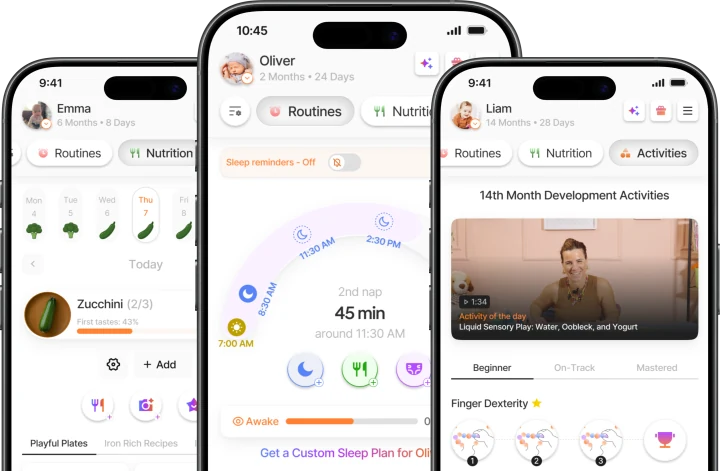
Signs of ADHD in toddlers and preschoolers evolve over time, starting as intense physical restlessness in early childhood and shifting toward difficulty staying on task as they grow. Attention spans lengthen naturally as the brain develops, so behaviors should always be judged against age-specific expectations. To monitor your child's developmental progress, you can track age-appropriate milestones using the Yuppo app.
Early Signs in 2- to 4-Year-Olds
Early signs in 2- to 4-year-olds include running around constantly without sensing danger, losing interest in activities rapidly, and experiencing frequent tantrums. While parents often wonder how to spot hyperactivity in children under 1 year, hyperactivity cannot be diagnosed in infants; rapid motor development and constant movement in the first year are part of normal exploration. ADHD symptoms in 3 year old children often overlap with typical high-energy behavior. Most 2- to 3-year-olds focus on a single activity for about 3 to 8 minutes. For children whose focus falls consistently below this range, understanding early impulsivity signs and management strategies can be helpful.
Signals During the 5- to 6-Year-Old School Preparation Phase
Signals during the 5- to 6-year-old school readiness period include difficulty remembering simple multi-step instructions, inability to sit still during table activities, and mixing up sequential tasks. At this age, children are typically expected to sustain focus on a structured task for 10 to 15 minutes and wait their turn. Preschooler attention deficit signs often manifest as appearing not to listen when spoken to directly. Evaluating school readiness skills can help parents support social and cognitive growth.
Differences Between Normal High Energy and Attention Deficit
Differences between normal high energy and attention deficit come down to behavioral intensity, consistency, and whether a child can settle down during an activity they love. High-energy children usually rest when physically tired or sit still for a favorite storybook. However, children with toddler focus problems feel an internal urge (clinically termed motor restlessness) to move constantly, even during fun activities. While neurotypical children can pause when prompted by an adult, children struggling with attention find it harder to apply this mental brake.

Other Factors Affecting Focus in Young Children
Other factors affecting focus in preschoolers include insufficient sleep, excess screen time, nutritional imbalances, and emotional stress. Behaviors resembling ADHD can sometimes stem from daily routine issues that are easy to adjust. Supporting the nervous system by improving these external factors can naturally boost concentration.
The Impact of Sleep Routines and Screen Time
Inadequate sleep and excessive screen time fatigue the child's brain and shorten attention spans. Overtired preschoolers often act hyperactive and irritable. According to World Health Organization (WHO) guidelines, children aged 2 to 4 need 10 to 13 hours of sleep per 24-hour period, and sedentary screen time should be limited to no more than 1 hour per day. Rapid digital stimuli make it harder to focus on the slower pace of real life. Managing screen boundaries thoughtfully helps maintain a healthier focus capacity.
Nutrition and Vitamin Deficiencies
Nutritional gaps, such as low levels of iron, zinc, or vitamin B12, can negatively affect concentration and brain function. Furthermore, according to the American Academy of Pediatrics (AAP), high amounts of added sugar and certain artificial additives may trigger restlessness and distractibility in some children. Balanced meals provide stable brain energy to support learning and focus.
Key Takeaways and Next Steps
Adjust expectations by age: Tailor expectations to your child's natural focus span of 5–10 minutes.
Reduce screen time: Limit digital media and replace it with slow-paced free play.
Establish consistent routines: Create a calming bedtime routine, as healthy sleep directly supports daytime focus.
Try a focus game: Set up a simple activity like sorting color blocks or matching cards to observe how long your child stays engaged at the table.
When to Consult a Pediatrician
If your child's attention difficulties or activity levels significantly disrupt daily life, safety, or social development, consult your pediatrician or a child specialist.
A professional evaluation may be recommended if you notice:
Safety risks: Your child repeatedly rushes into dangerous situations, like running into the street, without fear (while children aged 3 to 4 typically begin to understand basic hazards, a complete lack of impulse control warrants expert advice).
Inability to engage in play: Your 4- or 5-year-old cannot sustain 2 to 3 minutes of simple play or consistently acts as if they do not hear instructions.
Extreme restlessness: The child remains unable to calm down for most of the day despite adequate sleep and nutrition, or exhibits destructive behaviors.
Developmental regression: There is a noticeable loss in previously acquired language or focus skills over recent months.
This content is for informational purposes only. Always consult your pediatrician for diagnosis and treatment.
Childhood development in the preschool years is an exciting journey, but parents often need gentle guidance along the way. Learning how to support your child's attention span through age-appropriate activities can make this energetic stage much more manageable.
Try the free Yuppo app today to track your baby's weekly developmental milestones and discover expert-backed activities tailored to their focus capacity.
Frequently Asked Questions
Can a 3-year-old be diagnosed with ADHD?
A 3-year-old is rarely diagnosed with ADHD because high activity levels and short focus are normal at this age. Specialists typically wait until ages 4 to 6 for formal neurodevelopmental evaluations, when children can follow more complex directions.
How do you spot signs of ADHD in toddlers at home?
You can spot signs of ADHD in toddlers at home by watching how long your child plays independently with quiet activities like simple puzzles. Frequently forgetting multi-step instructions and avoiding eye contact when spoken to are key indicators.
How can parents improve attention span in preschoolers?
To improve attention span in preschoolers, limit fast-paced screen content and introduce activities that build fine motor skills. Breaking tasks into small steps and reducing room distractions such as number of toys also makes staying focused much easier.
Can a child have attention deficit without hyperactivity?
Yes, a child can have attention deficit without hyperactivity, often presenting as quiet daydreaming and missing verbal directions. These children are not physically hyperactive but struggle with completing tasks and maintaining focus compared to peers.
Are there attention tests for preschoolers?
Formal paper-and-pencil attention tests are not typically used for preschoolers. Instead, pediatric specialists rely on play-based clinical observation and standardized questionnaires completed by parents and teachers to assess a child's focus and behavior.
How should you approach a toddler with focus problems?
Approach a child with focus problems using clear, simple instructions while making direct eye contact, avoiding accusatory language. Praising effort and providing safe spaces for physical play helps make communication and daily management much smoother.
References

Dr. Çiğdem İrem İleri
Developmental Psychologist
After graduating from Koç University in 2019 with a double major in Psychology and Media and Visual Arts, alongside track programs in Design, Gender Studies, and Media and Management, Çiğdem İrem İleri began her integrated doctoral studies in Developmental Psychology at the same institution that same year.