11 Month Sleep Regression: Why It Happens and How to Help Your Baby Sleep Again

This article is approved by Yuppo Lab Sleep Expert
Published: 16 October, 2026
Updated: 16 October, 2026

At a Glance
An 11 month old sleep regression typically lasts around 2 to 6 weeks, driven by developmental shifts rather than a medical problem.
Your baby may wake more at night, fight naps, or cry when you step out of the room.
Babies aged 6 to 12 months may sleep around 15 hours in total, and brief night wakings remain developmentally normal.
Placing your baby in the crib drowsy but awake and keeping nighttime responses low-key help the phase pass more smoothly.
The 11 month sleep regression is a temporary phase, usually lasting two to six weeks, when a baby who slept well starts waking at night or resisting naps.
Below you will learn what drives this regression, how to spot its signs, and which steps help your baby (and you) move through it. You can find more age-specific resources in our sleep category.


What is the 11 month sleep regression
Not a diagnosis but a common pattern
The 11 month sleep regression is not a formal medical category but a widely used term for the disruption that commonly appears between 10 and 12 months. According to the American Academy of Pediatrics (AAP), babies do not develop regular sleep cycles until about 6 months, and it is normal to wake at night and fall back asleep after a few minutes. When those brief wakings grow more frequent and harder to manage, parents typically describe it as a regression.
What it typically looks like
Your baby's growing grasp of object permanence, the realization that you still exist behind a closed door, combines with new motor skills to make sleep transitions harder. You may notice:
Two or more extra night wakings compared to recent weeks
Longer settling time at bedtime
Crying when you leave the room
Shorter or skipped daytime naps
Every baby has their own timeline, so this phase may begin a few weeks earlier or later.
Why does sleep regression happen around 11 months
Several developmental forces converge around 11 months, making sleep regression common during this window:
Separation awareness: Your baby understands you exist when out of sight but cannot predict your return.
Motor practice: Skills like pulling to stand and cruising keep the brain active during sleep transitions.
Nap pressure: Growing wake windows make fitting two naps into the day harder.
Separation anxiety and object permanence
Separation anxiety is a normal sign of a meaningful attachment, according to the AAP. Your baby knows you exist out of sight but cannot yet trust you will return, turning bedtime into a protest. A previously calm sleeper may scream the moment you step toward the door, settling only once you are visible again.
Motor milestones and brain development
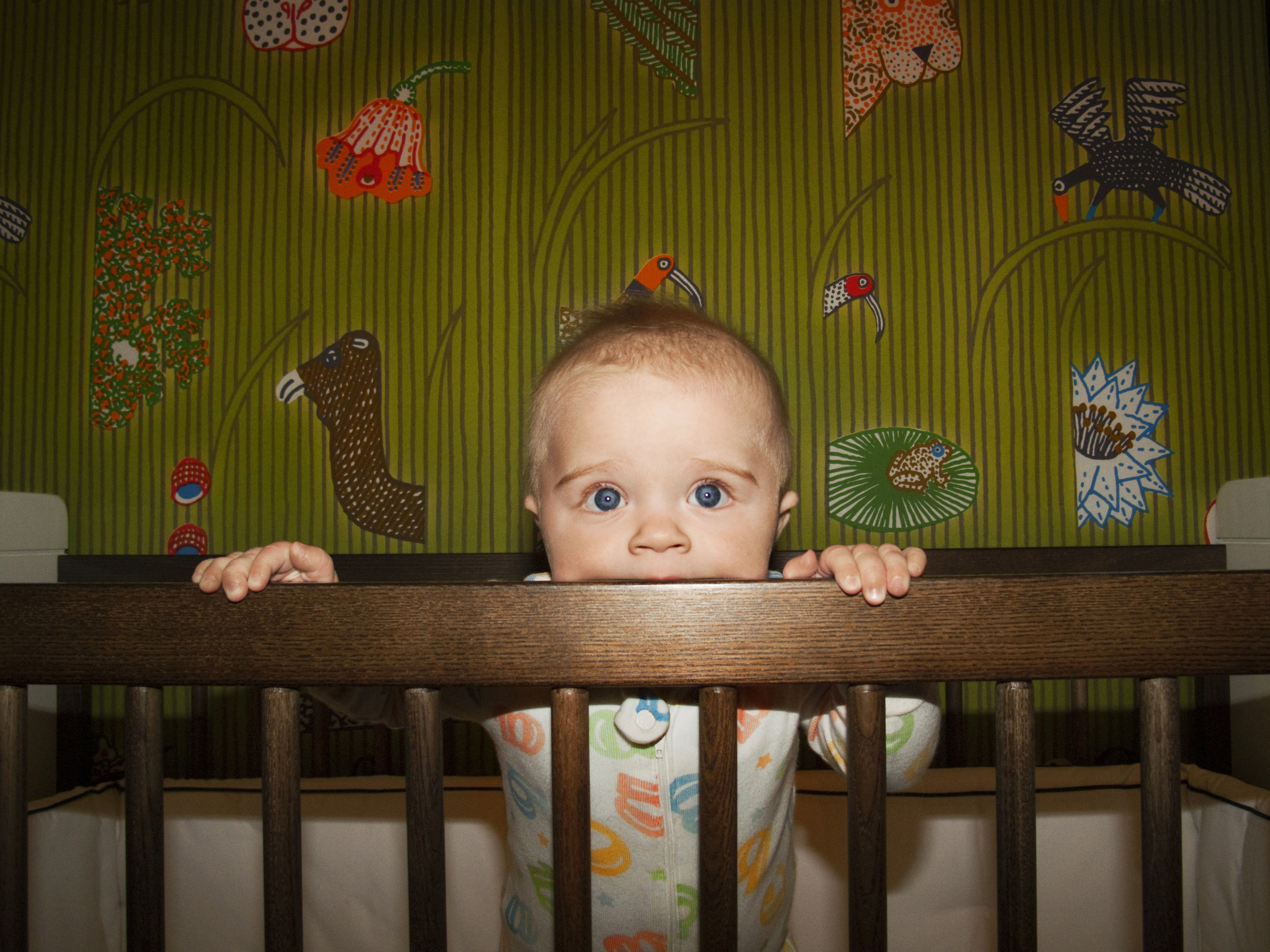
Motor milestones like pulling to stand, cruising, and early stepping keep your baby's brain rehearsing movement patterns well into the night. A common scenario: your 11 month old pulls up in the crib at 2 a.m. and cries because they have not figured out how to lie back down.

Nap transition pressure from two naps to one
Nap transition pressure builds as the wake window between naps stretches. A baby who napped twice a day may suddenly refuse the afternoon nap, stay awake and fussy, then crash into an overtired bedtime. Most babies are not ready for a single nap until roughly 13 to 15 months. You can learn how growth spurts interact with appetite and sleep during this period.
11 month sleep regression signs: what to watch for
Increased night wakings, nap resistance, and bedtime protests that surface suddenly are the clearest signs of an 11 month sleep regression.
Nighttime wake-up patterns
Your 11 month old waking up at night crying between sleep cycles is the hallmark of this phase, even when longer stretches had become the norm. The AAP explains that a good sleeper at this age is a baby who wakes frequently but can get back to sleep independently, and that frequent waking is developmentally appropriate. If your baby has not yet built that skill, these wakings may feel more intense than regressions at 8 months or 4 months.
Nap refusal and shortened naps
Naps during the 11 month sleep regression often look like outright refusal or 20-to-30-minute stretches instead of the longer rest your baby used to take. The AAP recommends watching for early sleepy cues because catching those signals before your baby becomes overtired makes settling easier. Look for:
Eye rubbing, yawning, or turning away from play
Sudden fussiness after a stretch of happy activity
Losing interest in toys or zoning out

How long does the 11 month sleep regression last
Typical timeline
Most families report improvement within about 2 to 6 weeks when daily rhythms stay predictable. According to the National Health Service (NHS), all babies change their sleep patterns, and growth spurts, teething, and illnesses can all affect how your baby sleeps. For some that means roughly two weeks; for others the phase stretches closer to six.
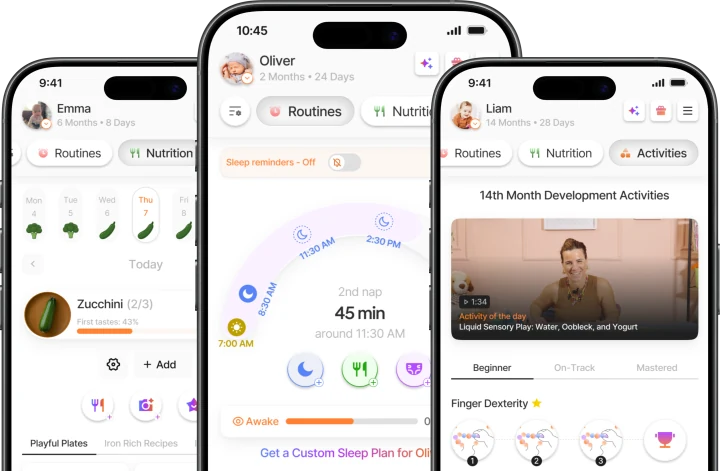
In Yuppo, you can log nap times and bedtimes using the sleep tracking feature and review the recorded pattern over several days, making it easier to see whether stretches are gradually lengthening.
Signs the regression is easing
You will usually notice gradual shifts before sleep fully returns to its earlier rhythm:
Night wakings become shorter and less frequent
Your baby settles more quickly after being placed in the crib
Nap lengths inch back toward their usual duration
If you went through an earlier regression around 4 months, you already know these disruptions pass.
Sleep regression, teething, or separation anxiety at 11 months: how to tell the difference
Telling sleep regression from teething and separation anxiety comes down to observing a cluster of daytime and nighttime clues together.
Side-by-side comparison
The table below highlights the main differences, though these three causes often layer on top of one another.
| Feature | Sleep Regression | Teething | Separation Anxiety |
|---|---|---|---|
| Typical timing | Around 10 to 12 months | Varies, often 6 to 12 months | Peaks around 10 to 18 months |
| Main daytime clue | Nap resistance, clinginess around sleep | Drooling, gnawing, red gums | Cries when caregiver leaves |
| Night waking style | Multiple brief wakings between cycles | Fussiness easing with gum pressure | Intense crying that stops when caregiver returns |
| Usual duration | A few weeks | A few days per tooth | Comes and goes over months |
All three can appear at the same time, so your baby may show overlapping signs.
When causes overlap
According to the NHS, teething symptoms include sore red gums, a slightly raised temperature below 38 °C (100.4 °F), a flushed cheek, and increased dribbling, though baby teeth sometimes emerge with only mild symptoms lasting a few days. If you notice these physical signs alongside night waking, teething discomfort may be adding to the regression. For teething timelines, see baby teething symptoms.

What you can do during the 11 month sleep regression
A predictable daily rhythm and low-key nighttime responses are the most effective tools during this phase.
Keep wake windows and bedtime routines steady
Steady wake windows give your baby's circadian rhythm the anchor it needs. Stretching them by 15 to 30 minutes around this age helps prevent both under-tiredness and overtiredness. According to the AAP, placing your baby in the crib drowsy but not yet asleep helps them learn to fall asleep on their own.
A sample bedtime sequence:
Warm bath or washcloth wipe-down
Fresh diaper and pajamas in dim light
A short book or quiet song
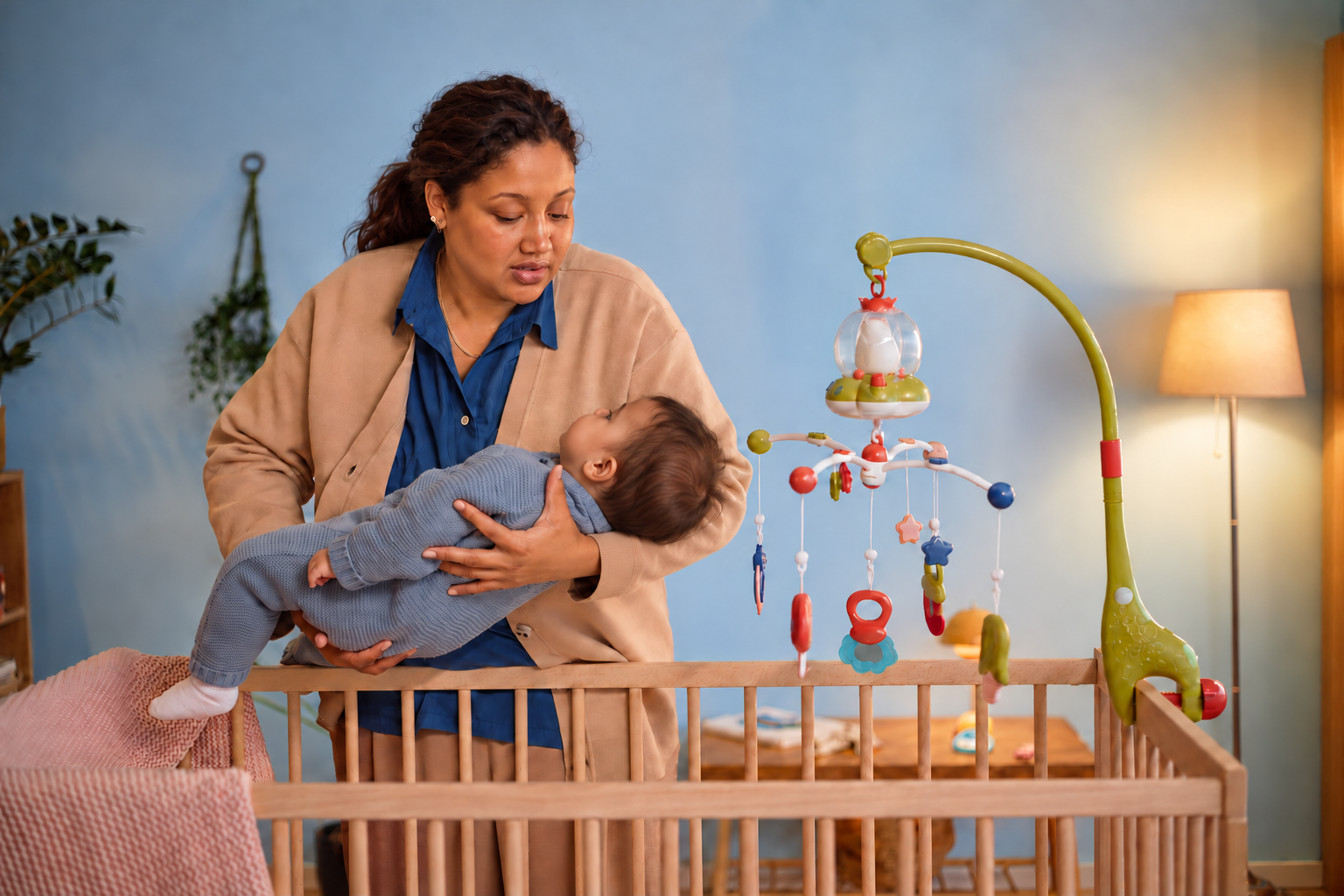
Into the crib while still awake
Respond to night wake-ups calmly
Brief, low-stimulation check-ins help your baby practice falling back asleep. The AAP suggests not rushing in at the first sound; giving your baby a moment allows them to try self-settling. Keep the room dark and speak softly, but attend to genuine needs like a dirty diaper or signs of discomfort.
Adjust the nap schedule when needed
Adjusting naps usually means capping the morning nap rather than dropping to one nap too soon. If the afternoon nap has been refused for over a week, try limiting the morning nap to about 60 minutes so sleep pressure builds for the second one. Babies aged 6 to 12 months may sleep around 15 hours total, mostly at night, according to the NHS. For more, see our baby sleep schedule by age guide.
If sleep stays disrupted beyond six weeks despite a predictable routine, your baby seems in pain rather than protesting, or daytime behavior shifts noticeably (loss of interest in play, a drop in feeding over several days), check in with your pediatrician.
Summary and Next Steps
Night wakings during this phase are developmentally normal. Your baby's brain is processing new motor skills and separation awareness, which temporarily disrupts transitions between sleep cycles.
Drowsy-but-awake placement builds self-settling skills. Laying your baby down before they drift off gives them practice returning to sleep on their own.
Watch for early sleepy cues. Catching eye rubbing, yawning, or sudden fussiness before overtiredness sets in eases both naps and bedtime.
Log your baby's sleep for a few days this week. Noting bedtimes, wake-ups, and nap lengths reveals patterns that are hard to see in the fog of broken nights.
Contact your pediatrician if the disruption continues well beyond six weeks or if your baby shows signs of pain.
This content is for information only; always consult your pediatrician for diagnosis and treatment.
Understanding which developmental skill is behind your baby's night wakings can feel like guesswork on broken sleep. In Yuppo, you can enter your baby's birth date and follow week-by-week developmental steps prepared by experts, giving each new ability your baby is practicing clear context.
Frequently Asked Questions
Can the 11 month sleep regression start at 10 months?
Yes, this regression can appear anywhere between roughly 10 and 12 months because developmental timelines vary. If your baby begins resisting sleep or waking more around 10 months, the same strategies of a predictable bedtime sequence and calm nighttime responses apply.
Should I drop to one nap during the 11 month sleep regression?
Most babies are not ready for a single nap until around 13 to 15 months. Try widening wake windows by 15 to 30 minutes and capping the morning nap to protect afternoon sleep instead. Two shorter naps still prevent the overtiredness that tends to worsen night wakings.
Is it normal for my 11 month old to wake up screaming at night?
Brief, intense crying between sleep cycles is common during this regression. Your baby may be startled awake by a new motor skill or unsettled by separation awareness. These episodes usually ease within a few weeks as the developmental surge settles.
Does the 11 month sleep regression affect breastfeeding or bottle feeding at night?
Some babies seek extra feeds for comfort rather than hunger during this phase. Offering reassurance without adding new nighttime feeds helps prevent a lasting habit. If your baby eats well during the day, the extra night feed likely reflects a need for closeness.
Will the 11 month sleep regression resolve on its own?
Most families see improvement within about 2 to 6 weeks as their baby adjusts to newly emerging skills. A familiar four-step bedtime sequence and brief, calm check-ins at night support a smoother return to longer sleep stretches.
References
American Academy of Pediatrics. (n.d.). Sleep. HealthyChildren.org.
American Academy of Pediatrics. (2013). Sleeping Through the Night. HealthyChildren.org.
American Academy of Pediatrics. (2024). Getting Your Baby to Sleep. HealthyChildren.org.
National Health Service. (2025). Helping your baby to sleep. NHS.
National Health Service. (2026). Baby teething symptoms. NHS.

Yuppo Lab
Sleep Expert

Sleep
Learn 6 month sleep regression signs, likely duration, and practical ways to respond. Navigate your baby's changing sleep with Yuppo.
Sleep
Discover when sleep regressions strike and what to do at each stage, from 4 months to 2 years. Track your baby's sleep milestones with Yuppo.

Sleep
Learn why sleep regression strikes around 20 months and what you can do to help your toddler rest again. Track your toddler's sleep patterns with Yuppo.