Parenting to Your Child’s Temperament: Practical Strategies

This article is approved by Yuppo Lab Developmental Psychologist
Published: 25 August, 2026
Updated: 25 August, 2026
Key Takeaways
Parenting to your child's temperament is an empathy-focused approach based on understanding a child's inborn traits rather than fighting against them.
Research suggests that differences in children's temperament generally begin to become observable at around 3 to 4 months of age.
Challenging temperament traits are often not a medical problem that needs to be solved, but an opportunity to reset the rhythm of communication between parent and child.
Although a child's temperament cannot be completely changed, flexibility and adaptability can develop over time through a parent's compassionate guidance.
Parenting to your child's temperament means respecting the personality they were born with and offering boundaries and support that suit them. Many parents wonder why two siblings growing up in the same home can react so differently to the same events; the main reason is usually their inborn biological differences. This article is for parents of children ages 0 to 6 who sometimes feel worn out managing these differences. You'll learn about temperament types in babies, discover ways to communicate healthfully with children who struggle, and find practical steps for creating a sensitive balance between parent and child.



What Is Gentle Parenting, and Why Does Temperament Matter?
Gentle parenting validates a child's feelings while setting loving limits around behavior. In this process, temperament is the most important guide for determining which approach is likely to work. This does not mean letting a child do whatever they want. Instead, it aims to build empathy so you can understand why your child is behaving in a certain way. The American Academy of Pediatrics (AAP) recommends considering children's inborn temperament traits while supporting healthy emotional development. When you understand how your child perceives the world, managing moments of crisis becomes much easier.
Temperament is the collection of your baby's first responses to the world. Some babies respond to a loud noise by simply blinking, while others may begin crying intensely at the same sound. These differences do not mean that a parent has done something wrong or failed to do something.
The Goodness of Fit Concept
Goodness of fit parenting describes how closely a parent's expectations and environmental conditions align with and support a child's current temperament. Introduced in child development research by Alexander Thomas and Stella Chess, the concept holds that development progresses more healthfully when the environment adapts to the child's nature. For example, trying to make a very active child sit quietly in an enclosed space for many hours is a situation with a low goodness of fit.

The Biological Foundations of Temperament
The biological foundations of temperament are the brain's natural, cellular-level responses to stimuli. These responses are inherited genetically and often appear during the first few months of life, beginning at birth. How much your baby sleeps, how they respond when first trying a new food, and their capacity for self-soothing are directly related to the nervous system, which begins taking shape in the womb. Most babies begin showing clear temperament traits at around 3 to 4 months. This is not defiance or stubbornness; it is the result of neurological functioning.
What Are the Main Child Temperament Types?
Child temperament types are generally divided into three main groups: easy, difficult, and slow-to-warm-up. Each baby's traits may fall at a different point along this spectrum. These classifications are scientific categories used to understand children's needs more accurately, not to label them. No child in the world fits one category completely; children usually reflect a blend of several traits.
Easy, Difficult, and Slow-to-Warm-Up Temperaments
Easy, difficult, and slow-to-warm-up temperaments are broad behavioral categories identified by researchers according to babies' sleep patterns, responses to new situations, and emotional intensity. The word “difficult” is not a moral judgment here. It means that the baby may need more guidance from a parent during the adjustment process.
Temperament Trait | Easy Temperament | Difficult Temperament | Slow-to-Warm-Up Temperament |
|---|---|---|---|
Adapting to Routines | Sleep and feeding times are generally regular and predictable. | Biological rhythms may be irregular. They may become hungry and sleepy at different times each day. | They adapt to routines gradually and over time. |
Response to New Situations | They approach new faces and settings with curiosity and a smile. | They usually respond to new stimuli—sounds, lights, or people—with distress and withdrawal. | They are cautious and shy at first and prefer to watch. |
Emotional Intensity | They usually express feelings with mild or moderate intensity. | They experience both happiness and anger with very loud voices and intense physical reactions. | Their reactions are more likely to involve quiet resistance or mild fussiness. |
As the table shows, each temperament calls for different parenting support from the environment. Understanding which category's traits your child most closely reflects is the first and most important step toward supporting their emotional intelligence development.
Positive Approaches for Children With Different Temperaments
Positive approaches for children with different temperaments involve creating flexible routines and offering gradual support in areas where a child struggles, without blaming them. Every temperament includes its own strengths. A child who seems stubborn may grow into a very determined person, while an extremely sensitive child may become an adult with a strong capacity for empathy. The important thing is to keep the right communication channels open to nurture this potential.
If you want to better understand your own parenting tendencies and your child's nature, you can use the expert-approved temperament and parenting-style assessments in the Yuppo app to see evidence-based interaction suggestions suited to both you and your child.
Safety for Sensitive Children
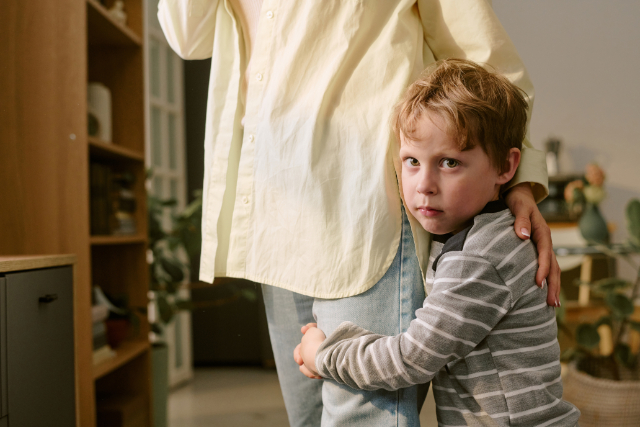
Sensitive child parenting should focus on creating a sense of safety by increasing environmental stimuli slowly and explaining step by step what children can expect before entering new settings. These children do not tend to enjoy surprises. For example, before going to a crowded birthday party, saying, “We’re going to a place with music and lots of children. You can hug me if you get tired,” can greatly reduce their anxiety.

Boundaries for Active Children
For children with high physical energy and active temperaments, active child boundaries are created by providing safe spaces for movement and expressing rules in clear, short sentences instead of constantly saying “no.” These children's bodies need regular movement. If you need to be somewhere where running is not allowed, taking a park break beforehand so they can release some energy is one of the best strategies a parent can use. Intense children who show signs of impulsivity early on gradually develop the ability to stop themselves through compassionate guidance.
How Can Parents and Children Find Temperament Compatibility?
Compatibility between a parent's and child's temperaments develops when the adult notices their own triggers and shows flexibility toward the child's unique rhythm instead of expecting the child to be a copy of them. The greatest conflicts often occur when a quiet, organized parent has a very active, spontaneous child. Meeting in the middle rather than imposing your own nature on your child can improve your relationship.
Your child's development of regulation, or self-control, is supported largely by the calming and organizing responses you offer in response to their temperament. When you stay calm, your child's nervous system gradually learns how to calm down as well. Remember: your child is not fighting against you. They are trying to make sense of the world through the lens of their own temperament.
Summary and Next Steps
Observe: For a few days, note when your baby struggles during the day, such as with sounds, lights, or transitions.
Adjust expectations: Before entering settings that exceed your child's capacity, plan short breaks suited to their temperament.
Change your words: When describing your child, use constructive words such as energetic, determined, or sensitive instead of naughty, stubborn, or whiny.
Show yourself compassion: Don't feel guilty when you can't respond perfectly during moments of conflict. Parenting is an ongoing learning process.

When Should You Seek Help for Child Behavior?
Children's temperament traits are often part of typical development. However, some behaviors may signal a need for developmental support. If you observe any of the following, it is important to consult your child's pediatrician:
If a baby older than 6 months has extreme crying episodes that last for much of the day and cannot be soothed in any way, even after basic needs such as feeding, diaper changes, and sleep have been addressed,
If around 18 to 24 months, there are severe signs of withdrawal, such as never making eye contact with the outside world or people around them, or not responding to their name,
If around age 3, tantrums become severe enough to threaten the physical safety of the child or others, such as hitting themselves or forcefully banging their head,
If sleep or feeding refusal attributed to the child's temperament becomes severe enough to cause a drop in growth-chart percentiles, such as weight loss or a failure to gain weight.
This content is for informational purposes only. Always consult your child's pediatrician for diagnosis and treatment.
Every child has a unique map on the parenting journey, and reading that map is not always easy after tiring nights. As you discover your baby's nature, you can access the scientific and practical support you need through Yuppo to confidently take steps suited to their development.
With expert-created parenting content in the app, you can better understand the reasons behind your child's behavior and use the developmental analysis to create activity plans suited to their level, making your daily home routine both fun and supportive.
Frequently Asked Questions
Can my baby's temperament change as they grow?
Your baby's temperament has a biological foundation that becomes apparent during the first months of life and does not fundamentally change, but it can become much more flexible with age through interactions with the environment. As the brain develops, children gain coping skills in areas they find challenging.
Does gentle parenting mean having no rules?
Gentle parenting does not mean having no rules. It means accepting a child's feelings with compassion while setting clear, consistent, age-appropriate limits on behavior. Boundaries are essential for helping children feel safe in a complex world.
How can I parent a child with a difficult temperament?
The key to communicating with a child who has a difficult temperament is not taking intense reactions personally and planning transitions more slowly by identifying triggers in advance. Creating steady routines that still allow some flexibility can be very effective in reducing these children's anxiety.
Why can siblings have completely different temperaments?
Two siblings can have completely different temperaments even when they grow up in the same home because temperament is influenced more by biological and genetic foundations than by environmental factors or parenting styles. Every baby's nervous system is unique.
What should I do if my child's temperament clashes with mine?
If your child's temperament does not match yours, first acknowledge the areas that are difficult for both of you. Then adjust your expectations with flexible strategies that help you meet in the middle. Trying to understand your child's world is the first step toward resolving conflict with compassion.
References

Yuppo Lab
Developmental Psychologist