Key Takeaways
Most 3 month olds tend to stay awake for roughly 60 to 120 minutes between naps, with the shortest window typically right after morning wake-up.
Sleepy cues like looking away, going still, or yawning are more reliable guides than any fixed minute count.
Many babies at this age fit in around four to five naps a day, and feeding counts as part of every wake window.
Growth spurts, catnaps, and developmental shifts can temporarily change how long your baby tolerates being awake.
Understanding 3 month old wake windows starts with one key fact: your baby generally needs to sleep again within about 60 to 120 minutes of waking up. A wake window is simply the full stretch from eyes-open to eyes-closed, feeds and all. If your baby recently hit the 3 month mark and nap timing still feels like guesswork, that's expected: your baby's circadian rhythm is still maturing, and consistent patterns are just beginning to emerge. Below you'll find the typical sleep and wake ranges, how to read tired signals, a sample daily schedule, and ideas for filling awake time.

What Is a Wake Window?
A wake window is the time your baby spends awake between one sleep and the next, from the moment they open their eyes. It includes everything that happens during that stretch:
Feeding (breast or bottle)
Diaper changes
Active play and tummy time
The quiet wind-down before the next nap
If your baby wakes from a nap at 10:00 a.m. and falls asleep again at 11:15 a.m., that 75-minute stretch is one wake window.
How a Wake Window Differs from Total Awake Time
A single wake window covers one awake-to-sleep stretch, while total awake time adds all those stretches together across a full day. For a 3 month old, total daily awake time is usually several hours shorter than total sleep time, while each individual window is much shorter. Tracking single windows helps you spot the right nap moment instead of guessing from a daily total.
Why Wake Windows Become More Predictable Around 3 Months
Between 1 and 4 months your baby transforms from a sleepy newborn into a more alert, responsive infant, according to the American Academy of Pediatrics (AAP). As your baby's circadian rhythm matures and melatonin production steadies, wake stretches begin forming a loose, recognizable pattern. That doesn't mean every day will be identical, but you'll start noticing a rhythm.

How Long Should a 3 Month Old Stay Awake Between Naps?
Most 3 month olds handle about 60 to 120 minutes of awake time before they need sleep again. The range is wide because every baby is different, and even the same baby's windows shift throughout the day.
Typical Wake-Window Range at 3 Months
The ideal wake window for a 3 month old often starts around 60 to 75 minutes in the morning, while later windows may stretch to 90 to 120 minutes. The Centers for Disease Control and Prevention (CDC) recommends watching your baby closely for tiredness or fussiness so they can take a break from playing. A few things influence where your baby falls in the range:
Time of day (morning windows tend to be shorter)
Quality of the previous nap
Your baby's individual temperament
Why the First Wake Window of the Day Is Usually the Shortest
Your baby wakes from the longest sleep of the 24-hour cycle, and morning alertness often fades quickly. Picture this: your baby wakes at 7:00 a.m. and begins yawning and looking away from you by about 8:10 a.m., signaling a first window of roughly 70 minutes.
How Wake Windows Shift from 2 to 4 Months
At around 2 months, wake windows tend to hover near 45 to 90 minutes; by 4 months, many babies tolerate 75 to 150 minutes. The shift happens gradually, so you'll likely notice small weekly changes rather than a sudden jump. If your baby's rhythms change noticeably around the 4 month mark, a 4 month sleep regression may be playing a role. Sleep patterns continue shifting well beyond the first year, with disruptions sometimes surfacing around 13 months or 15 months.

What Sleepy Cues Signal the End of a 3 Month Old's Wake Window?
Early sleepy cues are your best guide for nap timing because acting on them before overtiredness helps your baby settle more smoothly. These signs become easier to read as you get to know your baby, as the AAP notes.
Early Cues to Act On
Early tired cues at 3 months can be subtle, sometimes just a brief pause in play or a turn of the head. You might lay your baby on a play mat after a feed, and after about 15 minutes of batting at a hanging toy, they go still and stare past it. That quiet moment of disengagement is often the first signal.
Yawning (one or two, not a long series)
Briefly rubbing eyes or ears
Turning away from faces or toys
Going unusually quiet or still
Late Cues and What They Mean
Late cues include arching the back, frantic arm movements, intense crying, and difficulty making eye contact. By this point your baby is likely overtired, and settling may take longer. Meeting your baby's needs early rather than stretching wake time supports better sleep cycle regulation, according to the AAP.

Sample 3 Month Old Wake Window and Nap Schedule
A typical 3 month wake window schedule spreads four to five naps across the day. For infants aged 4 to 12 months, the CDC recommends 12 to 16 hours of total sleep per 24 hours including naps; at 3 months your baby is approaching that range, so expect plenty of daytime sleep.
The table below shows one possible pattern; your baby's actual times will vary.
| Wake window | Approximate duration | Activity focus | What follows |
|---|---|---|---|
| 1st (morning) | 60–75 min | Feed, gentle interaction | Nap 1 |
| 2nd | 75–90 min | Tummy time, high-contrast toys | Nap 2 |
| 3rd | 80–100 min | Floor play, reading, singing | Nap 3 |
| 4th | 90–110 min | Calm play, short outing | Nap 4 |
| 5th (if needed) | 60–90 min | Quiet wind-down, bedtime routine | Bedtime |
Whether the day includes a fifth window depends on how long each nap lasts.
Morning Wake Windows and Naps
Morning wake windows are usually the most predictable part of your baby's day. After the first short window, nap 1 often lasts 30 to 90 minutes. The second window is slightly longer, leaving time for tummy time or a few minutes with a rattle before nap 2.
Afternoon and Evening Pattern
Afternoon wake windows can shift when a short nap earlier compresses the remaining schedule. The National Health Service (NHS) suggests a soothing bedtime routine, like a bath, fresh clothes, dimmed lights, and a short story, to help your baby settle at the end of the last window. Putting your baby down drowsy but not fully asleep also helps them learn to fall asleep on their own, according to the AAP.

What to Do During Your 3 Month Old's Wake Windows
Active play during the day helps your baby sleep for longer stretches at night, according to the AAP. That doesn't mean filling every minute with stimulation; it means choosing the right activity for each part of the window.
Feeding and Interaction in Early Wake Time
Most wake windows start with a feed, followed by quiet one-on-one time. The CDC recommends talking to your baby, answering their sounds, reading, and singing during awake time, all of which support bonding and early language development.
Play and Tummy Time Before Wind-Down
Tummy time and floor play fill the active middle of a 3 month old's wake window. Getting down on the floor to move helps your baby become strong, learn, and explore, according to the CDC. By around 2 months most babies hold their head up during tummy time, and by 4 months they push up on elbows and forearms, as the AAP describes. Good options at this age:
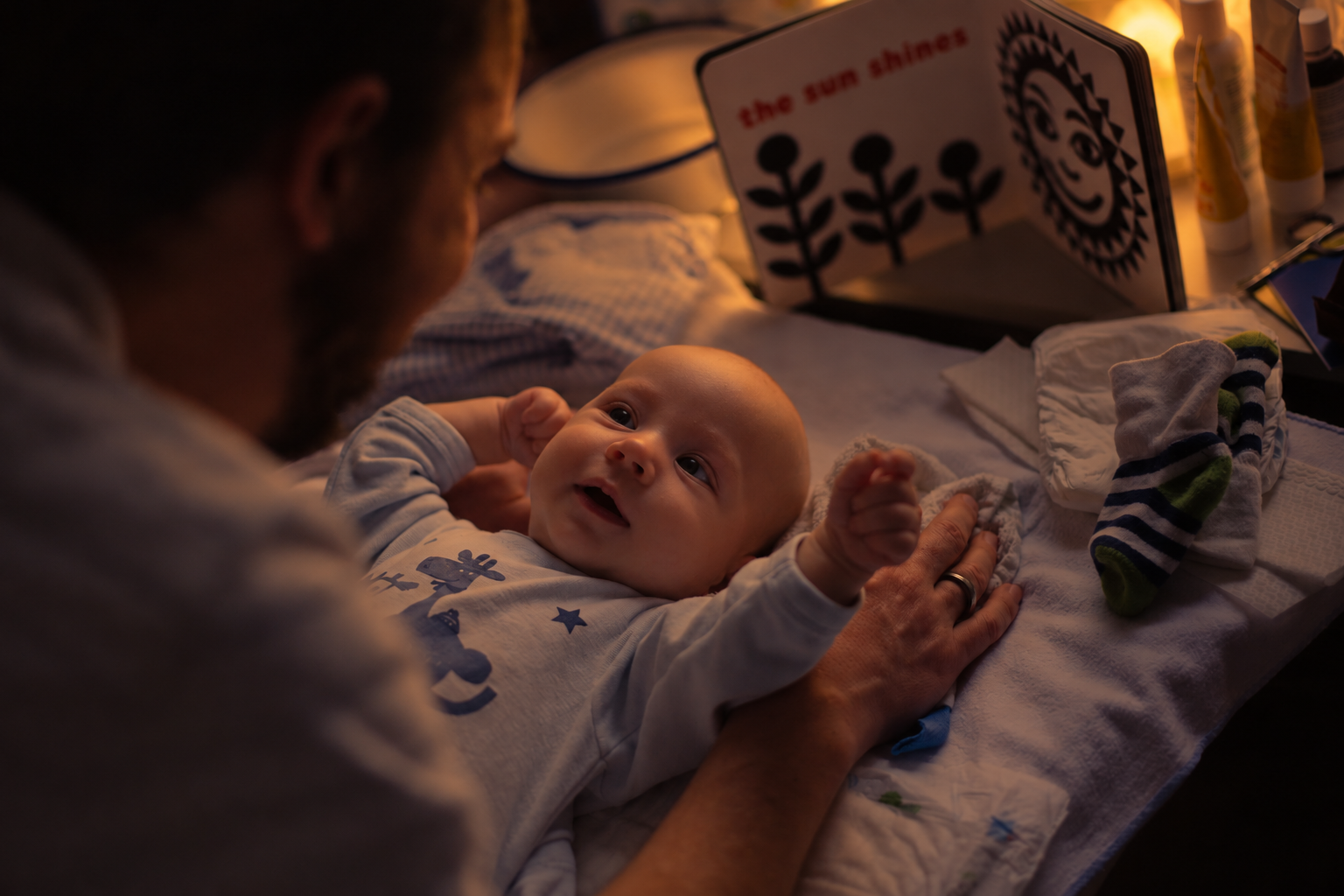
High-contrast images or books
A bright hanging mobile
Sturdy rattles
Singing and gentle music
In Yuppo, you can browse personalized activity suggestions matched to your baby's age and pick a tummy-time game that fits the time left in the current wake window. Wind down the last 5 to 10 minutes with dim light, a quiet voice, and gentle rocking.

Why Your 3 Month Old's Wake Windows Seem Too Short or Too Long
Temporary shifts in your baby's wake-window pattern are a routine part of this age and rarely point to a problem. The NHS notes that growth spurts, teething, and illnesses can all affect how a baby sleeps.
Catnaps and Their Effect on the Next Awake Stretch
A catnap, roughly 20 to 40 minutes, means your baby didn't complete a full sleep cycle. After a 30-minute catnap you might try trimming the next window by about 15 minutes, and you'll often find your baby settles more easily. Signs that the next window may need shortening:
Sleepy cues appearing earlier than usual
A fussier mood during play
Difficulty staying engaged with toys
Growth Spurts and Developmental Changes
During a growth spurt, your baby may seem hungrier or sleepier than usual, temporarily changing wake-window lengths. A 3 month sleep regression can also overlap, making both naps and nights feel less predictable for a week or two.
When the Day Feels Unpredictable
An unpredictable day, where naps and wake times shift without clear reason, is nothing unusual at 3 months. A consistent daily routine with regular waking, meal, nap, and play times helps your child feel secure, according to the AAP. Keeping daytime bright and active while making nighttime calm and dim also supports longer nighttime stretches, as the NHS notes. Some afternoons your baby might become fussy after only 80 minutes even though morning windows stretched to 100; afternoon fatigue simply builds faster.
If your baby shows any of these patterns over several days, a conversation with your pediatrician can help:
Sleeping far less than expected for their age consistently
Being unusually difficult to wake from naps
Persistent feeding difficulties alongside poor sleep
Summary and Next Steps
Aim for nap timing within a 60 to 120 minute window, knowing the first window is typically the shortest and later ones gradually stretch.
Prioritize sleepy cues over the clock: a yawn, a turn of the head, or a sudden stillness tells you more than a timer.
Trim the next window by about 15 minutes after a catnap to keep overtiredness from cascading through the day.
Use tummy time, talking, singing, and simple toys during wake time to support development and encourage longer nighttime sleep.
One off day won't reset your baby's emerging rhythm: consistency over weeks matters far more than perfection on any single day.
This content is for information only; always consult your pediatrician for diagnosis and treatment.
Keeping track of nap lengths and wake times is tough when every day feels different. In Yuppo, you can log each nap, wake period, and bedtime, then review the recorded pattern to see which windows are running short so you can adjust tomorrow's timing with real data instead of memory.
Frequently Asked Questions
Yes, a wake window covers every minute your baby is awake, from the moment they open their eyes until they fall asleep. Feeds, diaper changes, play, and wind-down time all count. Keeping this in mind prevents you from accidentally stretching the window by starting the clock after a feed.
Letting your baby finish the nap generally works better than cutting it short. If a nap runs long, shorten the next wake window slightly so bedtime stays on track. A consistent daily rhythm over time matters more than protecting any single window.
An overtired baby often becomes fussy, fights sleep, or takes only a very short nap, which can trigger a string of shorter naps through the day. If you spot late cues like arching or intense crying, moving to a calm, dimly lit space can help your baby settle faster.
Wake-window length depends on age and individual temperament, not on how your baby is fed. The sample schedule earlier in this article applies equally to breastfed and formula-fed babies, so focus on your baby's sleepy cues rather than feeding method.
If the last nap would push bedtime past your target hour, skipping it is usually the better choice. Most 3 month olds take four to five naps depending on how long each nap lasted. On days full of short catnaps, a fifth nap keeps bedtime from drifting too late.