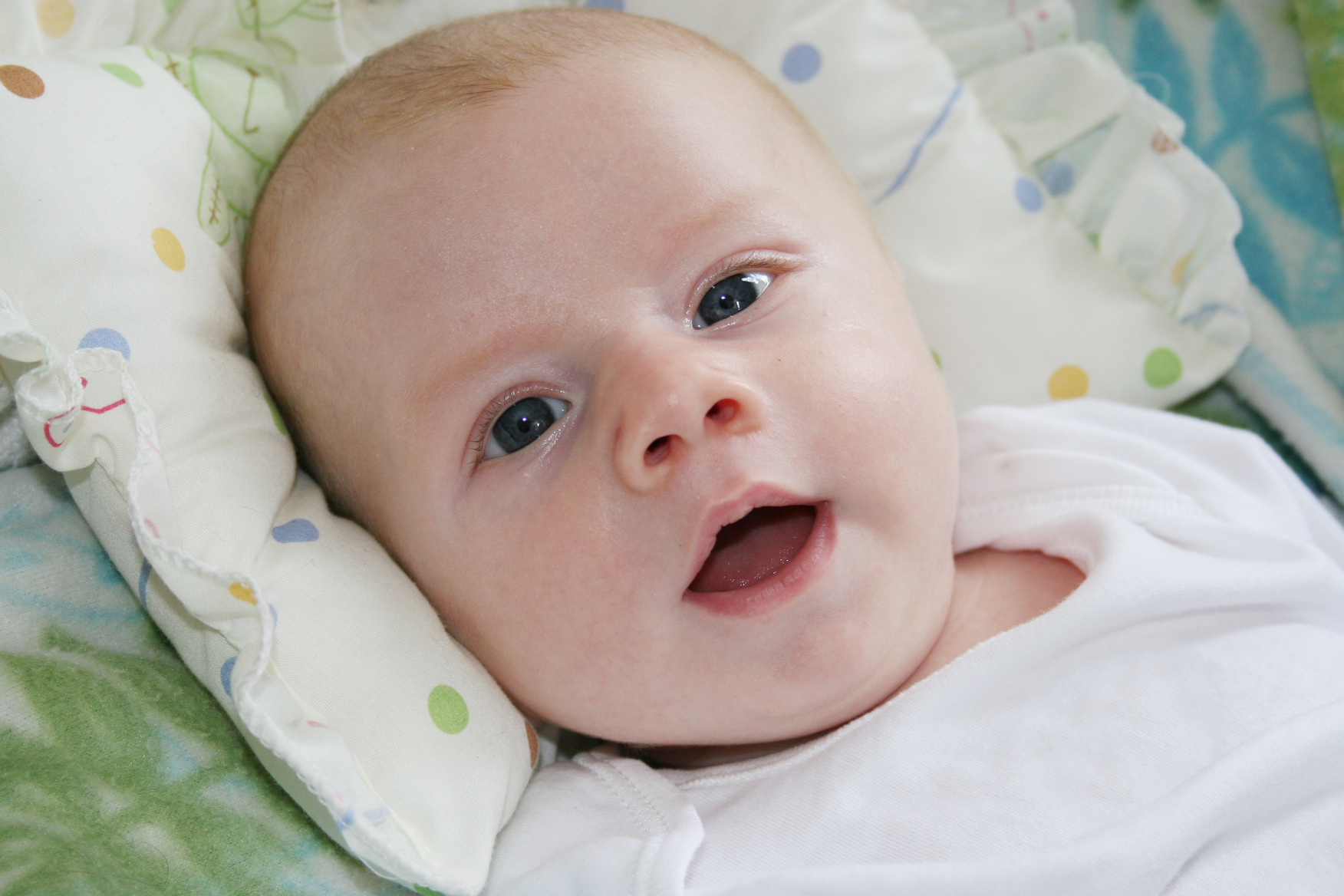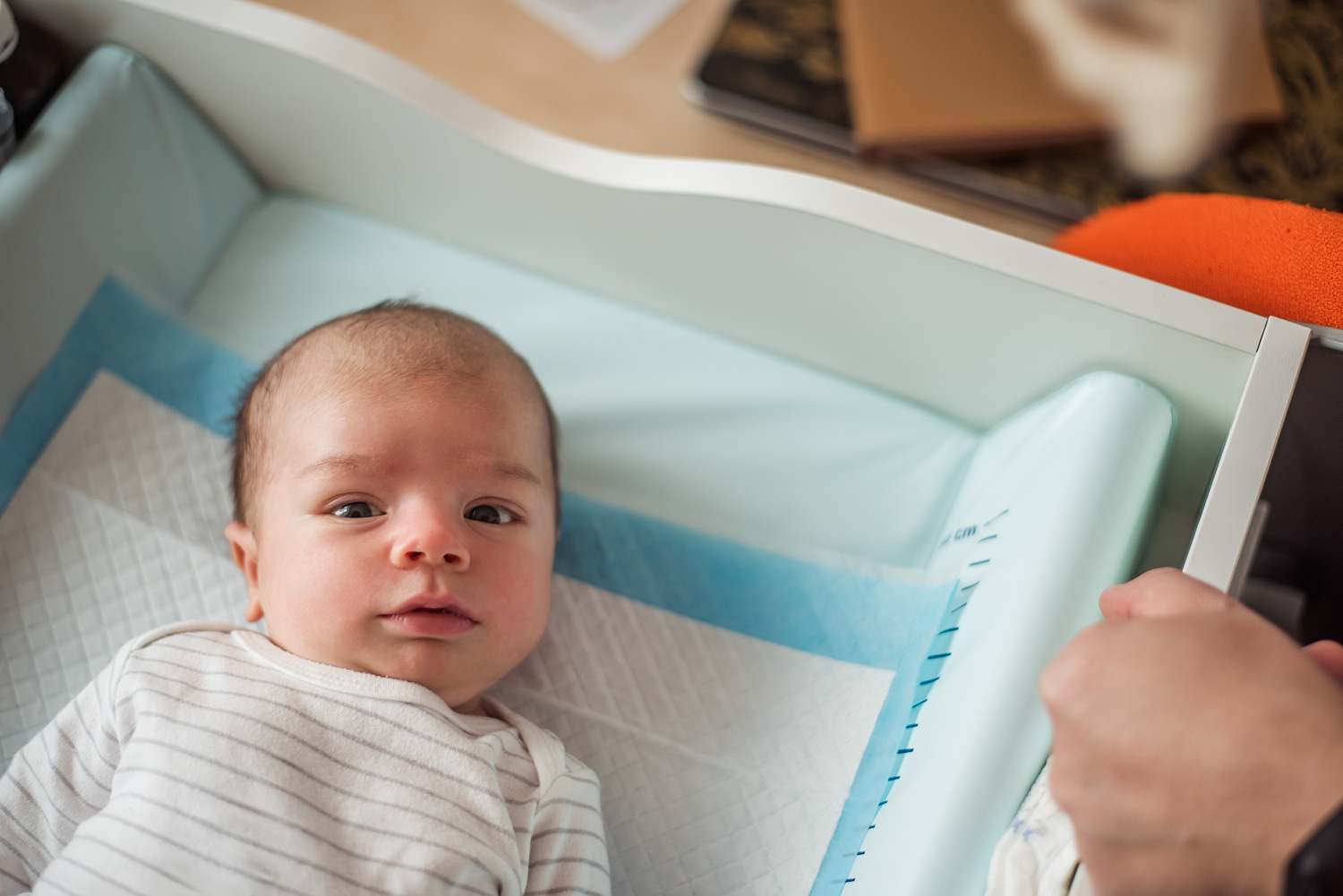
Key Takeaways
Many 2 month olds seem comfortable with wake windows of roughly 60 to 90 minutes, generally starting shorter in the morning and stretching slightly by evening.
The wake window begins the moment your baby's eyes open and includes feeding, diaper changes, and all interaction.
Brief yawns and gaze aversion are early sleepy cues worth acting on before overtiredness sets in.
Small day-to-day shifts in how long your baby can stay awake are normal at this age, so flexibility matters more than precision.
A wake window for a 2 month old covers every minute from eyes open to falling back asleep. For many babies at this stage, that stretch runs somewhere around 60 to 90 minutes, though the length varies from baby to baby and even from morning to evening.
If your baby has been staying alert a little longer each week and you are sorting out the balance between play and rest, this guide walks you through sleepy cues to watch for, age-appropriate activities, and a flexible sample schedule. You can explore more age-based topics in our sleep collection.

What is a wake window for a 2 month old
A wake window is the full stretch from the moment your baby wakes to the moment they fall asleep again. Everything in between counts:
Feeding (breast or bottle)
Diaper changes
Tummy time and play
Wind-down cuddles before the next nap
How a wake window differs from a fixed clock-based schedule
Wake windows track actual awake time rather than fixed clock hours, which better matches your baby's shifting daily rhythm. According to the NHS, every baby has their own pattern of waking and sleeping, and it is unlikely to match another baby's. Following awake time lets you work with that unique pattern instead of fighting it.
Why the second month is a transition point for alertness
Between 1 and 4 months your baby shifts from a totally dependent newborn to an increasingly alert, responsive infant, according to HealthyChildren.org (AAP). This growing alertness gradually stretches awake periods, and the circadian rhythm begins to develop. Many families notice another sleep shift around 3 months, so building flexibility now helps later too.
How long should a 2 month old stay awake between naps
Most 2 month olds stay comfortably awake for about 60 to 90 minutes between naps, and that range shifts slightly each week as stamina builds. The table below offers a general pattern; treat these numbers as starting points, not targets.
| Age (weeks) | Typical wake window | Approx. daytime naps | Approx. daytime sleep |
|---|---|---|---|
| 5–6 | ~45–75 min | 4–5 | ~5–7 hr |
| 7–8 | ~60–80 min | 4–5 | ~4.5–6.5 hr |
| 9–10 | ~60–90 min | 4–5 | ~4–6 hr |
| 11–12 | ~75–90 min | 3–5 | ~4–6 hr |
Your baby may fall on either end depending on nap quality, feeding, and temperament.
Week-by-week wake window ranges from 5 to 12 weeks
At 5 to 6 weeks, stretches as short as 45 minutes are common because most newborns are asleep more than they are awake, with total daily sleep reaching around 18 hours according to the NHS. By 8 weeks, wake windows often expand to 60 to 80 minutes. By weeks 9 through 12, many babies handle 75 to 90 minutes comfortably. You can find more about this stage in our 2 month old baby development guide.
Why morning wake windows tend to be shorter than evening ones
The first wake window of the day often runs shorter than later ones because residual sleepiness from overnight rest keeps sleep pressure high. You may notice your 8 week old tolerates about 60 minutes in the morning but handles closer to 80 minutes by late afternoon. Moving the morning nap a bit earlier, rather than pushing to a clock target, usually gives a smoother start.
How to spot your 2 month old's sleepy cues
Your baby gives small but readable signals when the current wake window is closing, and catching them early makes settling much easier. HealthyChildren.org (AAP) recommends noticing these signs early so you can help your baby settle before overtiredness sets in.
Early cues to act on right away
Early sleepy cues are subtle and easy to miss, but responding quickly usually leads to smoother, longer naps.
A single yawn or two
Looking away from your face or a toy (gaze aversion)
Slower, less coordinated limb movements
A brief "zoning out" expression
Picture this: your baby yawns once after about 50 minutes and starts gazing past your face. Starting the nap routine at that moment is typically far easier than waiting for fussing.
Late cues that point to overtiredness
Late cues mean the comfortable window has already passed, and a rise in cortisol is making it harder for your baby to settle.
Arching the back or stiffening the body
Intense crying that is hard to soothe
Rubbing eyes or ears
Jerky, frantic movements
If you see these signs, dim the lights and hold your baby close. Gentle rocking or thumb-sucking is appropriate at this age, as HealthyChildren.org (AAP) notes.

What to do during your 2 month old's wake window
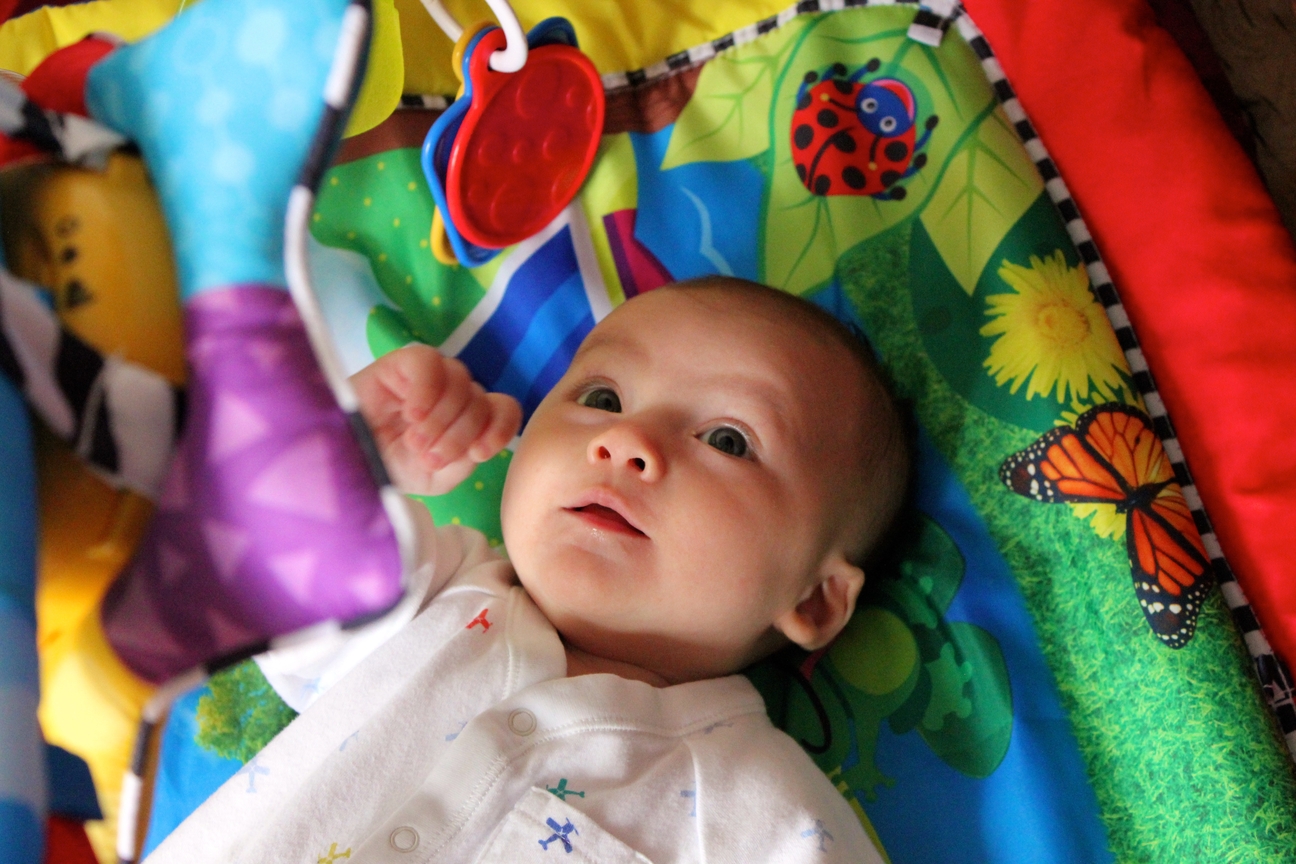
Short bursts of interaction during the first half of your 2 month old's wake window support development without overloading their senses. HealthyChildren.org (AAP) suggests high-contrast images, a bright hanging mobile, sturdy rattles, and singing for babies at this stage.
Alert-phase activities for the first half of the window
The alert phase is the best time for gentle stimulation.
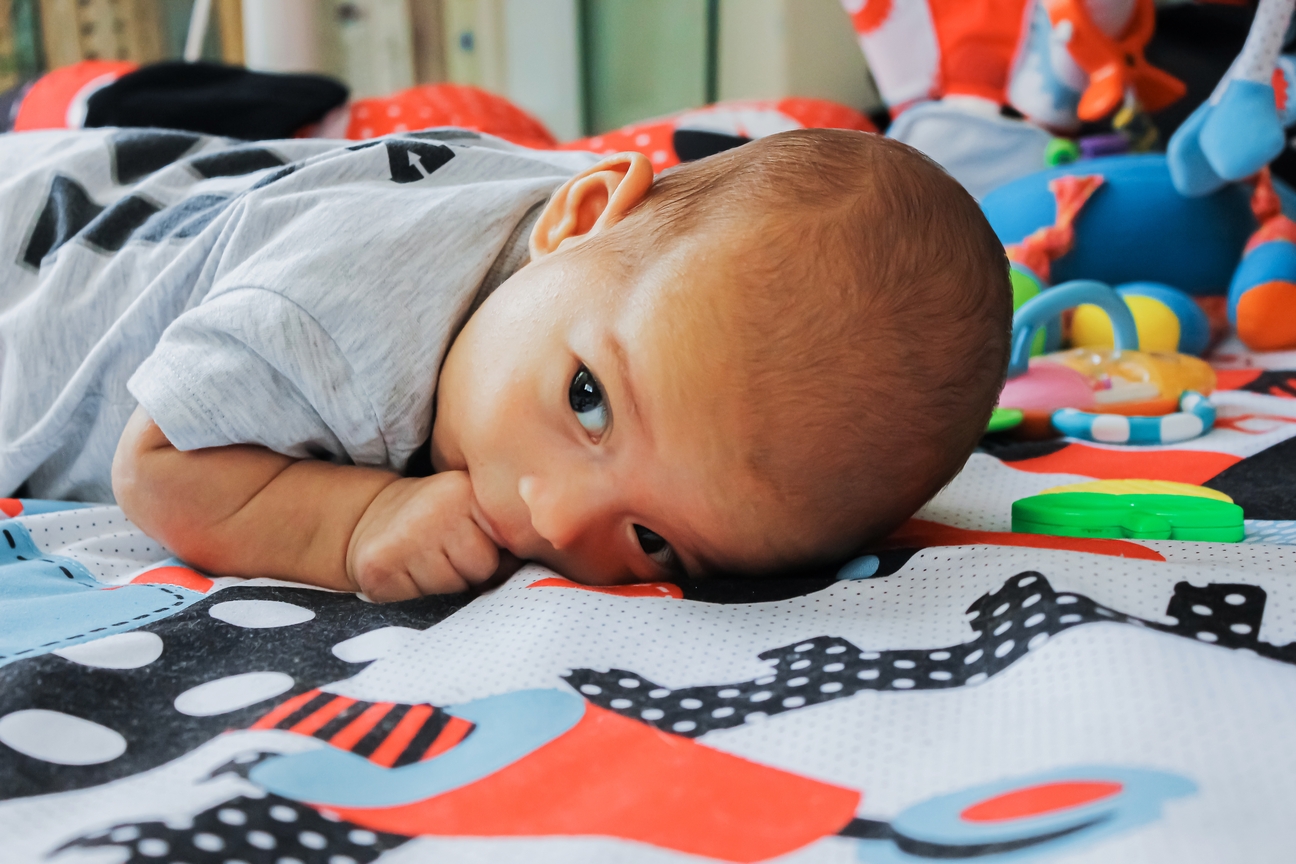
Tummy time: Aim for 2 to 3 sessions daily, about 3 to 5 minutes each. HealthyChildren.org (AAP) notes that right after a diaper change or a nap is an ideal moment.
Face-to-face talk: Hold your baby about 20 to 30 cm (8 to 12 in) away and chat or sing.
High-contrast cards: Black-and-white patterns hold attention well at 2 months.
Keeping daytime active and engaging helps your baby sleep for longer stretches at night, according to HealthyChildren.org (AAP). You might place your baby on a play mat for tummy time while alertness peaks, then shift to a soft lullaby once the first sleepy cue appears.
Wind-down routine for the second half
About halfway through your baby's wake window, shifting to calmer input helps the transition toward sleep. You might carry your baby from the bright living room to a quieter bedroom, dim the lights, offer a feeding, and sway gently while humming. HealthyChildren.org (AAP) recommends creating a clear contrast between active daytime settings and calm, quiet nighttime ones; applying that same contrast within each wake window makes the shift from play to rest more natural.
Sample 2 month old sleep schedule built around wake windows
A flexible daily rhythm built around your baby's wake windows works better than a rigid hour-by-hour 2 month old schedule. Below is an example using windows of roughly 60 to 90 minutes.
~7:00 a.m. Wake, feed, brief tummy time
~8:15 a.m. Nap 1 (first window ~75 min)
~9:30 a.m. Wake, feed, play
~10:45 a.m. Nap 2
Pattern repeats with about 4 to 5 daytime naps
~7:30 p.m. Begin a calm bedtime routine after the last wake window
For a broader look at how nap patterns shift through the first year, see our baby sleep schedule by age guide.
Adjusting when a nap runs short or long
When a nap ends after only 30 minutes, the next wake window will likely run shorter because your baby still carries sleep debt. If a single nap stretches well past about two hours, gently waking can help protect nighttime rest. A temporary growth spurt can shift nap length too, so stay flexible.
How nighttime feedings fit into the pattern
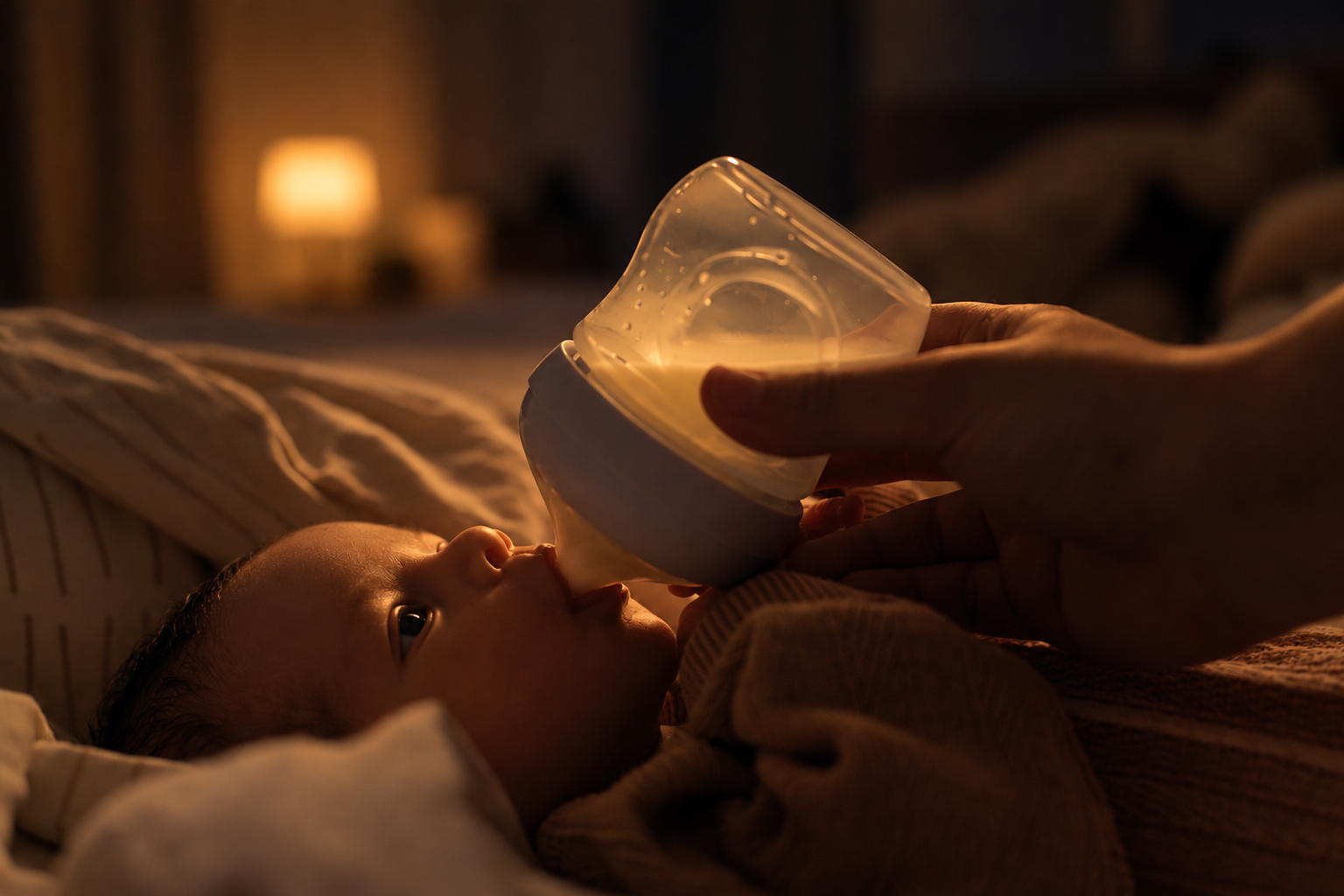
Nighttime wake periods are typically just long enough for a feeding, roughly 20 to 30 minutes. HealthyChildren.org (AAP) advises staying calm, quiet, and softly spoken during nighttime feeds and changes. As your baby approaches 3 to 6 months, the NHS notes they may begin sleeping 5 to 8 hours or longer at night, though not all babies will.
Common wake window mistakes that lead to overtiredness at 2 months
Overtiredness at 2 months usually traces back to a few repeatable patterns rather than anything unusual about your baby. Spotting these habits early can save many frustrating bedtimes.
Stretching the window past your baby's limit
Pushing your baby to stay awake longer than they can handle makes settling harder and often leads to shorter, choppier naps. If early sleepy cues appear at 60 minutes, there is no benefit in holding out for 90.
Relying on the clock instead of your baby's cues
Clock times make a useful loose guide, but your baby's behavior is more reliable when figuring out how long your 2 month old should be awake on any given day. A baby who napped only 25 minutes may need to sleep again well before the usual interval.
Comparing your baby's pattern to online averages
Averages describe large groups, not individual babies. HealthyChildren.org (AAP) explains that a "good sleeper" at this age is one who wakes frequently but can return to sleep, not one who sleeps 10 hours straight, and that frequent waking is developmentally appropriate. In Yuppo, you can log each nap and wake period so your baby's own pattern becomes visible over several days, making it easier to spot what is typical for them.
The cue-reading skills you build now stay useful during later nap transitions and toddler sleep shifts. If your baby consistently cannot settle despite adequate feeding and age-appropriate wake times, or you notice a sudden drop in alertness, check in with your pediatrician.
Summary and Next Steps
Follow cues over clock times: your baby's yawns and gaze tell you more than any chart, even within the general 60-to-90-minute range.
Catch early signals: a single yawn or a look away is the ideal moment to start settling, well before crying begins.
Split the window in two: use the alert first half for tummy time, singing, and high-contrast play, then dim the lights and slow down for the second half.
Accept daily variation: differences from one day to the next are a normal part of this age, not a sign that something is wrong.
Try this week: after each nap, jot down how many minutes your baby stayed awake; within a few days a personal pattern will emerge that is more useful than any general guideline.
This content is for information only; always consult your pediatrician for diagnosis and treatment.
Remembering how long each wake window lasted is hard when every day feels different. In Yuppo, you can type a question about your baby's nap timing into Po, the AI parenting assistant, and get sleep guidance matched to their current week of life.
Frequently Asked Questions
Yes, the wake window starts the moment your baby's eyes open. Feeding, diaper changes, play, and quiet holding all count. You do not need to subtract feeding minutes; the entire period from waking to sleeping is one continuous window.
Staying awake past a comfortable limit makes it harder for your baby to fall asleep, often leading to shorter, choppier naps and a frustrating cycle of overtiredness. Acting on the early sleepy cues described earlier is the simplest way to stay ahead of that pattern.
Generally, let your baby sleep as long as they need. If a single daytime nap stretches well past about two hours, gently waking them can help protect nighttime rest. There is no need to cap every nap; focus on the overall balance across the day.
Nighttime wake periods are typically much shorter, usually just 20 to 30 minutes for a calm feeding and diaper change before settling back to sleep. Keeping lights low and voices quiet during these brief wakes supports the developing circadian rhythm.
Your baby's energy and readiness for sleep naturally shift based on nap quality, feeding, stimulation, and even room temperature. These fluctuations are a normal part of early infancy. Tracking patterns over several days gives a clearer picture than comparing individual sessions.
HealthyChildren.org. (2024). Getting Your Baby to Sleep. HealthyChildren.org.
HealthyChildren.org. (2013). Sleeping Through the Night. HealthyChildren.org.
HealthyChildren.org. (2026). Developmental Milestones: 1-4 Months Old. HealthyChildren.org.
HealthyChildren.org. (2009). Reversing Day-Night Reversal. HealthyChildren.org.