Self-Awareness in Children: Developmental Milestones

This article is approved by Yuppo Lab Developmental Psychologist
Published: 12 August, 2026
Updated: 12 August, 2026

At a Glance
Self awareness in children typically accelerates between 15 and 24 months as they recognize their physical independence.
Ages 0–6 are the most critical developmental window for forming identity and building a basic sense of security.
The ability to recognize themselves in a mirror often begins to become clear around 18 months, along with the development of object permanence.
Offering choices and setting healthy boundaries are among the most practical and effective ways to build a child’s confidence.
Those moments when your child protests, “I’ll do it myself!” are actually a natural part of self awareness in children. This article is for loving parents who may sometimes feel tired and wonder how best to guide a child who is building their own identity. You’ll learn when your baby begins to feel like a separate individual, the stages of self-awareness, and how to support them without undermining their confidence. Remembering that every child reaches these milestones at their own pace, let’s look at the key steps in social and emotional development together.


When Does Self-Awareness Begin in Babies?
Baby self awareness development typically begins between 15 and 24 months, when babies start recognizing themselves as separate individuals, independent of their caregivers. In the first months of life, babies often experience themselves as part of the world and especially as part of their parents. This early stage is when a basic sense of security develops. Over time, increased mobility, crawling, and the transition to walking give them opportunities to explore the world on their own. The American Academy of Pediatrics (AAP) notes that safe, responsive parent–baby interactions during the first year provide the foundation for healthy self-awareness. Clinging to or trying to move away from a parent during this separation period is a completely typical developmental step.
The Mirror Image: The Recognition Process
When babies recognize themselves in the mirror usually becomes clear around 18 months, when they understand that the face in the reflection belongs to them. The well-known “mirror test” in developmental psychology—recognizing a mark placed on the face in the mirror and touching their own face—is one of the clearest signs of developing self-awareness. Before this age, babies may think the reflection is another child and try to interact with it. Once a child understands that the reflection is actually them, they also begin exploring the physical boundaries of their body.
Object Permanence and the Sense of Self
Object permanence in babies—the understanding that people or objects continue to exist when they leave view—also helps babies recognize that their own existence is lasting. Cognitive development theorist Jean Piaget stated that object permanence generally begins to develop around 8–12 months. If your child cries when you disappear from view or can find a toy hidden under a blanket, these are signs that the concept is developing. Once this skill is established, behaviors commonly seen in 12-month baby development—such as playing independently and accepting that they are a separate being—are quickly supported.

Stages of Self-Awareness in Children Ages 0–6
The stages of self awareness in children from ages 0–6 range from building a basic sense of security to gradually gaining independence and discovering personal boundaries. According to psychologist Erik Erikson’s theory of psychosocial development, babies learn to trust the outside world and their caregivers during their first year. They then move toward autonomy as they seek to control their own bodies and surroundings. Behaviors during these stages are not fixed parts of a child’s character; they are temporary reflections of the developmental needs of that period.
The “Terrible Twos” and the Search for Autonomy
Toddler autonomy development refers to the period when children try to assert their independence by frequently saying “no” and wanting to make their own choices. This is one of the most intense yet natural steps in identity formation. Testing boundaries and wanting to do things independently are less about defiance than about becoming an individual. Reading children’s social-emotional skills accurately during this stage can reassure parents. With Yuppo’s developmental analysis, you can evaluate not only whether your child can perform a skill, but also their level of ability, then receive an activity plan suited to that level that turns power struggles into play.
Self-Awareness During the Preschool Years
During the preschool years, self-awareness means that children ages 3–6 begin to make sense of their emotions, abilities, and place in their social environment. At this age, children develop concrete descriptions of themselves, such as “I run fast” or “I really like drawing.” Emotional intelligence development makes a major leap during this stage. Children learn to name their own feelings and notice the feelings of others. These early discoveries about their abilities help build the foundation for future self-esteem.
How Parenting Affects Self-Identity Development
The effect of parenting on self-identity development is direct: supportive and caring responses help children feel valued and capable. The World Health Organization (WHO) emphasizes the critical importance of responsive caregiving for children’s social and emotional health in early childhood. For a long time, children see themselves through their family’s eyes. A parent’s affirming, encouraging, and calm response during difficult moments becomes the child’s inner voice and helps lay the foundation for a strong identity.
Unconditional Love and Acceptance
Unconditional love and acceptance mean that children feel loved and accepted by their parents simply for who they are, regardless of their achievements or mistakes. Instead of saying things like “I won’t love you if you do that,” set limits around the behavior while acknowledging the child’s feelings. This protects their sense of self-worth. A child who receives unconditional compassion is more likely to focus on finding solutions to challenges rather than questioning their value, and empathy skills in childhood develop more healthily over time.
Healthy Boundaries and the Chance to Choose
Healthy boundaries and choices strengthen a child’s belief that they are an independent individual by allowing them to make decisions within a safe framework. One of the most practical ways to build confidence is to let your child make small decisions during the day. For example, instead of asking, “What do you want to wear?” ask, “Do you want to wear the blue T-shirt or the red sweater?” This gives your child decision-making autonomy while helping you avoid unnecessary conflicts. Consistent boundaries help children see the world as predictable and safe.
You can review the general patterns of self-perception development by age in the table below:
Age Range | Self-Development Milestone | How Parents Can Help |
|---|---|---|
0–12 months | Feels like one with the caregiver; a basic sense of security develops. | Respond promptly and compassionately to their needs. |
12–24 months | Recognizes being a separate individual; the concept of “me” begins to develop. | Provide a safe space for independent exploration. |
2–3 years | The need for autonomy increases; making choices and protesting become more frequent. | Allow them to make small decisions between two options. |
3–6 years | Social identity develops; children begin describing their abilities and emotions. | Praise effort and make space for them to express their feelings. |
Remember that the age ranges in the table reflect general averages and that every child’s developmental journey follows a unique pace.

What Are the Signs of Low Self-Esteem in Children?
Low self esteem signs in children often include avoiding new experiences, frequently saying “I can’t,” or seeking intense reassurance. A child who is unsure of their abilities may be overly sensitive to criticism or refuse to join peer play because they fear making mistakes. Perfectionism, giving up quickly, or comparing themselves with other children and drawing negative conclusions may also suggest that their self-perception needs support. When you notice these signs, avoid blaming or comparing your child. Focus on their effort and encourage them with phrases such as, “I can see that you’re trying. It will get easier with practice.”
When Should You Consult a Professional About Self-Development?
You may need to consult a professional if your child becomes completely isolated from social settings or if tantrums seriously affect daily life. It is normal for children to feel shy, defiant, or angry at times. However, getting support can make things easier for the family if developmental milestones and social communication skills remain noticeably different from those of peers for an extended period. If your child is consistently withdrawn or avoids eye contact with caregivers for a long time, consulting a child development professional early is an appropriate and reassuring step.
Summary and Next Steps
Separation period: Babies’ understanding of themselves and the world as separate entities becomes clearer around 15–24 months. Patiently observe their emerging skills during this transition.
Supporting autonomy: Recognize that saying “no” is not rebellion but practice for independence, and create controlled opportunities for choice from an early age.
Praising effort: Build your child’s confidence by praising not their personality or only their successful results, but also the courage to try and the effort they put in.
This week’s action: When your child wants to choose their own clothes or eat independently, try giving them that autonomy even if you know it will take longer or make a mess.
When Should You Call the Doctor?
If you consistently observe the signs below for more than a few weeks, consult your child’s pediatrician or a qualified child-development professional:
Although 18 months or older, they consistently avoid eye contact or emotional communication with caregivers,
They show sudden and lasting regression in previously acquired social and emotional skills, such as interest in play or responding to their name,
Intense separation anxiety continues after age 3 without any sign of easing and interferes with the child’s social life,
Their reactions in social settings, such as fear or anger, are unusually intense for their age and they consistently have difficulty calming down.
This content is for informational purposes only. Always consult your child’s pediatrician for diagnosis and treatment.
Reliably tracking the different stages of your baby’s cognitive, physical, and social-emotional development can often become complicated. Feeling supported on this journey and having easy access to evidence-based content prepared by experts can ease some of the worries of parenting.
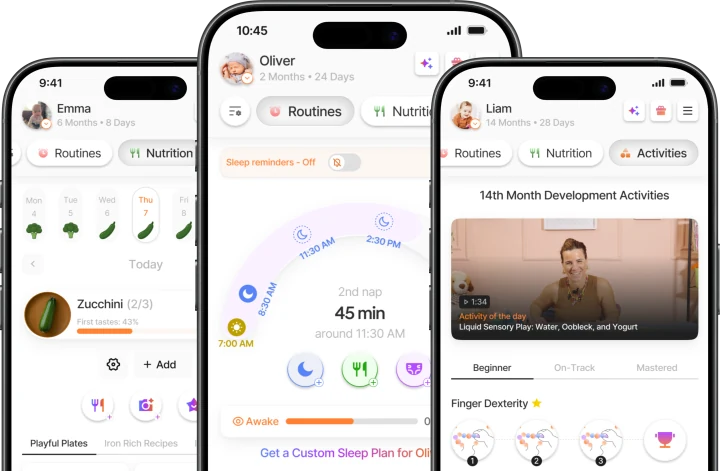
With developmental analyses and personalized activity plans, you can use the Yuppo app for free to assess your child’s skill level and support them in the right way, creating a healthy development roadmap suited to their unique pace.

Frequently Asked Questions
At what age do babies recognize themselves in the mirror?
Babies usually begin recognizing their mirror image between 15 and 24 months, on average around 18 months. If they notice a mark on their reflection and touch their own face rather than the mirror, this suggests that bodily self-awareness is beginning.
How can I build my child’s confidence in everyday life?
Give your child small, age-appropriate responsibilities and offer simple choices, such as “Would you like this or that?” Praise not only achievements but also the effort they show when facing challenges. This helps keep their confidence strong.
Is my 2-year-old saying “no” to everything part of self-development?
Yes. A 2-year-old saying “no” to everything is directly related to self-development because this is the peak of the search for autonomy. Rather than simply being defiant, your child is trying to show that they are a separate individual with their own will and boundaries.
Why is social-emotional development so important during the preschool years?
Social-emotional development is critical during the preschool years because children begin learning to recognize their feelings, control impulses, and empathize with others. These skills create a secure foundation for the relationships they will build throughout life.
How can overly critical parenting affect a child’s self-perception?
Overly critical parenting can damage a child’s self-perception and make them feel inadequate or unworthy. A child who is constantly judged for mistakes may fear trying new experiences, struggle to develop internal motivation, and need extensive reassurance from others.
References

Yuppo Lab
Developmental Psychologist