Signs Your Preschooler Is Being Bullied

This article is approved by Yuppo Lab Developmental Psychologist
Published: 11 August, 2026
Updated: 11 August, 2026
Key Takeaways
Preschool peer bullying generally involves intentional, repeated negative behavior with a power imbalance among children ages 3–6.
The biggest difference between one-time fights over toys and ongoing bullying is the persistent repetition of the behavior.
Unexplained stomachaches, refusing to go to school, and changes in sleep are among the first signs parents should watch for.
Instead of questioning your child, create a safe space where they can express their feelings and know they are being heard.
As a parent, starting your child at preschool or pre-K can be exciting while also raising many questions. Preschool peer bullying is one of the issues parents worry about most during the early years when children begin socializing. This article is for parents of children ages 0–6. In this guide, you’ll learn how to tell bullying apart from everyday conflicts, read the quiet signals in your child’s behavior, and communicate constructively with school administrators.


What is preschool peer bullying?
Preschool peer bullying generally involves children ages 3–6 intentionally and repeatedly causing physical or emotional harm to another child. Because impulse control is still developing at this age, not every negative behavior is bullying. According to the United Nations Children’s Fund (UNICEF), behavior is considered bullying when there is a clear physical or social power imbalance between the children and the behavior continues to happen repeatedly.
Children test boundaries during this period, and their empathy skills develop gradually. So, if one child throws sand at another in the sandbox, that alone may be a bump in the process of learning social rules rather than bullying. But when it becomes intentional exclusion or hurtful behavior directed at the same child every day, parents and educators need to observe the situation carefully.
Bullying versus peer conflict: What’s the difference?
The main difference between bullying and peer conflict is that bullying involves a power imbalance and continues over time, while conflict is a situational disagreement between children with equal power. Two children wanting the same toy at the same time and pushing over it is a typical peer conflict. After these conflicts, children usually return to playing, without lasting fear.
Feature | Peer Conflict | Peer Bullying |
|---|---|---|
Frequency | Usually happens once or occasionally. | Repeated continuously and intentionally. |
Power Balance | The children have equal power, physically or socially. | There is a clear power imbalance. |
Outcome | After resolving the issue, the children return to play. | Creates lasting fear and anxiety in the child being targeted. |
As the table shows, conflicts offer natural opportunities for children to develop social skills, while bullying undermines a child’s sense of safety.
Signs Your Preschooler Is Being Bullied
Key emotional signs of bullying include sudden withdrawal, losing skills they had already mastered, and unexplained angry outbursts. When children have trouble putting difficult experiences into words, they communicate through their bodies and behavior. According to American Academy of Pediatrics (AAP) guidance, a cheerful, outgoing child who suddenly becomes quiet without an obvious reason or aggressive toward siblings at home may be showing stress they cannot manage elsewhere. Closely observing your child’s social and emotional adjustment when starting school may offer useful clues.
Why does my child suddenly refuse school or struggle with separation?
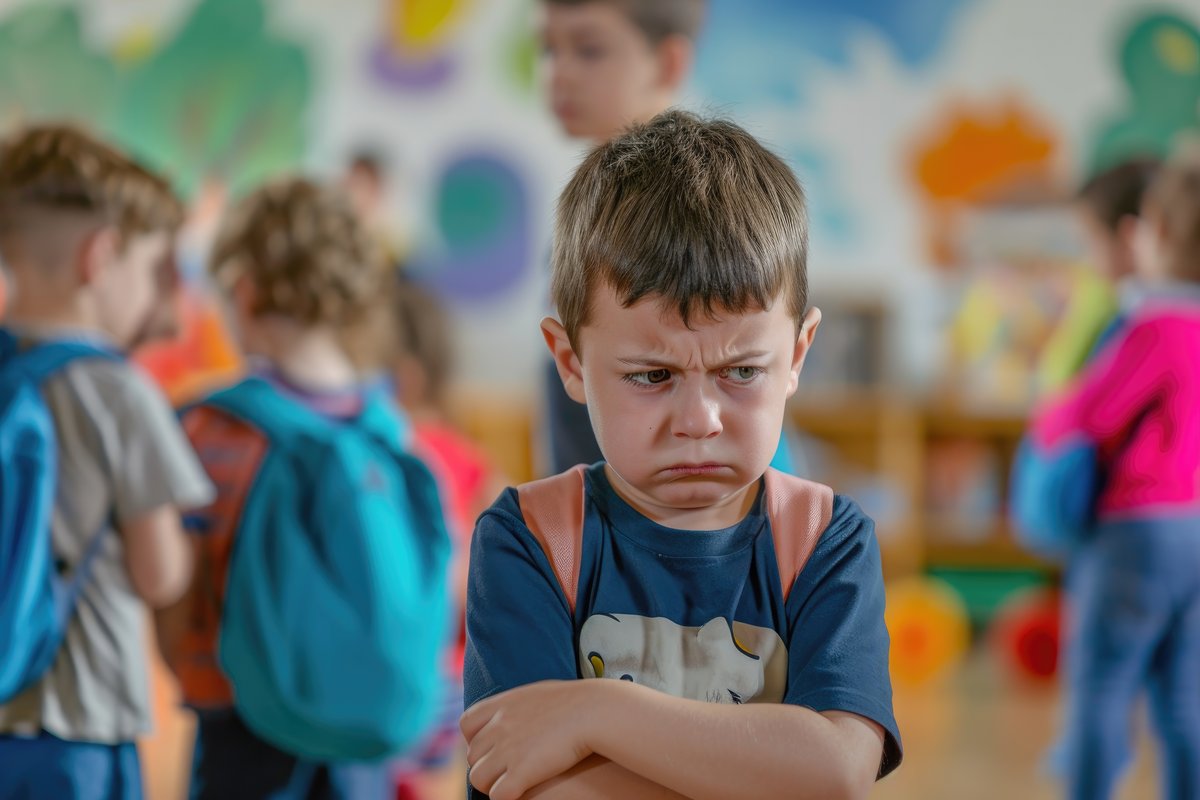
Reluctance to go to school and separation anxiety may appear as morning crying spells when a child tries to avoid a setting where they do not feel safe. A child who once looked forward to school may want to stay home, saying, “My stomach hurts” or “I feel dizzy,” without an identifiable physical cause. These somatic symptoms are real: stress can feel like physical pain.
Emotional changes and sleep problems
Emotional changes and sleep problems in stressed children may appear as night terrors, difficulty falling asleep, or waking up crying. Bullying experiences during the day that a child cannot fully process can affect nighttime sleep cycles. A child who was previously toilet trained may begin wetting the bed or suddenly become afraid of the dark, which can signal underlying anxiety.
Types of Preschool Bullying
Common types of preschool bullying include forcibly taking toys, excluding a child from a group, or teasing through physical and relational behavior. Because young children’s language skills are still developing, bullying is often direct and easy to see. Deliberately leaving a child out of a play circle, calling them a name they dislike, or damaging their belongings during an activity are common examples at this age.
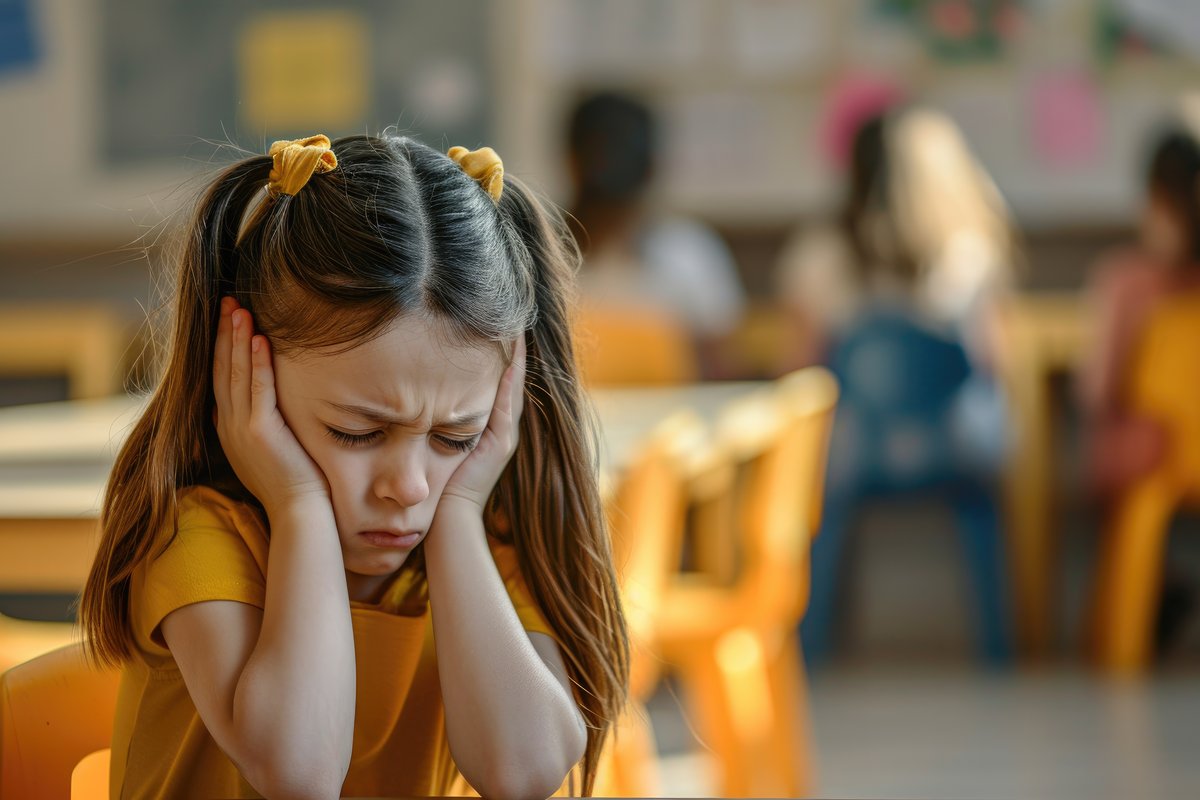
Relational bullying, including social exclusion, can easily go unnoticed by adults during this period. Manipulative statements such as “You can’t play with us” or “I won’t be your friend if you don’t do this” are harmful expressions of 4- to 6-year-olds’ attempts to establish a social hierarchy.
How Can Parents Help a Child Being Bullied?
The first step in responding to bullying is to listen without blaming your child and work with the school to address the situation constructively. Statements such as “Hit them back” or “Why didn’t you stand up for yourself?” can make a child who already feels powerless feel even more guilty. Instead, saying, “Thank you for telling me. This is not your fault, and we’ll work through it together,” helps your child feel safe. Your child’s empathy development also shapes how they respond during difficult moments.
To understand your child’s social challenges and offer appropriate support, use the temperament and parenting-style assessments in the Yuppo app to better understand their personality, then use expert-created content to develop an empathetic communication style that meets their emotional needs. When speaking with teachers, look for common ground instead of using accusatory language. Asking, “We’ve noticed some changes at home. What are you observing at school?” can lead to faster results.
When Should You Seek Bullying Help for a Preschooler?
It may be time to seek professional help when signs such as loss of appetite or sleep problems continue for more than about two weeks. Children are resilient and often overcome difficulties with appropriate support from parents and teachers. In some situations, however, the trauma may be more than a child can manage alone.
If your child’s quality of daily life is clearly declining, they refuse to play, or show signs of self-harm, support from a child psychologist or other qualified child-development professional can help you manage the situation more safely and effectively.
Summary and Next Steps
Analyze the difference carefully: Observe whether your child is experiencing a one-time conflict or ongoing bullying.
Ask open-ended questions: Instead of asking, “Did someone upset you at school?” start a conversation with, “What did you like most or least during playtime today?”
Watch for physical signals: Consider unexplained stomachaches or sleep regressions not only as possible physical problems, but also as signs of stress.
Work as a team with the school: Stay in regular contact with teachers to follow your child’s social dynamics at school.
When Should You Call the Doctor?
Your child’s difficulties cannot always be resolved at home or at school. Consider seeking professional support if you observe any of the following:
There are bruises or scratches on your child’s body with no clear explanation or an inconsistent account of how they happened.
Problems such as difficulty falling asleep, night terrors, or bed-wetting have continued for more than 2 weeks.
Your child has become completely uninterested in activities and friends they previously enjoyed.
Your child has a severe loss of appetite and you notice weight loss.
Anxiety attacks prevent your child from carrying out daily activities such as eating, getting dressed, or going outside.
This content is for informational purposes only. Always consult your child’s pediatrician for diagnosis and treatment.
Following your child’s social and emotional development closely is especially important during this sensitive period. Yuppo’s skill-based developmental analysis can show your child’s level in cognitive and social-emotional areas. You can then access a personalized plan with activity recommendations prepared at an appropriate level of challenge for your child’s skills, not only based on whether they can perform each activity.
You can also explore responsive parenting approaches through expert-created videos and information cards, then confidently take steps to strengthen your bond with your child.
Frequently Asked Questions
At what age does bullying start in preschool?
Bullying in preschool often emerges around ages 3–4, when children begin forming social groups and exploring power dynamics. Empathy is still developing, so behaviors such as refusing to share toys or intentionally pushing can become a pattern. When these actions happen regularly and include a power imbalance, they may develop into a bullying cycle.
What should I do if my child is bullying another child?
If your child is bullying someone, first avoid overreacting or labeling them. Try to understand the emotional need behind the behavior, such as seeking attention or feeling unsafe. Set clear, firm limits, model respectful behavior, and work with the school to teach your child alternative ways to express feelings and needs.
How does a child who is bullied at school act at home?
A child who is bullied at school may be much more irritable than usual, less patient with siblings, or unusually quiet and withdrawn. They may try to regain a sense of control at home after losing it elsewhere. This can appear as unexplained crying spells or regression in previously established toileting habits.
How can I support my bullied child’s self-esteem?
Support your child’s self-esteem by giving them chances to make choices at home and showing that their feelings matter. Offer small responsibilities in areas they enjoy and do well in, so they can experience success. Being a safe, nonjudgmental person who listens can also support the healing process.
How should teachers handle bullying in preschool?
Teachers should notice bullying promptly, separate the children safely, and teach appropriate social skills instead of excluding the child who bullied. Stories that build empathy can help in the classroom, along with clear expectations and consistent support. Keeping parents informed and involved transparently is also an important part of an effective response.
References
Gönültaş, S. ve Mulvey, K. L. (2023). Do Adolescents Intervene in Intergroup Bias-based Bullying? Bystander Judgments and Responses to Intergroup Bias-based Bullying of Refugees. Journal of Research on Adolescence. https://pubmed.ncbi.nlm.nih.gov/35373445/
UNICEF. (n.d.). Bullying. UNICEF Egypt. https://www.unicef.org/egypt/bullying
Yuppo Lab
Developmental Psychologist