Types of Play in Child Development: Ages and Stages

This article is approved by Yuppo Lab Play Therapist
Published: 18 August, 2026
Updated: 18 August, 2026
Highlights
The types of play in child development generally evolve gradually from playing alone to social cooperation, from the first months of life through the preschool years.
These different stages, which begin in infancy, support the healthy development of motor, cognitive, and emotional skills as a whole.
Parallel play, which typically begins around ages 2–3, is an important transition stage in which children play in the same space without directly interacting with one another.
According to the American Academy of Pediatrics (AAP), play is vital for shaping a child’s brain architecture and reducing stress.
The types of play in child development are fundamental ways children naturally build their ability to understand the world, solve problems, and form social relationships. From infancy through early childhood, every child progresses at their own pace and experiences different forms of play. This article was prepared for parents who want guidance through their baby’s world of play and a better understanding of their developmental needs. As you read, you’ll learn about the different stages of play and discover how to support your child’s colorful journey at their own pace. Learn what play is, why it matters, and how it supports development in our blog post.


Why are types of play in child development central to development?
The types of play children show during development generally help build cognitive, physical, and emotional skills as an integrated whole, beginning in the first months of life. The importance of play for babies comes not only from the enjoyment it provides, but also from the opportunity to learn about the world. Babies test cause-and-effect relationships by touching objects, putting them in their mouths, or dropping them.
American Academy of Pediatrics (AAP) guidance emphasizes that play based on back-and-forth interaction with a parent is biologically essential for healthy brain development in children. Developmental theorists such as Jean Piaget also noted that play allows children to fit information from their surroundings into their own mental schemas. For example, when a baby hears a sound after shaking a rattle, this supports fine motor skills and auditory processing at the same time.
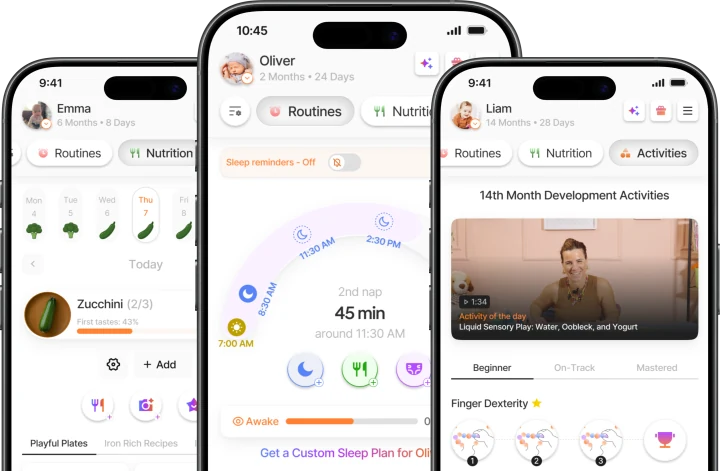
Parents’ guidance is valuable during this process, but every child may have different interests. A parent’s role in play is not to dictate what the child should do, but to provide a safe space for the interaction the child initiates. With Yuppo’s developmental analysis, you can assess not only whether your child can perform a cognitive or social skill, but also their level of performance. Based on this analysis, the app can provide a personalized plan made up of activities prepared by specialists to match your child’s current level.
What are the stages of play development?
For most children, the stages of play development progress gradually from exploring alone to forming complex collaborations with other children between birth and ages 5–6. Defined by researcher Mildred Parten, these stages take shape according to children’s levels of social maturity. Every child moves through them at their own pace; some stay in a particular stage longer, while others transition smoothly between stages.
Solitary and parallel play
The solitary and parallel play period is a developmental stage, usually seen from birth to age 3, when children explore their surroundings independently and remain independent even when they are alongside peers. During the first months, babies focus on their own hands, feet, and nearby objects, experiencing the stage known as solitary play.
Around ages 2–3, children may play in the same room with similar toys without interrupting one another’s play. Known as parallel play, this is an early rehearsal for social interaction. A child is comfortable with the other child’s presence but does not yet feel the need to create a shared storyline.
The beginning of social and cooperative play development
The beginning of social play and cooperative play development often occurs between ages 3 and 5, when children begin sharing toys and creating rules together around a common goal. At first, children begin exchanging materials, but there is still no fully shared goal.
After around age 4, cooperative play becomes more established. Building a house, playing house, and rule-based games such as hide-and-seek are part of this stage. Based on the work of developmental theorist Mildred Parten, the generally accepted main stages of play are:
Stage of Play | Estimated Starting Age | Key Feature |
|---|---|---|
Unoccupied Play | 0–3 months | The baby observes their surroundings through random movements and explores their own body. |
Solitary Play | 0–2 years | The child explores objects independently, without relying on others nearby. |
Onlooker Play | 2–2.5 years | The child watches other children play but does not try to join in. |
Parallel Play | 2–3 years | Playing side by side in the same space with similar toys, but independently. |
Associative Play | 3–4 years | Children begin sharing toys, but the play does not have a shared goal. |
Cooperative Play | 4–6 years | Children set rules and divide roles to achieve a common goal. |
It is important to remember that the age ranges in the table are not fixed boundaries and that each child’s social skills may develop at their own individual pace.

What is the difference between symbolic play in children and structured play?
Symbolic play is a free-form process in which children use their imaginations to give objects different meanings, while structured play usually consists of activities with a specific goal and set of rules. Also known as pretend play, symbolic play typically begins to emerge between 18 and 24 months and increases mental flexibility. Turning an empty cardboard box into a boat or a wooden block into a phone are wonderful examples.
Structured play includes activities with a predetermined framework, such as completing puzzles, playing matching-card games, or playing board games. Through these activities, children reinforce concepts such as following directions and waiting their turn. When choosing toys for their children, parents can create a well-rounded developmental environment by including both open-ended materials and structured activity sets.
When should you consult a professional about play development concerns?
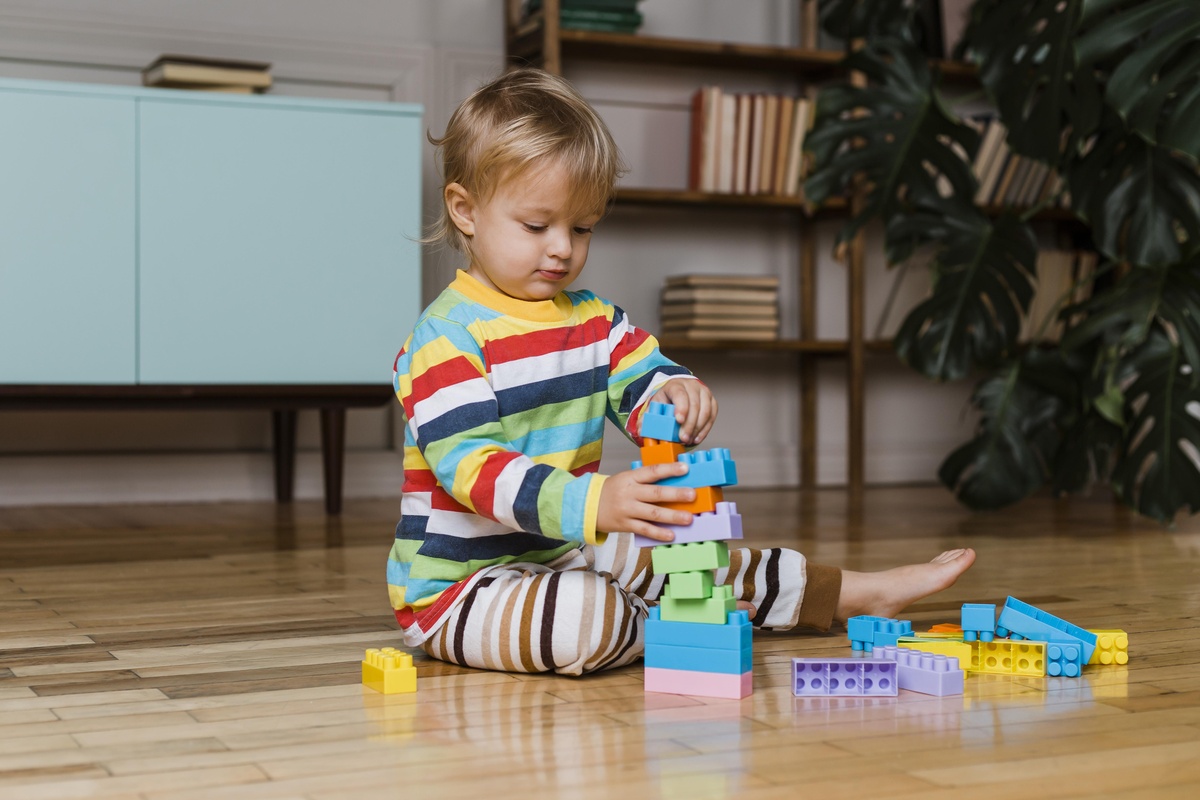
Consulting a professional about play development concerns may be worth considering if a child is typically 18–24 months old but does not interact with their surroundings or consistently has difficulty using toys as intended. Every child’s interest in play looks different; some prefer active physical play, while others may enjoy quietly stacking blocks.
However, if repetitive actions such as spinning objects for long periods or lining up toys without a purpose are the child’s only form of play, this may be a sign that they need developmental support. In these situations, learning about early signs of autism or other developmental differences and openly sharing what you observe with your child’s pediatrician is the healthiest approach.
Summary and Next Steps
Observe: To notice which stage of play your child is in, spend time watching them play without directing them.
Protect free play: Set aside a certain amount of time each day for symbolic play shaped by your child’s imagination instead of structured activities.
Adjust expectations: Rather than expecting a 2-year-old to share toys or follow shared rules, let them enjoy parallel play.
Join without taking over: When your child invites you to play, let them lead. Strengthen your connection by becoming part of the world they create.
When Should You Call the Pediatrician?
Although children’s play habits change from day to day, some situations may require a professional evaluation. If you observe the signs below within the listed age ranges, contacting your child’s pediatrician is recommended:
At 9–12 months, not responding to or smiling during back-and-forth social games such as peekaboo.
At 18–24 months, not using objects as intended, such as bringing a comb to the hair or a cup to the mouth.
Between 24 and 36 months, not attempting any symbolic or pretend play.
Consistently avoiding eye contact during play and not responding when their name is called.
At ages 3–4, responding to the presence of other children with extreme anxiety or completely refusing to interact with peers.
This content is for informational purposes only. Always consult your child’s pediatrician for diagnosis and treatment.
Playing is your baby’s most important work, and it is not always easy to understand their energy and needs during this process. Your baby’s sleep cycles throughout the day affect when they are most ready to explore and when they are tired.
By entering your baby’s wake-up time in Yuppo, you can see nap and bedtime suggestions created based on their age and individual sleep habits. This can help you find the times when they have the most energy and are most ready to play, and try Yuppo for free.
Frequently Asked Questions
At what age do babies start playing with other children?
Playing with others becomes more noticeable around ages 3–4, when children begin sharing toys and gathering around a common goal. Social smiles and early interactions in the first months are the first connections with others, but truly reciprocal cooperative play develops during the preschool years.
What age does parallel play start, and how long does it last?
Parallel play usually occurs between ages 2 and 3, when children play near one another with similar toys without interfering with each other. Around ages 3–4, as children gradually begin interacting, parallel play starts to shift toward associative and cooperative play.
Is always playing alone a sign of a developmental problem?
Playing alone is generally a normal, expected stage, especially between birth and age 3, as children explore the world at their own pace. After ages 3–4, however, it may be helpful to discuss the situation with your child’s pediatrician if they consistently avoid being around other children and show no effort to interact.
How does pretend play support a child’s cognitive development?
Symbolic play typically begins around 18–24 months and supports abstract thinking, problem-solving, and empathy. Imagining that one object is something else strengthens cognitive flexibility and helps build a foundation for later language development and social adaptation.
How involved should parents be in their child’s play?
Parents should generally respond to the interaction their child initiates and join the play within the child’s rules. Rather than constantly directing the activity, giving your child room to use their imagination in a safe setting supports a growing sense of independence.
References
Yuppo Lab
Play Therapist