
Key Takeaways
Your one-week-old sees your face during feedings and is naturally drawn to high-contrast patterns and human faces over any other visual stimulus.
Reflexes like rooting, palmar grasp, and the Moro reflex are present from birth, indicating a healthy nervous system at work.
Hearing is fully mature at birth; your baby recognizes familiar voices and may turn toward them.
Newborns prefer sweet scents and can distinguish the smell of their own mother's breastmilk within the first days.
On-demand feeding, hygienic cord care, and gentle responsive touch are the foundations of recommended first-week care.
Your baby's first seven days include more newborn 1-week milestones than you might expect: from birth, your newborn responds to your voice, displays feeding reflexes, and processes sights, sounds, and scents. If your baby arrived just days ago and you find yourself studying every tiny movement, each of those responses carries real meaning. Every baby follows their own pace, so treat these milestones as a general map rather than a rigid checklist.
Below you will learn what to expect in newborn week one, from physical changes to reflex patterns and newborn bonding cues.

What are newborn 1-week milestones?
Reflexes, sensory responses, and feeding patterns visible from day one make up the core milestones you can observe in your one-week-old. They signal that your baby's body is adapting to life outside the womb, not items you need to tick off on a fixed schedule.
What counts as a milestone at one week
A first-week milestone is any observable response showing that your baby's brain and body are adapting well. According to the American Academy of Pediatrics (AAP), a one-week-old generally:
Focuses on nearby objects within feeding distance
Prefers black-and-white or high-contrast patterns and human faces
Reacts to loud sounds and may turn toward familiar voices
Displays reflexes such as rooting and grasping
Your baby's Apgar score, assigned in the first minutes after birth, gave the medical team a quick initial snapshot. The milestones you observe at home during the days that follow build on that baseline.
How one-week-old milestones differ from a checklist
One-week-old milestones describe a range of behaviors rather than a pass-or-fail checklist. The AAP notes that newborns cannot control many of their movements during the first few weeks, and motions often look jerky or jittery. Two healthy babies born on the same day can look quite different in how they move, feed, or respond to sound, and that variation is completely normal.

Why the first seven days are a critical window for development
Your baby's first seven days mark a rapid shift from womb life to independent breathing, feeding, and temperature regulation, making consistent basic care especially meaningful right now.
How daily care builds a strong foundation
Daily care actions like feeding, holding, and talking to your baby create the sensory input that supports early neural connections. The World Health Organization (WHO) highlights the first week as a period when basic daily care lays a strong health foundation. When it feels like all you do is feed, change, and soothe, each of those interactions carries real biological weight for your baby's developing brain.
Essential newborn care practices
Three essential newborn care practices form the WHO's recommended foundation for this period:
Skin-to-skin contact for warmth and bonding
Hygienic umbilical cord and skin care
Early and exclusive breastfeeding
These overlap with what you are likely already doing. Following your baby's progress from this starting point through month-by-month development helps you see how first-week habits connect to later milestones.
What physical changes are normal in your newborn's first week?
Your newborn's body shifts visibly each day during the first week, with changes in weight, skin texture, and cord appearance all falling within the normal range for most babies. Knowing the typical pattern helps you feel confident as you observe your baby's first-week milestones up close.
Weight loss and early regain
Most newborns lose some birth weight in the first few days as extra fluid leaves the body, with a commonly cited range of roughly 7 to 10 percent. This dip is expected and usually does not mean feeding is going poorly. Weight typically starts trending upward around day 4 or 5, and most babies return to birth weight within about 10 to 14 days. Your pediatrician tracks weight at early visits, and you can follow patterns over time with a percentile calculator.
Skin, umbilical cord, and appearance changes
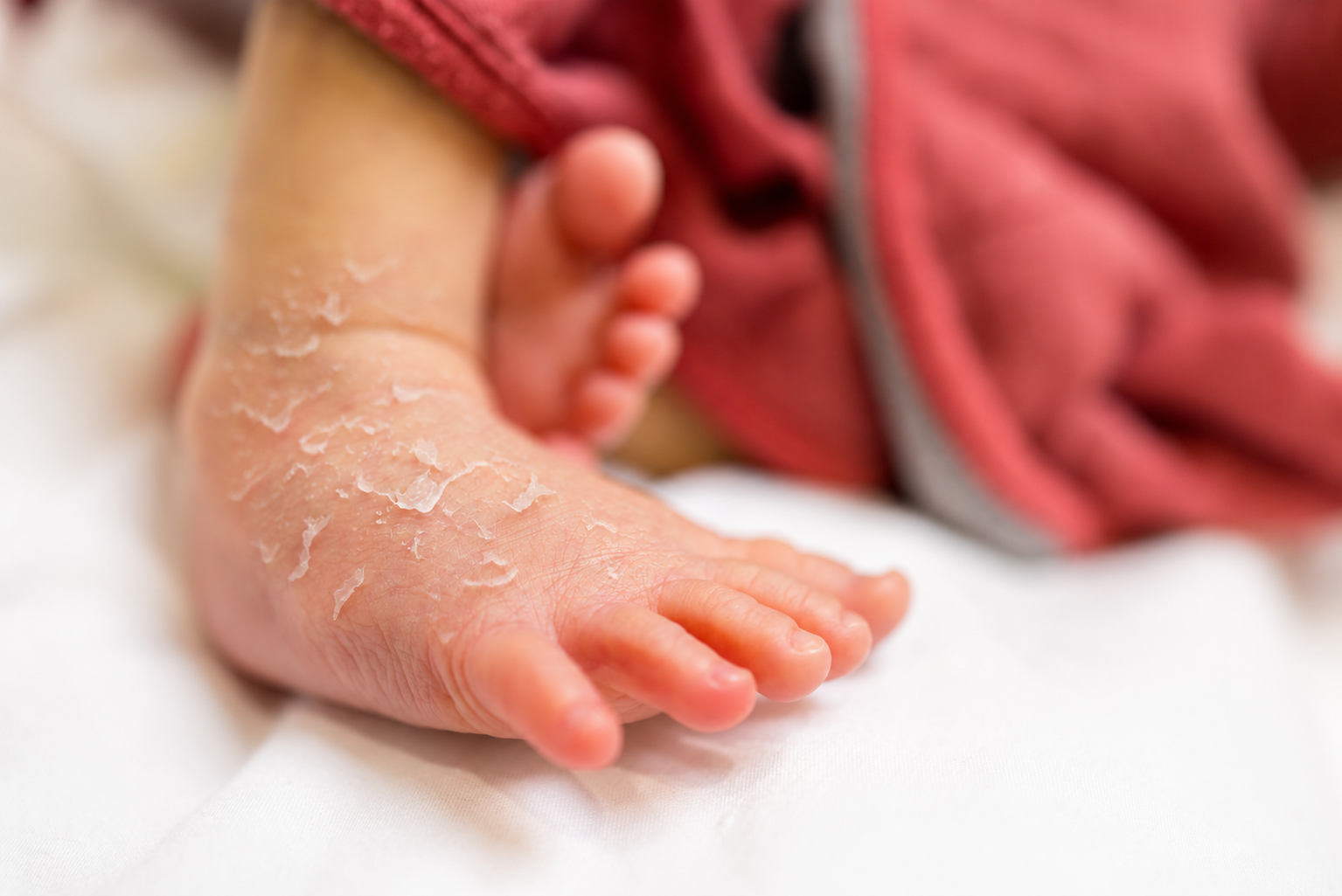
Your baby's skin often peels, flakes, or shows blotchy patches as it adjusts to air exposure. You might notice peeling around the wrists and ankles, a normal transition from the fluid-filled environment of the womb. Traces of vernix caseosa, the waxy coating that protected skin before birth, may linger in skin folds during the first day or two. The umbilical cord stump usually dries and detaches within about 1 to 3 weeks; keep it clean, dry, and fold the diaper below it so air circulates.
Feeding and diaper output day by day
A daily log of feedings and diaper output offers a practical snapshot of your baby's nutrition intake. The table below outlines general first-week patterns; your baby's numbers may vary.
| Day of Life | Typical Feeding Frequency | Expected Wet/Dirty Diapers | Common Physical Observations |
|---|---|---|---|
| Day 1 | Frequent short colostrum feedings | 1–2 wet, first meconium stool | Mild puffiness, vernix in skin folds |
| Day 2–3 | Roughly 8–12 sessions per 24 h | 2–3 wet, meconium transitioning | Weight dip expected, skin may peel |
| Day 4–5 | Steady on-demand pattern | 4–6 wet, stools turning yellow-green | Cord stump drying, weight stabilizing |
| Day 6–7 | Consistent on-demand rhythm | 6+ wet, yellow seedy stools (breastfed) | Peeling skin common, early weight gain |
Having your newborn essentials organized ahead of time makes daily tracking simpler.
What reflexes and senses does a one-week-old newborn have?
Your one-week-old arrives with built-in reflexes and active senses that support feeding, protection, and early connection with you.
Inborn reflexes you can observe at home
Newborn reflexes are automatic motor responses present from birth that indicate a healthy nervous system. The rooting reflex is often the first you notice: stroke your baby's cheek gently, and they turn toward the touch with mouth open, ready to feed. The AAP describes rooting as one of the earliest reflexes observed.
Other reflexes you may spot:
Palmar grasp: Place your finger against your baby's palm and feel a surprisingly firm grip.
Moro reflex: A sudden sound or shift in position causes arms to fling outward, then pull back in.
Stepping reflex: Held upright with feet on a flat surface, your baby may take alternating steps. The AAP notes this reflex typically fades after the first couple of months.

What your newborn can see, hear, and smell
Your newborn can see nearby faces, hear at full capacity, and distinguish familiar scents from the moment of birth. According to the AAP, a one-week-old focuses best at about 20 to 30 cm (8 to 12 in), roughly the distance to your face during feeding. High-contrast patterns and human faces draw your baby's gaze most. It is normal for a newborn's eyes to wander or occasionally cross during these early weeks.
Hearing is fully mature at birth, and your newborn may turn toward the voices they hear most often, associating them with warmth, food, and comfort, as the AAP describes. Newborns also prefer sweet scents and can recognize the smell of their own mother's breastmilk, according to the AAP.
Early bonding signals and social responses
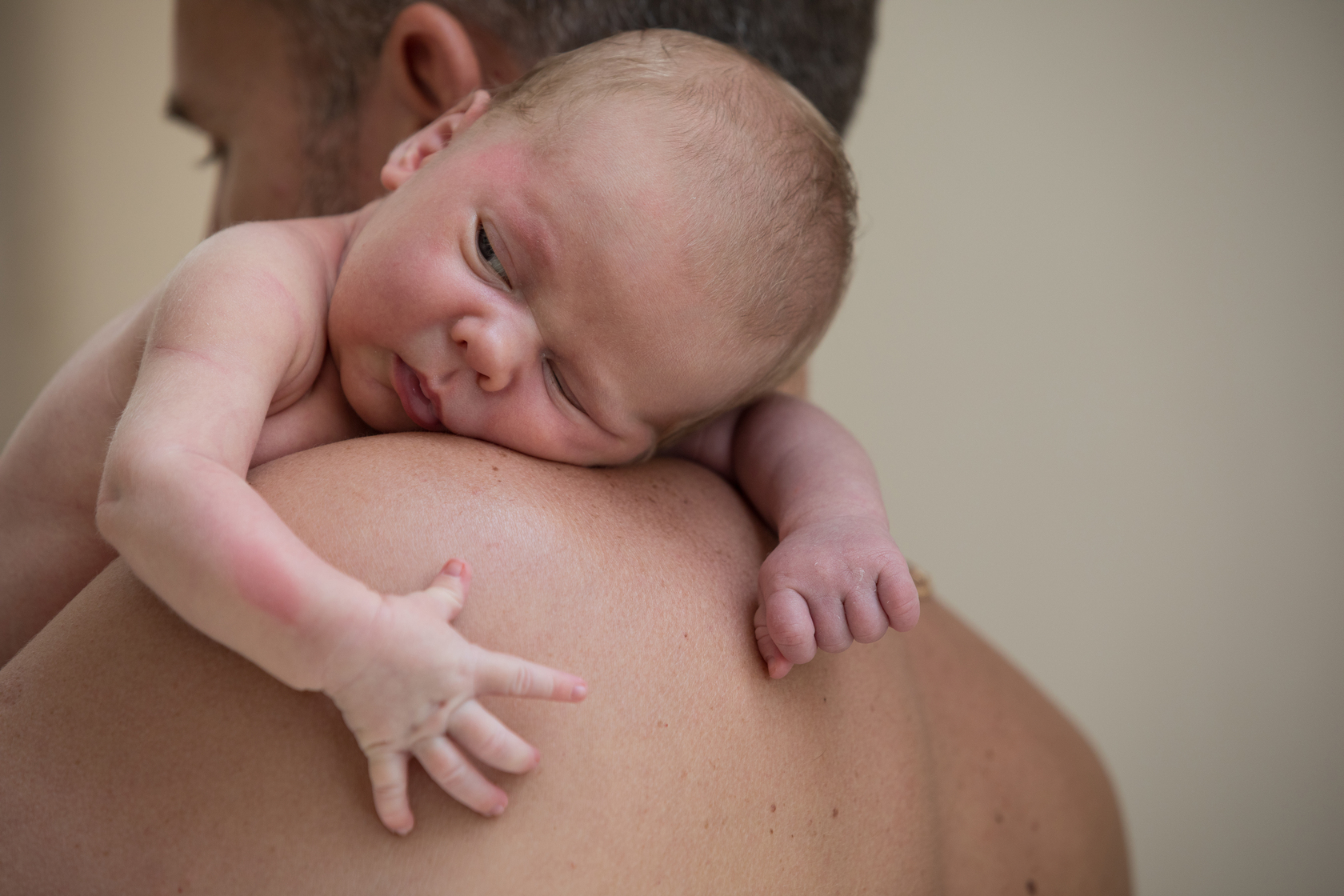
Your one-week-old communicates early bonding cues through gaze, body movement, and reactions to your voice. As the AAP describes, your baby watches you while you hold them and occasionally moves their body to respond or attract your attention. Talking softly during feedings and diaper changes strengthens the voice recognition your baby is actively building right now.
How to support your newborn during the first week
On-demand feeding, safe sleep, and responsive touch form the practical core of supporting newborn first-week milestones. You do not need special equipment or a rigid schedule to give your baby exactly what they need right now.
Feeding on demand and tracking output
Breastfed newborns typically eat roughly 8 to 12 times per 24 hours during the first week. Watch for hunger cues rather than the clock:
Rooting and head-turning
Sucking on hands or fingers
Fussiness before crying begins
Monitoring diaper output alongside feedings is a practical way to confirm your baby is getting enough. In the weeks ahead, growth spurts may temporarily increase feeding frequency.
Safe sleep positioning and skin-to-skin time
Back sleeping on a firm, flat surface is the recommended position for every sleep. The WHO recommends skin-to-skin contact as part of essential newborn care for warmth and bonding. Holding your baby against your bare chest after feedings supports temperature regulation and early attachment. A gentle baby massage and soft lullabies can become calming parts of your daily rhythm.
Responding to cues and building an early rhythm
Prompt responses to your baby's cries help build trust and lay the groundwork for a daily rhythm. Your newborn prefers soft sensations and dislikes rough or abrupt handling, as the AAP notes. Gentle rocking, calm speaking, and swaddling meet your baby's sensory preferences. There is no schedule to force right now; the pattern emerges as you learn each other's signals. In Yuppo, you can log feedings and sleep stretches and then review the daily pattern, making it easier to spot emerging trends before your next checkup.

Which first-week newborn behaviors are normal and which need attention?
Many changes that surprise you during the first week are part of a healthy adjustment to life outside the womb.
Normal skin changes and minor concerns
Blotchy patches, tiny white bumps called milia, and peeling skin are among the most common harmless variations in the first days. A slight yellowish tint to the skin or eyes may indicate newborn jaundice, which is usually mild and monitored by your pediatrician at early visits.
Fussiness, hiccups, and startle responses
Your one-week-old may hiccup, sneeze, and fuss frequently as their body learns to self-regulate. The Moro reflex can make your baby look startled by ordinary household sounds, which is completely expected. Shaky hands and a quivery chin are also common. The AAP recommends contacting your pediatrician if your baby's entire body is shaking, as whole-body tremors may signal a medical issue.
Contact your pediatrician promptly if you notice any of these newborn danger signs described by the WHO:
Feeding problems or repeated refusal to eat
Noticeably reduced activity or difficulty waking
Labored breathing, fever, convulsions, or baby feels unusually cold
Summary and Next Steps
Active senses from day one: your baby sees at feeding distance, prefers your face and voice, and distinguishes your scent within the first days.
Reflexes confirm healthy adaptation: rooting, palmar grasp, Moro, and stepping reflexes are all expected this week and evolve gradually over the coming months.
Weight follows a predictable arc: a brief dip is typical, with regain usually underway by the end of the first week in most newborns.
Simple daily care carries real weight: on-demand feeding, close physical contact, and hygienic cord care align with recommendations from leading health organizations.
Start observing today: during a calm feeding, watch how your baby's eyes fix on your face and how their body stills at the sound of your voice; those observations become your personal baseline for the weeks ahead.
This content is for information only; always consult your pediatrician for diagnosis and treatment.
Sorting out which changes are expected when every day feels entirely new is one of the first week's biggest challenges. In Yuppo, you enter your baby's date of birth and see a week-by-week timeline of expert-prepared developmental milestones, so you know which reflexes and sensory changes to watch for next.
Frequently Asked Questions
Most newborns sleep around 14 to 17 hours per day in short stretches of roughly 2 to 4 hours. A day-night rhythm has not developed yet, so waking around the clock is expected during this stage.
A drop of roughly 7 to 10 percent of birth weight in the first few days is generally considered typical. Most babies begin regaining around day 4 or 5 and usually return to birth weight within about 10 to 14 days.
Your newborn focuses best at about 20 to 30 cm (8 to 12 in), roughly the distance to your face while feeding or holding. High-contrast patterns and human faces capture your baby's attention most at this age.
Breastfed newborns generally eat about 8 to 12 times per 24 hours, roughly every 2 to 3 hours. Watching for hunger cues like rooting and sucking motions is more reliable than a fixed clock schedule.
The stump typically dries and detaches within about 1 to 3 weeks after birth. Keep it clean and dry, and fold the diaper below the stump so air can circulate freely.