Key Takeaways
The WHO recommends no screen time for infants under 1 year, and the AAP notes that children under 18 months learn best from real-world interactions.
Misuse of digital media between ages 0 and 5 can contribute to delays in language, thinking, social skills, and fine motor development.
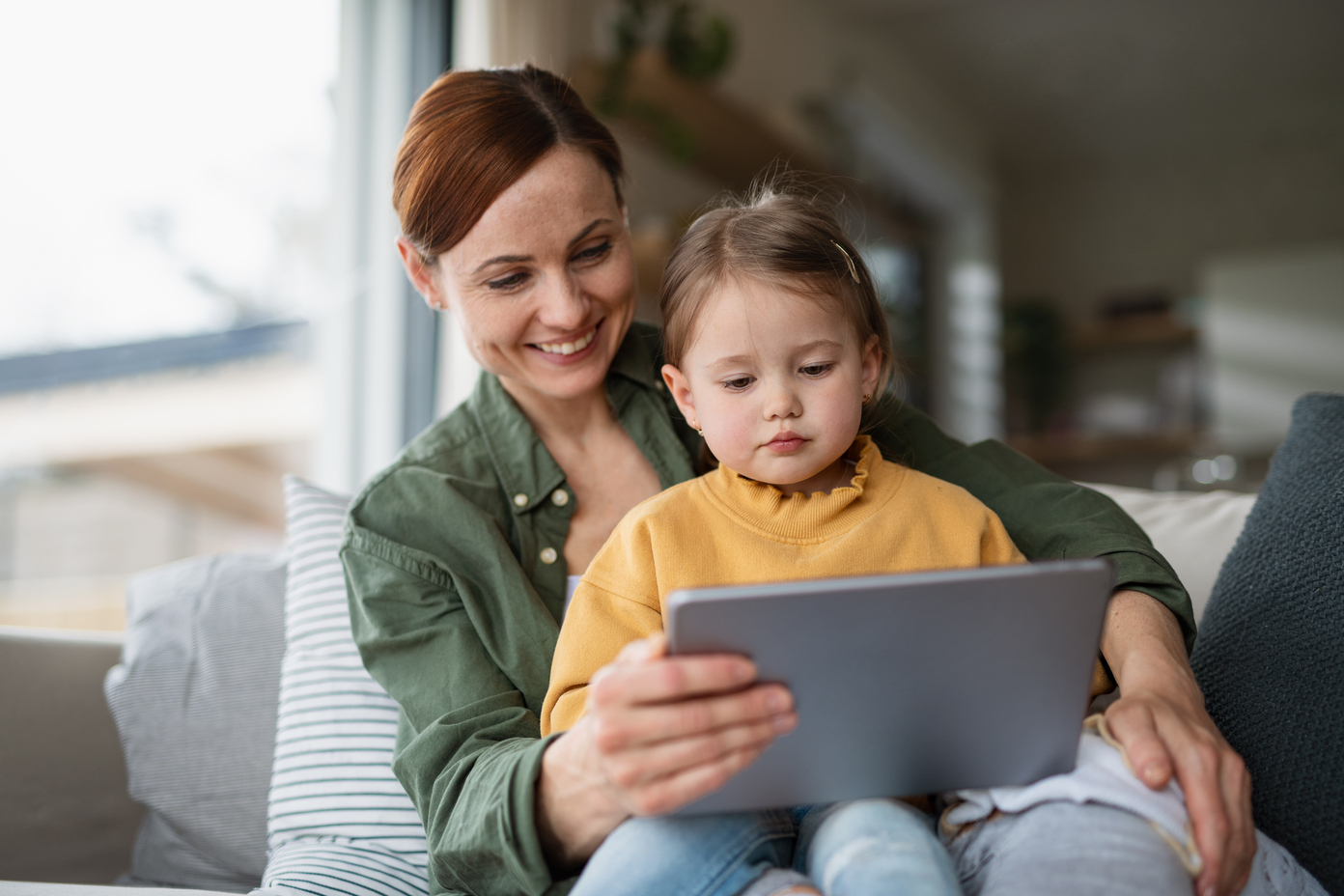
Co-viewing, where you watch alongside your child and talk about the content, turns screen time into a shared learning moment and strengthens your bond.
Screen-free zones, particularly bedrooms and mealtimes, help the whole family build healthier media habits.
About 90% of a child's brain development occurs by age 3, making face-to-face play and conversation especially valuable in those early years.
Screen time guidelines for toddlers call for no screens before 18 months, with live video calls generally treated as an exception, limited co-viewed content for ages 2 through 5, and consistent family-set limits after that. These recommendations, from the WHO and AAP, cover everything from a show your child watches intently to a television humming in the background.
If your toddler keeps reaching for your phone at dinner or your preschooler asks for "just one more episode" each evening, you are far from alone. Below you will find age-by-age limits, the effects of screen use on young children, and practical ways to cut back without daily battles.

What counts as screen time for toddlers and young children
Screen time refers to any period your child spends looking at a digital display, whether a television, tablet, smartphone, or computer. Because background screens are easy to overlook, many families find their actual media exposure is higher than expected.
Active use versus background exposure
Active screen use is time your child intentionally watches or interacts with content on a device. Background television, by contrast, plays in a room without anyone directly watching, yet it can still fragment focused play and reduce the quality of your conversations together.
Active use: your child selects and watches a show or taps through an app.
Background exposure: a news broadcast plays while your child builds with blocks nearby.
Incidental glances: brief moments your child looks up at a screen someone else is using.
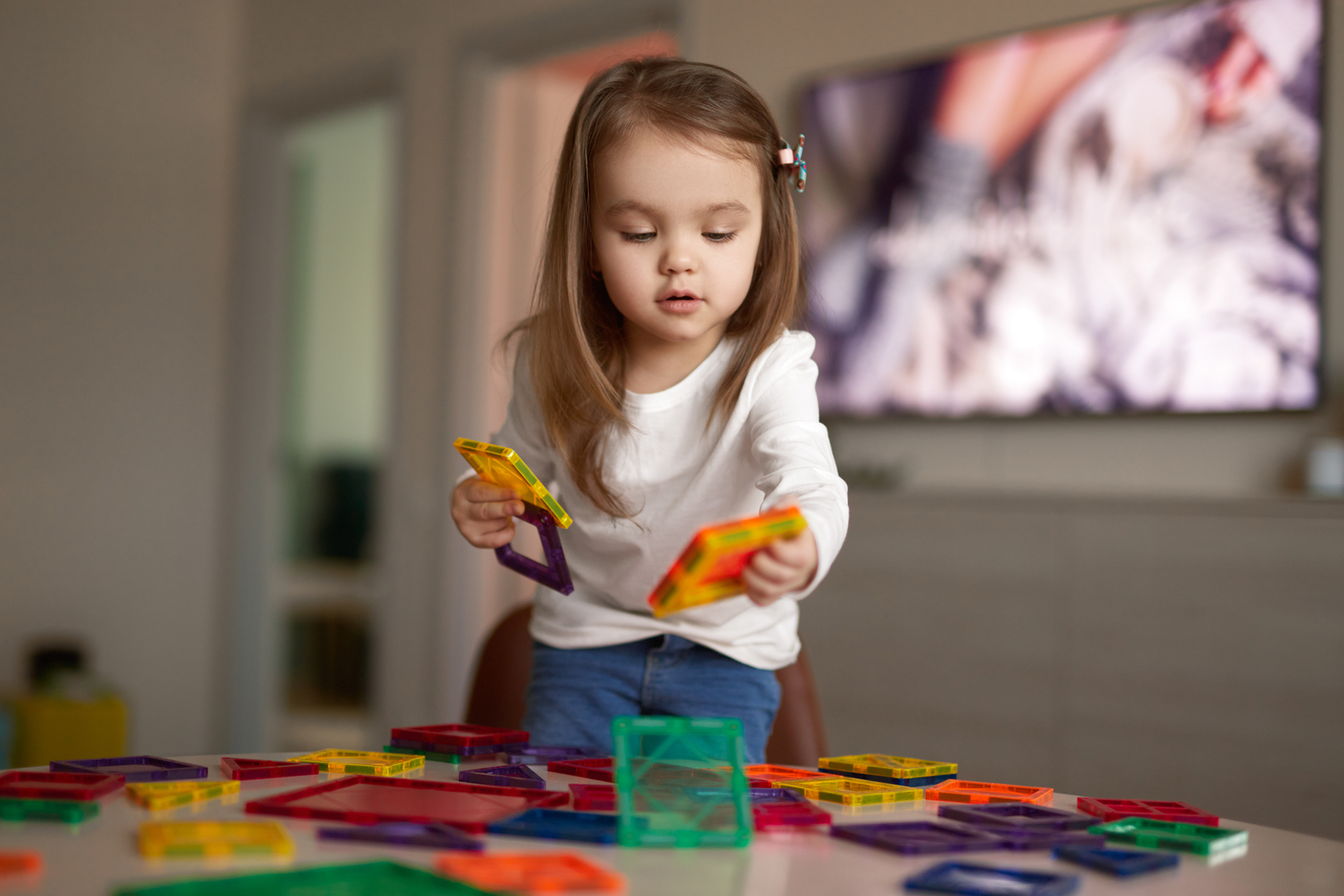
Imagine your 2-year-old stacking blocks while a talk show runs behind them. Even without sitting down to watch, the shifting sounds and images repeatedly pull attention away from the deep, uninterrupted play that supports learning.
Where video chatting fits in
Live video calls are generally treated as an exception to screen time limits because they involve real-time, two-way social interaction. When your baby waves at a grandparent and gets a wave back, that exchange mimics the turn-taking found in face-to-face conversation.
Screen time guidelines for toddlers: recommended limits by age
Screen time recommendations shift with each developmental stage because your child's ability to learn from a screen changes as the brain matures. The table below summarizes current guidance from the World Health Organization (WHO) and the American Academy of Pediatrics (AAP).
| Age group | Daily screen limit | Preferred content | Key note |
|---|---|---|---|
| Under 12 months | None (video calls OK) | Live caregiver interaction | WHO: no screens recommended |
| 12–18 months | Avoid solo use | Brief co-viewed clips only | AAP: real-world learning is primary |
| 18–24 months | Very limited, co-viewed | Slow-paced, interactive programs | Introduce with a caregiver present |
| 2–5 years | Up to about 1 hour | Quality educational content | Co-view and discuss together |
| 5–6 years | Consistent family limits | Age-appropriate interactive media | Maintain screen-free zones |
Your family's routine may look slightly different depending on your child's needs, and that is perfectly normal.
Birth to 18 months
Babies under 18 months generally learn best from real-world interactions, and heavy solo screen use during this period can affect developing language and social skills, according to the AAP. The WHO recommends no screen time at all for infants under 1 year, encouraging reading, storytelling, and singing instead. Picture an 18-month-old video-chatting with a grandparent: they point at the camera, babble, and wait for a response, exactly the kind of real-time exchange that sets video calls apart.
18 to 24 months
Children between 18 and 24 months can begin watching very brief, high-quality content when a caregiver watches alongside. At this age co-viewing works best when you name objects on screen or ask short questions like "Where's the dog?" to keep the exchange interactive rather than one-sided.
2 to 5 years
You may wonder how much screen time your preschooler should actually get. Most guidance suggests roughly one hour or less per day for this age band. The AAP encourages families to seek out content that models social and emotional skills and fosters free play. Sitting with your 3-year-old during a short animated story and pausing to ask "What do you think happens next?" turns that time into genuine conversation.
Approaching school age: 5 to 6 years
Children nearing school age can handle somewhat more independent screen use, yet consistent daily limits remain valuable. This is a good time to draft a family media plan together. Picture a weekend afternoon when you and your 5-year-old sketch a simple weekly schedule on a whiteboard: which days include tablet time, how long each session lasts, and what activity follows. When your child helps write the rules, limits feel like a shared project. You can track broader growth alongside routine changes with a month-by-month development overview.
How excess screen time affects young children's language, sleep, and behavior
Excess screen time in early childhood can influence language, sleep quality, and emotional regulation, areas the AAP specifically highlights as vulnerable when digital media is misused between ages 0 and 5.
Language and cognitive development
Language, thinking, and social skills can all develop more slowly when digital media replaces live interaction in early childhood, the AAP notes. About 90% of a child's brain development occurs by age 3, and speech and language growth is closely tied to later thinking ability, according to the AAP. Simple interactions that support language include:
Narrating daily routines ("Now we're putting on your shoes")
Reading picture books together
Playing peekaboo and pat-a-cake, which practice the back-and-forth pattern behind conversation
If your toddler's speech feels slower than expected, this guide to speech milestones offers helpful context.
Sleep quality and duration
Heavy screen use in early childhood is linked to unhealthy sleep patterns, one of the consequences the AAP identifies when digital media is misused. The AAP recommends keeping screens out of bedrooms and away from the hour before bed to protect sleep routines.
Emotional regulation and attention
Your child's growing ability to wait, plan, and manage impulses, often called executive function, builds primarily through hands-on play and social interaction. The AAP notes that excess screen use is associated with more frequent outbursts and fewer chances to develop self-control. If attention or impulse control is a concern, this overview of attention-related signs in toddlers may be a useful starting point.
If you notice persistent concerns around language, attention, or emotional regulation that do not improve with routine changes, bringing them up at your child's next well-visit gives your pediatrician helpful context.
Interactive media versus passive viewing: what matters for young children
Interactive media that invites your child to respond differs sharply from passive viewing, where the screen does all the talking. A slow-paced program that pauses for answers is a very different experience from a fast-cut video looping on autoplay.
What research says about content quality
Quality online content can introduce new words, invite children to sing along, model positive behaviors like cooperation and respect, and encourage problem-solving, according to the AAP. The AAP's family media plan guidance also advises turning off autoplay and notifications, which are designed to keep children engaged longer than intended.
Content that pauses for a child's response supports active learning.
Fast-paced clips with frequent scene changes tend to overstimulate rather than teach.
Programs heavy on advertising can fragment focus.
The role of co-viewing in learning
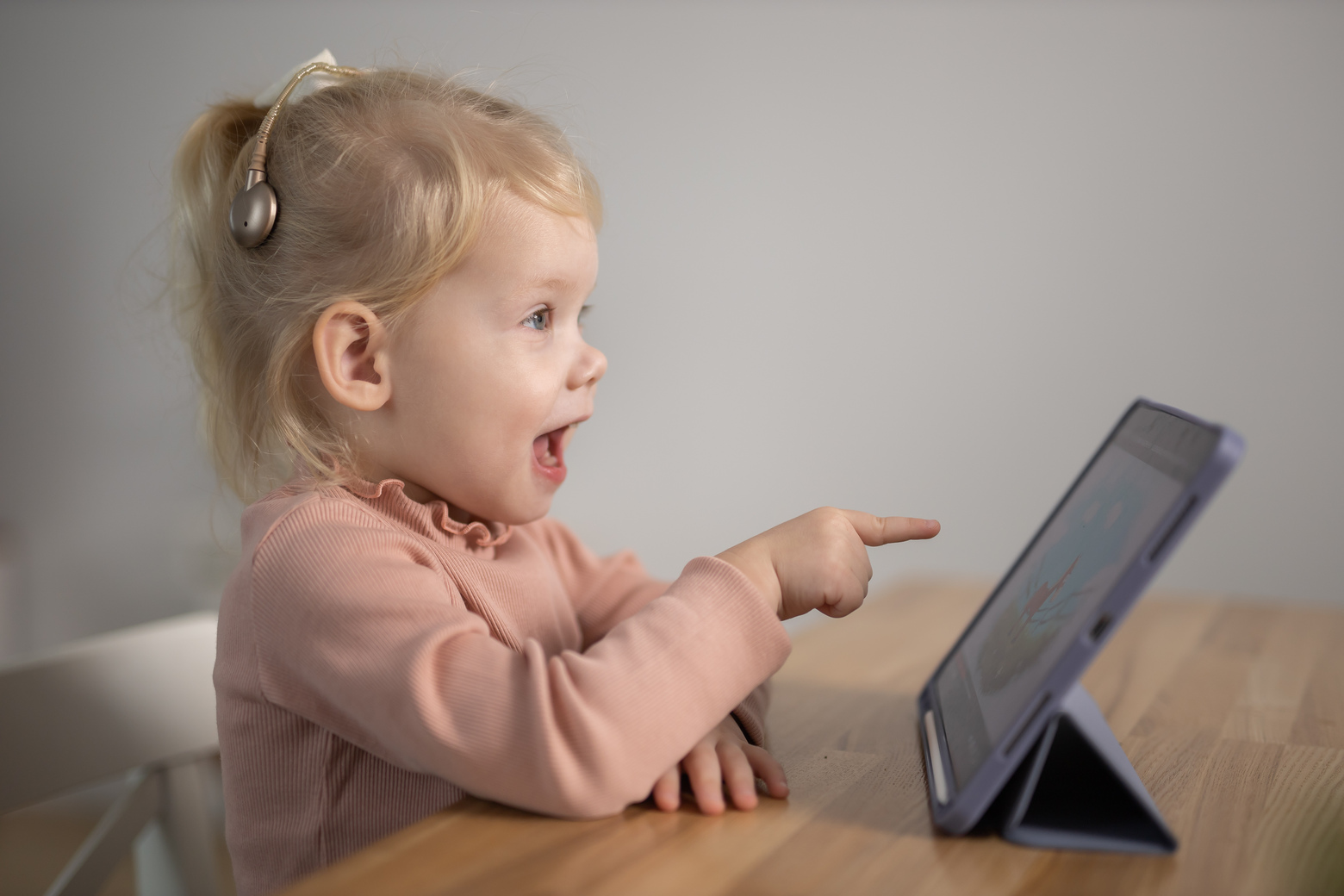
Co-viewing transforms passive watching into shared learning by having you sit with your child and discuss what you see. The AAP explains that this approach can open a window into your child's experiences, build your bond, and help you guide them positively. Saying "Look, the character shared her toy!" is all it takes to turn a quiet scene into a small conversation about kindness.
Limiting screen time under 5: routines, screen-free zones, and alternatives
Reducing your child's screen time works best when you replace it with something they genuinely enjoy. The WHO frames the core goal as shifting from sedentary time to playtime while protecting sleep.
Setting predictable screen routines
A predictable daily routine helps your child know when screen time starts and ends, cutting down on negotiation. Try a visual sand timer so your 4-year-old can see the minutes counting down. When the sand runs out the tablet goes off, a concrete cue that often prevents the "five more minutes" loop.
Screen-free zones and transitions
Designating screen-free zones in your home gives everyone a clear boundary around media. The AAP suggests the dinner table and bedrooms as strong starting points, especially the hour before bed. A short family screen-use agreement that everyone follows turns these limits into a shared choice.

Replacing screen time with engaging alternatives
Interactive non-screen activities with a caregiver, such as reading, storytelling, singing, and puzzles, are very important for development, according to the WHO. Games like peekaboo and pat-a-cake promote turn-taking and early conversation skills, the AAP notes. Some quick swaps:
Replace a morning cartoon with a short picture-book session.
Trade tablet time after lunch for blocks or play dough.
Use singing and finger games during waits instead of handing over a phone.
You can find more age-matched ideas in this collection of brain development activities. In Yuppo, you can browse personalized play suggestions filtered by your child's age, giving you a ready list of screen-free activities when you need one fast.
Summary and Next Steps
Match limits to your child's age band: WHO and AAP guidance ties screen time recommendations to developmental stage, so use the table above as your baseline.
Sit with your child during at least one screen session this week: Ask a single open question about what you are watching together; that exchange adds language practice and connection that solo viewing cannot.
Create a screen-free zone today: Pick one spot like the dinner table and one window like the hour before bed, then keep devices out of both.
Swap one screen session for hands-on play: Replacing even 15 minutes of passive viewing with reading, blocks, or outdoor exploration adds meaningful interaction to your child's day.
If today was heavier on screens than planned, one adjusted day does not erase your child's progress. As your child approaches school age, the focus gradually shifts from counting total minutes to evaluating content quality and building self-regulation.
This content is for information only; always consult your pediatrician for diagnosis and treatment.
Finding the right screen-free activities for your child's exact developmental stage takes energy you may not have at the end of a long day. With Yuppo, you can enter your child's birth date and follow expert-prepared weekly milestones step by step, making it easier to choose age-matched alternatives to screen time.
Frequently Asked Questions
Live video calls are generally treated as an exception because they involve real-time social interaction. When your baby responds to a grandparent's voice and gestures, the exchange mimics face-to-face turn-taking, making it different from passive viewing.
Some high-quality interactive programs can offer modest learning benefits for children over about 2 years old, primarily when an adult co-views and reinforces the content afterward. Without that involvement, even well-designed apps tend to function more like passive entertainment.
Background television can reduce both the amount and quality of conversation between you and your child, even when no one is actively watching. It also fragments focused play. Switching to music or silence removes that invisible distraction.
Gradual reductions of about 15 to 20 minutes per day, paired with appealing screen-free alternatives, tend to be more sustainable than a sudden cutoff. Start by identifying the easiest session to replace and fill that slot with something hands-on like drawing or outdoor play.
Co-viewing is recommended through at least age 5, and clear time limits remain important afterward. Truly independent use with minimal supervision becomes more appropriate around school entry, ideally within a family media plan you have built together.